Iran Issues Stern Warning: Aggression Will Bring Severe Repercussions for Entire Region
Iran has announced that nations within the region are collaborating to avert the outbreak of war, emphasizing that they understand the severe repercussions any aggressive actions against Tehran could have on the entire area.
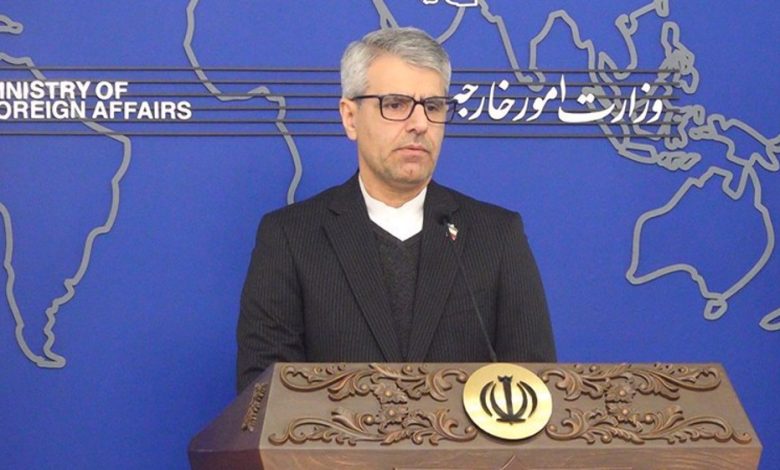
Iranian Foreign Ministry spokesperson Esmaeil Baghaei, during a weekly press briefing in Tehran on Monday, expressed that regional nations are cognizant of the fact that instability in the area and any threats directed at Iran could have widespread consequences, impacting other countries in the region.
He noted that nations in the region are engaging in joint efforts to avert any escalation of tensions, as there is a shared understanding of the risks associated with any provocative actions against Iran.
He called on all nations to stay alert to media speculation and the exploitation of regional matters by third parties.
He highlighted the communications and engagements between Iran and regional nations, notably Saudi Arabia, and urged all countries in the region to focus on the prevailing situation.
Baghaei’s comments arise in the context of a substantial increase in American military presence throughout the West Asia region, including the Persian Gulf. This military escalation aligns with ongoing threats from Trump of potential new military operations aimed at the Islamic Republic.
Iranian authorities have pledged to counter any aggression against the nation with a rapid and forceful retaliation.
On Sunday, Ayatollah Seyyed Ali Khamenei, the Leader of the Islamic Revolution, issued a cautionary statement, indicating that any offensive action could potentially escalate into a “regional war.”
Ayatollah Khamenei has issued a warning, emphasizing that any initiation of conflict would escalate into a regional war.
Allegations Arise of Israeli Tactics Aiming to Sow Discord Among Muslim Nations
In addressing inquiries regarding Israel’s alleged strategy to divide nations in the region, the Iranian spokesperson highlighted that representatives of the Zionist regime have openly declared the “Greater Israel” initiative. Their actions, the spokesperson noted, indicate an intention to destabilize and create discord within the region.
Baghaei stated that Israel continues to hold territories in Lebanon, Syria, and significant portions of Palestine, with seven regional and Muslim nations coming under attack in 2025.
According to reiterated statements, the evidence suggests that the Israeli regime’s agenda aims at causing fragmentation and sowing division among Muslim countries.
The spokesperson highlighted that there is a growing consensus, both among regional nations and throughout the Muslim world, that the Zionist regime is aiming to establish itself as the dominant force in the region.
He conveyed confidence that the pursuit of dominance and control will extend beyond the West Asia region. “Eventually, European nations will come to understand that tolerance toward the Zionist regime’s breaches of law and criminal actions will have repercussions for them as well,” he stated.
Iran is reportedly examining the executive particulars necessary to reinitiate talks with the United States.
In response to inquiries regarding the current progress of efforts to rekindle negotiations between Iran and the United States, Baghaei stated that Tehran must assess various dimensions of the situation.
He indicated that several points have been discussed within this framework, and Iran is presently in the phase of evaluating and making decisions concerning the specifics of a diplomatic initiative.
He voiced optimism that the initiatives would bear fruit in the future and that the parameters of the negotiations would be established.
“Regional nations, concerned about the ongoing situation, are actively striving to contribute positively. In contrast to European countries, which have taken steps perceived as increasing tensions, these regional players are serving as mediators in facilitating communication,” he stated.
He stated that, in light of the recent provocative actions by the United States and the Israeli government in the region, Iran’s diplomatic sector remains committed to advancing national interests and protecting regional peace and stability through a diligent and accountable strategy.
In an interview with CNN on Sunday, Iranian Foreign Minister Abbas Araghchi emphasized that the United States should take the opportunity to secure a fair agreement with Tehran. He cautioned that any military aggression would result in a “disaster” for the whole region.
Araghchi expressed confidence in reaching an agreement with the United States regarding Tehran’s nuclear program.
Iran maintains robust relations and a strategic partnership with both Russia and China.
Baghaei stated that Iran maintains “very good” relations with both China and Russia, highlighting the existence of significant agreements among the three nations for cooperation across various sectors.
The Iranian spokesperson stated that both China and Russia, as permanent members of the UN Security Council, have issued statements opposing what they describe as the United States’ coercive actions.
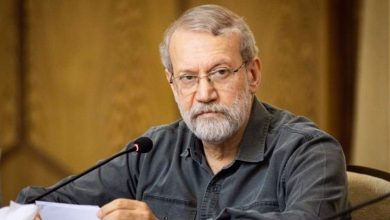
He highlighted the significant visit of Iran’s Secretary of the Supreme National Security Council, Ali Larijani, to Russia and ongoing communications with China. He emphasized that both Beijing and Moscow are well aware of their duties as permanent members of the United Nations Security Council and as nations with strong relations and strategic partnerships with Iran.