Iran Declares No Justification for Inspection of Bombed Nuclear Facilities
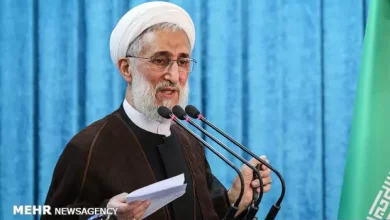
The head of the Atomic Energy Organization of Iran (AEOI) has stated that political and psychological pressure regarding inspections of damaged nuclear facilities will be ineffective. He emphasized the need for establishing clear procedures to address such situations.
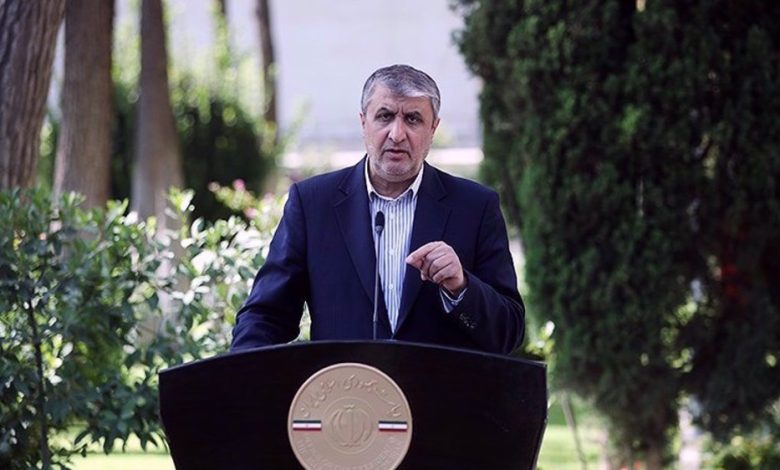
During a press briefing on the fringes of a cabinet meeting held on Wednesday, Mohammad Eslami announced that there is presently no formalized protocol for inspecting nuclear facilities that have suffered damage as a result of military attacks.
He stated that until the matter is resolved, political and psychological pressures, along with unrelated attempts to re-examine bombed sites and further the adversary’s agenda, are deemed unacceptable and will not elicit a response.
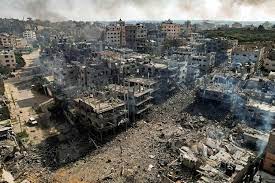
In June, amidst heightened US-Israeli hostilities towards Iran, the United States conducted airstrikes on three Iranian nuclear sites located in Fordow, Natanz, and Isfahan. These actions were viewed as a direct infringement of international law and the provisions outlined in the Nuclear Non-Proliferation Treaty (NPT).
Eslami highlighted that Article 68 of the Safeguards Agreement solely pertains to natural disasters and damage, and does not address military strikes or warfare.
In a statement, he asserted that if the International Atomic Energy Agency deems military assaults on safeguarded nuclear facilities permissible, it should explicitly approve and announce it. Conversely, if these attacks are deemed illegal, they must be condemned, and the post-conflict processes should be clearly outlined.
He remarked that Iran will not agree to demands for renewed inspections of damaged sites until the agency clearly defines the conditions.
Eslami stated that Iran’s level of cooperation with the International Atomic Energy Agency (IAEA) is unprecedented, asserting that no other nation in history has engaged with the agency as extensively as Iran has.
He stated that Iran’s nuclear industry has been subjected to the most comprehensive and rigorous inspections ever conducted, with no reports of non-compliance or safeguard violations.
He described the existing pressures as politically driven efforts designed to damage and undermine the Iranian populace, emphasizing that Iran’s nuclear endeavors continue to be solely peaceful.
Eslami stated that the discussions at Tuesday’s UN Security Council meeting went beyond simply expressing regret, revealing the enduring pressure exerted by the United States on Iran’s nuclear program.
He observed that Washington has explicitly outlined in its national security strategy that it opts not to advance its interests via international organizations. Instead, it adopts an approach characterized by “the law of the jungle and the use of force.”
Eslami characterized the report, along with the statements and references presented during the Security Council session, as “entirely unprofessional and lacking in legality.”
He highlighted that UN Security Council Resolution 2231 has lapsed, and additionally, its procedural mandates were not adhered to, rendering any citation unconvincing.
He strongly dismissed the assertions that Iran’s purported non-compliance with the Joint Comprehensive Plan of Action (JCPOA) warrants the re-imposition of prior United Nations sanctions, labeling them as “entirely rejected and unacceptable.”
He noted that China and Russia, both wielding veto power as permanent members of the United Nations Security Council, have firmly dismissed these allegations. They asserted that the initiative led by three European nations and the United States, with support from Israeli lobbying efforts, lacks any legal validity and cannot be enforced.
In other parts of his statement, Eslami revealed the initiation of a nationwide multimedia festival called “Nuclear Technology for Life,” a collaborative effort with Iran’s national broadcaster.
The initiative is designed to combat misinformation and distorted narratives concerning Iran’s nuclear program by providing comprehensive accounts through the involvement of both the public and media.