Imam Muhammad al-Baqir: The Splitter and Spreader of Sciences
Today marks the birth anniversary of the fifth Shia Imam, Muhammad al-Baqir. The following article offers an in-depth overview of his life and contributions.
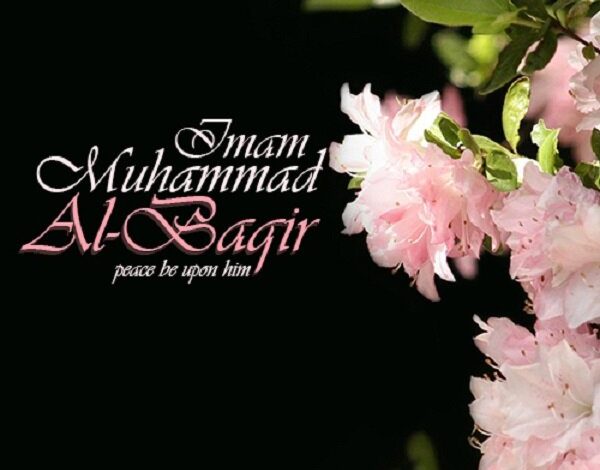
Imam Muhammad Baqir, also known by the titles Abu Jafar, Baqir, and Baqir al-Olum, was born in the year 57 Hijri in Medina. Upon the passing of his father, Imam Zayn al-Abedin, in 94 Hijri, Imam Muhammad Baqir was 39 years old. He was the son of Umm Yabdullah, daughter of Imam Hassan Mujtaba.
Imam Baqir (AS), despite residing in challenging and restrictive periods, played a pivotal role in conveying the essence of Islam. He gained renown for his deep analysis and elucidation of complex intellectual topics. His efforts led to the establishment of a robust movement in the fields of education and science, setting the groundwork for an Islamic university that flourished during the era of his son, Imam Sadiq (AS). Eminent scholars drew from his extensive knowledge and frequently sought his expertise to address their inquiries.
The name Baqir carries the meaning of “one who possesses great knowledge” or “a knowledgeable person.”
The term “Baqir” is derived from “Baqara,” signifying to open or expand. This name was attributed to Imam Muhammad Baqir (PBUH) due to his pioneering role in disseminating and expanding knowledge across various domains. His contributions encompassed religious instruction, Quranic exegesis, ethical guidance, and cultural education. Through his life, he educated people on an extensive array of theological, religious, and scientific principles. His teachings have been extensively preserved and continue to be passed down through generations.
The **Battle of Karbala** saw significant and notable participation, marking a poignant moment in history.
Imam Muhammad al-Baqir was around two and a half years old when he joined Imam Hussein and his family on the arduous journey to Karbala. He experienced firsthand the harrowing and tragic events in Karbala, followed by distressing incidents in Syria and Iraq. Following a year of captivity in Damascus, he returned to Medina in 62 A.H., at the age of four.
Imam Sajjad, recognized as an Alawite through both maternal and paternal lineage, was said to have appointed his son, Imam Muhammad al-Baqir, to the position of Imamate and leadership, as directed by divine command and the Prophet’s decree. Imam al-Baqir commenced his tenure in 95 A.H., continuing his leadership until 114 A.H., marking a 19-year period of his Imamate.
Imam al-Baqir’s Contributions to Scientific Progress
Imam al-Baqir’s exceptional intellect and aptitude spanned a wide range of disciplines, encompassing tradition, philosophy, theology, jurisprudence, ethical principles, and exemplary morals. Additionally, his foresight was evident, as he accurately predicted events before their occurrence. The breadth of his knowledge was profoundly extensive.
He reportedly expressed deep sighs and conveyed with sorrow that if there were individuals capable of bearing the knowledge bestowed upon him by Allah, the Great and Almighty, he would declare the principles of monotheism, Islam, the religion, and its laws.
Observing a decline in the essential attributes of the Islamic community—such as unity, excellence, and progress in knowledge and production—an influential Imam sought to revive its former glory and cultural identity. Through his spiritual leadership, he championed education and intellectual pursuit, choosing to abstain from political engagement to focus solely on the advancement of knowledge.
**Insightful Teachings of Imam al-Baqir (AS)**
A source stated, “If there’s an opportunity to work with someone and provide them assistance, you should seize it.”
In a statement, it was expressed that blending clemency with knowledge yields an unparalleled outcome.
– He advised: Embrace the truth. Distance yourself from matters that do not involve you. Steer clear of your adversary. Exercise caution with your friends, except for the trustworthy one who holds a deep reverence for Allah. Avoid forming friendships with wrongdoers and refrain from sharing your confidences with them. Seek counsel from those who are devoted to Allah.
He stated that if one does not become a preacher through their own self-awareness and understanding, external preaching will not benefit them.
– He remarked that if a person’s external actions are more substantial than their internal deeds, then their overall balance is light.
In the year 100 A.H., Hasham bin Abdul Malik ascended to the position of Caliph. His tenure was marked by a reputation for being an adversary of the Ahl al-Bayt, as he consistently sought to impose difficulties upon them whenever possible.
Renowned scholar Allame Majlisi documents that in the final days of his caliphate, Hasham journeyed to Mecca for the Hajj pilgrimage. Also present were Imam Muhammad Baqir (PBUH) and his son, Imam Jafar Sadiq (PBUH). It was reported to Hasham that Imam Jafar Sadiq (PBUH) addressed the pilgrims, declaring that he and his father were the divine representatives on earth. He proclaimed that those who are their allies and supporters will attain paradise, while their adversaries will be consigned to hell.
Upon reaching Damascus, Hasham, incensed by preceding events, instructed the governor of Medina, Ibrahim bin Walid, to bring the two revered Imams to his court. Hasham’s intention was to defame the Imams, yet his efforts were thwarted as the Imams turned the situation to their advantage, exacerbating Hasham’s hostility. As a result, he commanded their imprisonment. During their incarceration, Imam Muhammad Baqir delivered sermons to fellow inmates, fostering an atmosphere of profound enthusiasm and allegiance towards the Imam and opposition to Hasham. Recognizing the potential for unrest and rebellion, Hasham subsequently ordered the Imam’s release but instructed Ibrahim bin Walid to secretly poison Imam Muhammad Baqir, whom he viewed as a persistent threat. This order was carried out in 114 A.H., as documented in Jala-ul-Ayoon.
Imam Muhammad Baqir, a revered figure, spent 57 years on Earth before departing this world in the 114th year of the Hijra. This significant event occurred on the seventh day of the month of Zil-Hijjah, in the city of Medina. His remains were interred in the Baqi cemetery, where he lies alongside Imam Hasan and Imam Sajjad in Medina.