Hezbollah and “Israel” Reassess Deterrence and Engagement Rules After Sayyed Nasrallah
According to established definitions, Military Deterrence refers to the strategic practice of dissuading potential adversaries from pursuing aggressive actions...
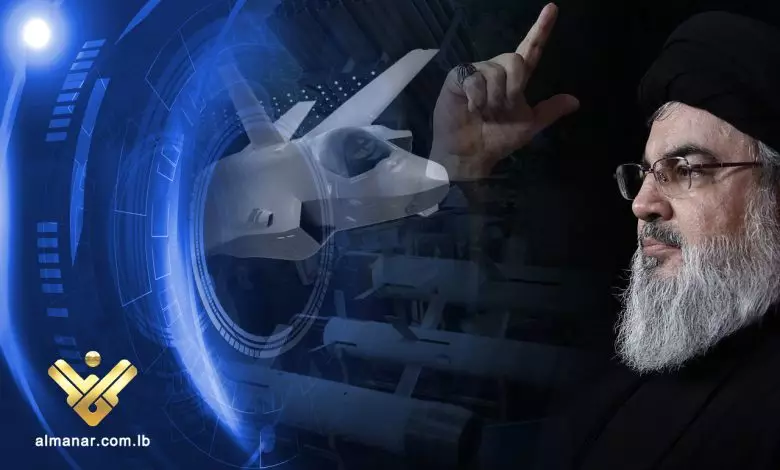
Military deterrence involves dissuading potential adversaries from engaging in undesired actions, such as an attack, by establishing a believable threat of severe repercussions should those actions occur. This strategy is based on persuading opponents that the prospective costs of any aggressive moves, whether military or political, significantly surpass any advantages they might perceive. Essential components include a noticeable and credible ability to retaliate, a demonstrated resolve to execute such retaliation, and effective communication of these aspects to the possible aggressor.
Applying this definition to the ongoing military conflict between Hezbollah and the Israeli Occupation Army, the prolonged confrontation can be categorized into deterrence and escalation. Accordingly, the encounter has consistently been governed by specific rules of engagement, either maintaining deterrence between the two forces or delineating the parameters of escalation.
Hezbollah was established in 1982 in response to the Israeli invasion of Lebanon that saw tanks advancing to Beirut, creating a dire situation. Nevertheless, the emergence of multiple resistance factions eventually forced Israeli forces to retreat to the occupation zone in South Lebanon.
Over an 18-year period, resistance operations targeting occupation sites in South Lebanon culminated in liberation in 2000. During this time, several pivotal events played a crucial role in defining the terms of engagement between the resistance and Israeli forces.
In 1993, Israel initiated a significant military campaign against Lebanon, targeting Hezbollah with the objective of disarming the group and safeguarding northern settlements from missile attacks. The conflict, which spanned seven days, did not succeed in meeting its objectives but resulted in significant casualties.
The initial framework of the deterrence strategies enforced by the resistance against the adversary is beginning to take shape with distinct clarity. Any Israeli assault on Lebanese civilians will be met with missile attacks targeting the northern settlements in occupied Palestine.
In 1996, the deterrence strategy was formalized through the April Understanding, marking the end of a 16-day conflict between Zionist forces and Lebanon. This agreement was pivotal as it distinguished military engagements between resistance forces and Israeli adversaries from civilian areas, essentially codifying Hezbollah’s deterrence strategy into a quasi-official arrangement.
In 1999, despite Hezbollah’s deterrence efforts, the Israeli forces launched an extensive offensive against Lebanon’s infrastructure, focusing on power plants, bridges, and buildings. In a steadfast response, the Islamic Resistance courageously retaliated by launching missile strikes into northern Israel.
Following its withdrawal from South Lebanon in 2000 amid ongoing resistance attacks, Israel began strategizing for a retaliatory strike against Hezbollah. This move came as Hezbollah forces advanced to border outposts in the South Litani region.
During that period, Israeli security violations continued unabated. Numerous resistance leaders and members were targeted and assassinated, including Ghaleb Awale, who was killed in Beirut’s Dahieh by the Zionist forces.
In a deadly operation undertaken by Hezbollah in 2006, the capture of two Israeli soldiers served as a catalyst for a retaliatory conflict initiated by Israel. The objective was once again to dismantle Hezbollah. However, after a 33-day war, Israel was unable to eliminate the Lebanese resistance faction, whose missile strikes on Israeli settlements persisted until the conflict’s conclusion.
In 2008, coordinated intelligence efforts between the United States and Israel resulted in the assassination of top Hezbollah military commander, Hajj Imam Mughniyeh. He played a pivotal role in enhancing Hezbollah’s military capabilities, including the establishment of the elite unit “Al-Rudwan” and the strengthening of missile and unmanned aerial units.
From 2006 to 2023, Israel made multiple attempts to challenge the deterrence established by the Lebanese resistance. In response, the resistance consistently aimed to retaliate proportionally. Sayyed Hasan Nasrallah, the Secretary General, declared several strategic responses, such as targeting Ben Gurion Airport should Beirut’s airport suffer any Israeli strikes.
Hezbollah has issued a warning, stating that it may target Israeli forces should they strike its operatives in Syria. In a notable incident, the Israeli military repositioned its troops, moving them 7 kilometers back from the Lebanese border, apprehensive of Hezbollah’s potential retaliation following the killing of a resistance fighter in Syria. This development underscores the established deterrence equilibrium between the Lebanese Resistance and Israel.
The United States administration has historically supported significant Israeli actions against Lebanon. Notably, the 1993 aggression was preceded by a Congressional resolution, numbered 28, aimed at disarming Hezbollah. In 2006, the U.S. administration reportedly inhibited the cessation of hostilities during the conflict’s second week, following Hezbollah’s demonstration of resilience and strength.
Following the October 7, 2023, assault orchestrated by Hamas and various Palestinian resistance groups, Hezbollah made a calculated decision to initiate what it termed the ‘Gaza Support Battle.’ This offensive commenced with its inaugural strike on Israeli positions on October 8.
Hezbollah’s military operations in backing Gaza extended over a year, resulting in over 3,000 attacks that caused significant human and material losses for the Israeli military. These operations compelled hundreds of thousands of settlers to evacuate from the northern region of occupied Palestine.
In a strategic move that went beyond mere support, Hezbollah engaged in a full-fledged partnership in the conflict. The organization effectively compelled a significant deployment of Israeli brigades to the Lebanese border, thereby hindering Israel’s efforts to focus solely on Gaza amidst accusations of genocide.
In September 2024, the United States initiated a strategy aimed at dismantling or at least disarming Hezbollah. This operation commenced with the Pager attack, an action bearing evident traces of CIA involvement, alongside the targeted assassination of key figures within the resistance.
The reported assassination of Hezbollah’s Secretary General, Sayyed Hasan Nasrallah, allegedly by US-Israeli forces, signaled a significant escalation in tensions with the group. As a result, a series of airstrikes, potentially too numerous to be executed solely by the Israeli air force, have targeted residential areas, infrastructure, and military sites linked to Hezbollah. The situation has intensified following the reported killing of Nasrallah’s successor, Secretary General Sayyed Hashem Safieddine, marking a critical moment in the ongoing conflict.
Hezbollah has persisted in its missile and drone assault against Israel, striking targets including the residence of Prime Minister Benjamin Netanyahu in Caesarea and a Golani Brigade training base near Binyamina. As Hezbollah intensified its missile attacks on Israel days before the war’s conclusion, the United States intervened to broker a ceasefire.
The Israeli state capitalized on a series of regional events, notably the collapse of the previous Syrian government, an outcome influenced by U.S. strategic maneuvers. Additionally, the opposition to resistance movements within Lebanon has further enabled Israel to push forward new strategies against its adversaries.
The Israeli military leadership, under encouragement from the US administration, has resolved to dismantle all of Hezbollah’s strategic frameworks centered on causing losses to opponents. The willingness to endure casualties and the use of advanced technology in warfare are the defining characteristics of the new Israeli military strategy.
Strategic expert Dr. Mohammad Sweidan shared insights with Al-Manar English, asserting that the 2024 conflict marked the end of the previous era of deterrence balances, ushering in new frameworks and engagement rules. He emphasized that this concept is continually evolving in response to changing circumstances.
Dr. Sweidan highlighted the resilience demonstrated by the Resistance, emphasizing its ability to thwart ground invasions despite vulnerabilities, while also addressing the challenges posed by aggressive Zionist actions.
Hezbollah successfully thwarted the adversary’s attempts to leverage their tactical achievements for enduring political gains, emphasized Dr. Swedian.
The 12-day conflict with Iran has shown both American and Israeli forces that losses are not easily endured. The limitations of air defense systems in intercepting missile and drone strikes have become apparent, underscoring that advanced technology can also be effectively utilized by opposing forces.
The current period is characterized by a significant reconstruction of features, rules, and formulas in alignment with evolving power balances. Hezbollah is resolutely regaining its footing, evaluating the circumstances, and devising strategies to re-establish deterrence, aiming to safeguard Lebanon and the broader Arab region against Israeli expansion and ambitions.