Great Satan US Destroyers Withdraw from Sea of Oman Following Warning Shots by Iranian Navy
Iran's Army reports that several US warships have retreated from the Sea of Oman following warning shots fired by Iranian naval forces. The display of force included the use of cruise missiles and advanced drones.
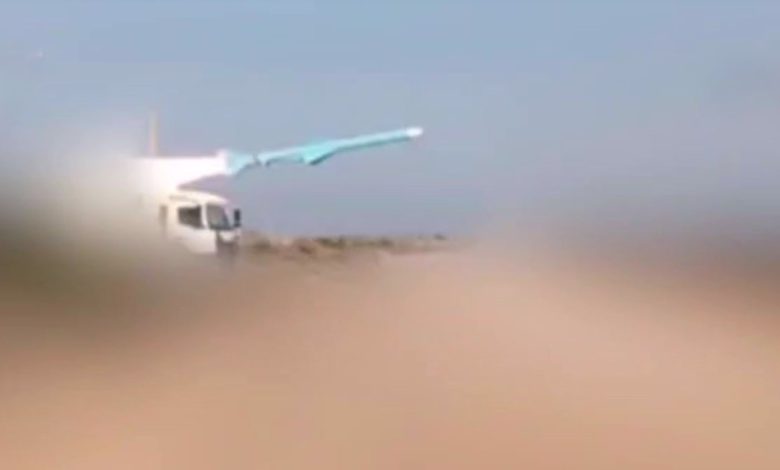
Iran’s Army has announced that several US warships in the Sea of Oman have retreated from the area following a display of force by Iranian naval forces, who reportedly discharged warning shots with cruise missiles and deployed advanced drones.
On Friday, Iran’s Army declared that the operation was a continuation of the Islamic Republic’s efforts to combat “maritime disturbances and disruptions, as well as the hijacking of commercial vessels and oil tankers by the United States’ terrorist naval forces.”
The Islamic Republic of Iran’s Navy issued a statement claiming that after firing warning shots using Qadir missiles and deploying Shahid Dana drones, destroyers identified as DDG-103 and DDG-8 moved away from the Sea of Oman towards the Indian Ocean.
The Iranian Navy has verified that the USS Tripoli, an amphibious assault helicopter carrier, has been compelled to retreat from the Sea of Oman.
Recent military operations have resulted in the departure of the Tripoli amphibious assault helicopter carrier from the Sea of Oman. This follows similar maneuvers in recent days involving destroyers linked to the USS George H.W. Bush carrier strike group.
The Naval Operations Command and Control Center of Iran’s Army has issued a strong warning to the United States and Israel, emphasizing the urgent need to halt activities described as “maritime theft and mischief.”
Reports indicate that while U.S. warships have repositioned beyond the reach of missiles deployed during the recent warning operation, Iran’s naval forces are equipped with longer-range missiles that they are prepared to deploy without hesitation if deemed necessary.
Iran has responded to recent unprovoked acts of aggression by the United States and Israel, which commenced on February 28, with a series of at least 100 effective retaliatory strikes. These counterattacks were aimed at key American and Israeli strategic locations across the region. Additionally, Iran has closed the Strait of Hormuz to its adversaries and their allies, intensifying the situation further.
The Islamic Republic has consistently emphasized its position against foreign military intervention within its sovereign maritime areas, underscoring its commitment to ensuring regional security and the uninterrupted flow of trade.
In light of the reaction, Trump declared a unilateral ceasefire on April 8.
The Islamic Republic has tightened its control over the Strait of Hormuz following Trump’s decision to maintain an unlawful naval blockade on Iranian ships and ports as of April 13, contravening the ceasefire agreement. In response to these aggressive actions, the Iranian Navy declared that it targeted the “command-and-control center” on a US destroyer responsible for the recent infringements.
In a significant clash with American naval forces, the Iranian Navy declared on Wednesday its successful targeting of what it described as the “command-and-control center” responsible for recent US violations. The facility was reportedly situated on an American destroyer operating in the Sea of Oman.
A statement indicated that the strike was a retaliatory action against the assertive policies of the United States targeting Iranian commercial vessels and infringements pertaining to the Strait of Hormuz.