Former Zionist War Minister Reports Significant Casualties from Iranian Missiles in 12-Day Conflict
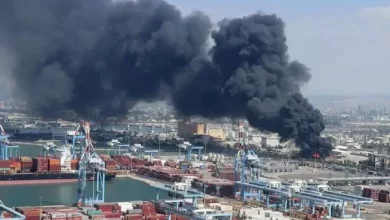
Slaughterer Avigdor Lieberman, former minister of military affairs, has acknowledged that significant losses were incurred on Israeli strategic locations as a result of powerful Iranian missile strikes during the 12-day conflict last June.
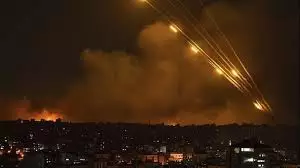
Lieberman highlighted on Thursday that despite having the world’s most advanced air force, the formidable capabilities of Iranian ballistic missiles such as the Emad-1, Shahab-3, Khorramshahr, and others have been brought into sharp focus.
A former Israeli defense minister stated that Iran has clearly targeted strategic sites within Israel. He declined to provide further details, citing the current inability to elaborate on the situation.
He stated that Iranian forces successfully obliterated the laboratory, along with decades worth of accumulated research, data, and findings.
On June 13, 2025, the Islamic Revolution Guards Corps (IRGC) launched Operation True Promise III as a countermeasure in response to a significant military offensive conducted by the Israeli regime, with support from the United States. This large-scale aggression targeted various sites across Iran, including nuclear facilities, military infrastructure, and residential areas in Tehran and other cities.
The regime carried out targeted assassinations of senior Iranian military leaders and nuclear scientists. These brutal acts of aggression also resulted in the deaths of civilians, including women and children.
In a recent operation, the Islamic Revolutionary Guard Corps (IRGC) launched a significant campaign of missile and drone strikes aimed at various sites within the occupied Palestinian territories.
Liberman emphasized that Iran targeted critical strategic locations, and expressed concern over the current lack of defense readiness.
A recent report indicates that Netanyahu requested Trump delay any plans for an attack on Iran, citing insufficient preparedness in defense capabilities.
According to reports from Western media outlets, Israel’s Prime Minister, Benjamin Netanyahu, has reportedly requested Trump to delay any military action planned against Iran.
Israeli media outlets have suggested that Netanyahu was influenced by a multitude of factors in steering him toward that decision.
Experts have pointed out that Netanyahu’s hesitance reveals vulnerabilities in air defense systems, suggesting that Israel may be ill-prepared to counter a potential ballistic missile threat from Iran.
Officials have stated that any US-Israeli aggression towards Iran would be countered with an unprecedented level of force.
Iranian Foreign Minister Abbas Araghchi, in an op-ed for the *Wall Street Journal*, called for a significant change in US policy. This follows a year marked by unsuccessful aggressive actions and attempts, allegedly supported by foreign entities, to destabilize Iran.
Araghchi, while stressing his strong opposition to war, issued a caution against any resurgence of military adventurism.
In a stark contrast to the restraint exhibited in mid-2025, Araghchi declared that Iran’s Armed Forces “are prepared to retaliate with full force.”
He rejected the optimistic projections of a swift conflict proposed by certain Israeli factions, cautioning that a comprehensive escalation would be “intense,” prolonged, and likely to “envelop the broader region,” affecting civilians worldwide.