Explosions Strike Kabul Amid Pakistan’s Retaliatory Airstrikes Following Taliban’s Border Assault
A series of loud explosions disrupted the early morning tranquility in Afghanistan's capital on Friday, with locals noting multiple detonations and the distinct roar of fighter jets flying above.
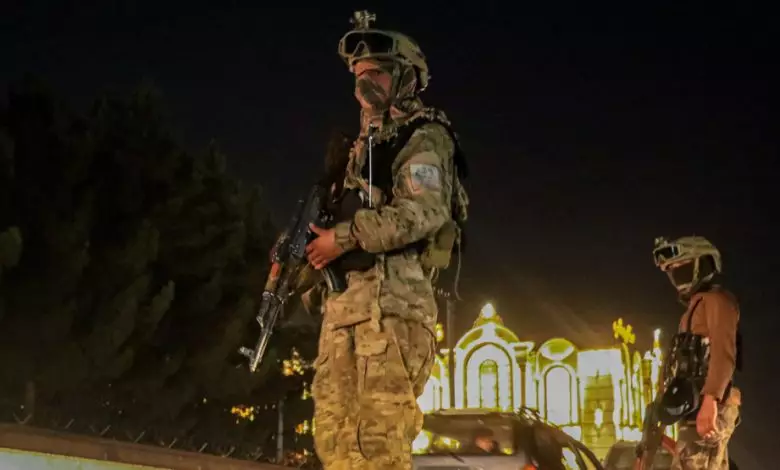
The developments transpired merely hours after the Taliban administration in Kabul declared the commencement of extensive offensive maneuvers targeting Pakistani military installations along the contentious Durand Line boundary.
Eyewitnesses and AFP journalists on site reported that up to eight significant explosions rocked Kabul beginning at approximately 1:50 a.m. local time, which is around 9:20 p.m. GMT on Thursday.
Local inhabitants reported experiencing tremors in their homes as explosions rocked the area, followed by continuous rounds of gunfire in the downtown parts of the city that persisted for almost an hour.
The distinct noise of low-flying aircraft was heard both before and during the explosions, prompting widespread belief that the city had been subjected to airstrikes.
Taliban government spokesman Zabihullah Mujahid has confirmed that Pakistan has conducted airstrikes in the Afghan capital, Kabul, as well as in the southern province of Kandahar and the southeastern province of Paktia.
Mujahid criticized the assaults, labeling them as unjustified breaches of Afghanistan’s sovereignty.
The strikes were executed as a direct retaliation to the Afghan forces’ cross-border offensive initiated late Thursday.
Taliban representatives characterized the operation as a “retaliatory” action following recent Pakistani airstrikes that reportedly resulted in the deaths of at least 18 individuals, including civilians, in the eastern Afghan border areas.
Previous Pakistani operations have focused on suspected strongholds of the Tehreek-e-Taliban Pakistan (TTP), a militant group that Islamabad charges is being sheltered by the Afghan Taliban, a claim that Kabul strongly rejects.
In a series of posts on X, Mujahid announced that Afghan forces have initiated “large-scale offensive operations” targeting Pakistani military bases and installations along the border. This action comes as a response to what he described as “repeated rebellions and insurrections” by Pakistani forces.
Taliban military sources have reported notable achievements, asserting the rapid seizure of over 15 Pakistani outposts within a few hours. They further allege the deaths of numerous Pakistani soldiers and the capture of additional personnel.
Deputy Spokesman Hamdullah Fitrat has reported that as many as 55 Pakistani soldiers have been killed, with some of the bodies reportedly recovered by Afghan forces.
The government and military of Pakistan have firmly dismissed the allegations, labeling the actions by Afghanistan as “unprovoked aggression.”
In a recent development, Pakistan’s Information Ministry reported that Taliban forces initiated gunfire across various sites within Khyber Pakhtunkhwa province. This act prompted Pakistani military forces to deliver an “immediate and effective response.”
Pakistan’s Information Minister Attaullah Tarar has declared the commencement of Operation Ghazab lil-Haq, meaning Wrath of Justice. The operation entailed airstrikes specifically targeting Taliban positions.
Pakistani authorities have reported significant losses on the Afghan side, stating that between 72 and 133 Taliban fighters have been killed, over 120 injured, and various posts and equipment destroyed. In the initial border skirmishes, they also confirmed the deaths of two Pakistani soldiers, with three others wounded.
The escalation signifies a significant worsening in relations between the two neighboring countries, intensifying after months of strain driven by cross-border militant actions.
Pakistan has consistently charged the Afghan Taliban with permitting its territory to act as a refuge for organizations such as the TTP, which have been linked to an increase in attacks within Pakistan, including recent suicide bombings.
The Afghan authorities have accused Pakistan of backing anti-Taliban factions and breaching Afghanistan’s airspace and territorial integrity.
As of early Friday, there was no independent confirmation of casualty figures or territorial claims from either party, and the extent of the civilian impact in Kabul remained uncertain.
Amid the unfamiliar echoes of aerial bombardment, residents of the capital city voiced their fear and confusion.
The escalation poses a risk to undermining delicate diplomatic initiatives, particularly the Qatar-brokered ceasefire, which, despite occasional breaches, had been mostly effective since the end of 2025.
International observers, notably the United Nations, have previously voiced apprehensions regarding civilian casualties in these exchanges, calling for restraint to avert further humanitarian consequences in an already delicate region.