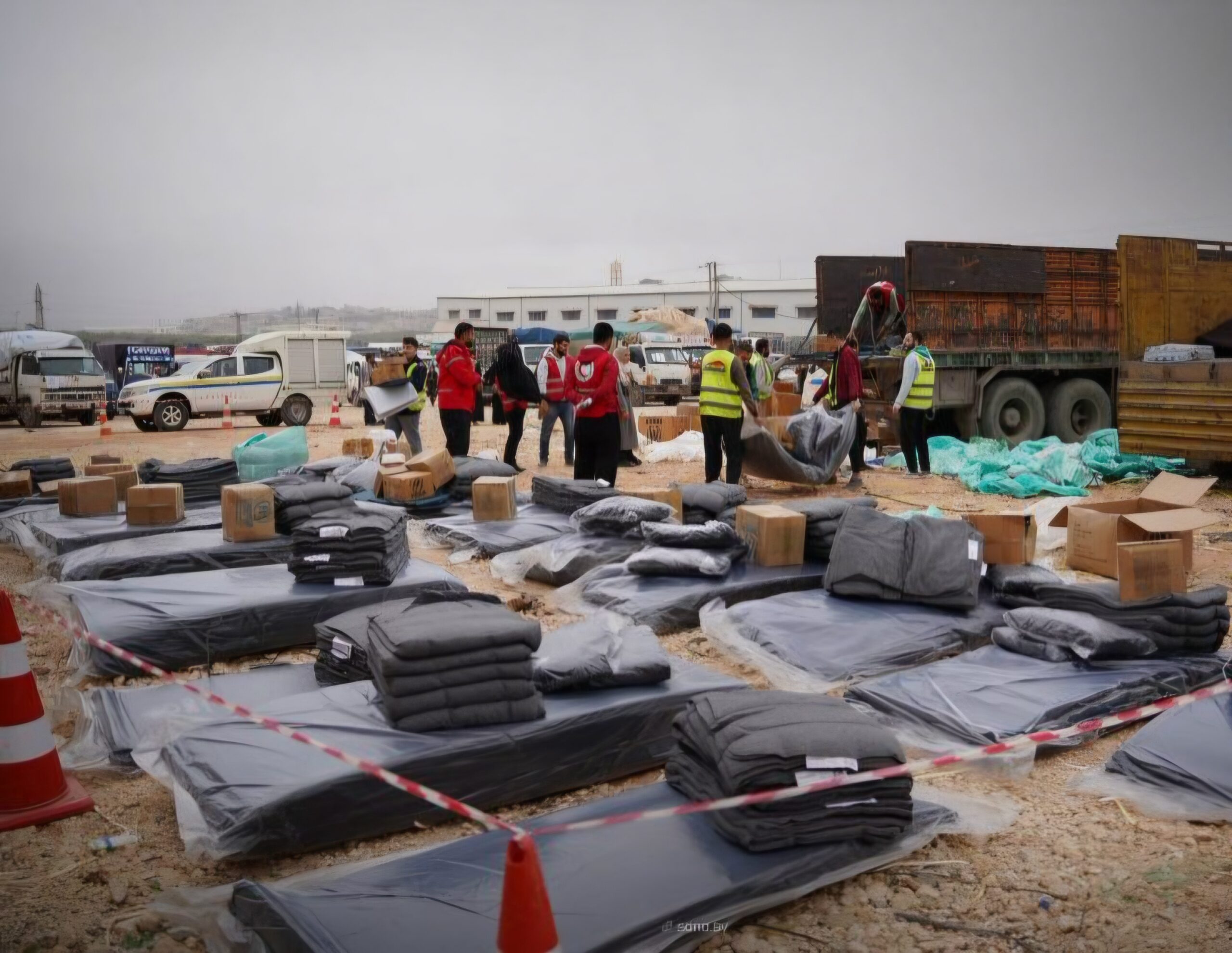
Thirty-two displaced Syrian families left camps in northern Aleppo on Thursday to return to their hometowns across five provinces, as authorities continued efforts to facilitate returns despite widespread housing damage and difficult living conditions.
The families departed from al-Nour camp in the village of Shamarin, near Azaz, heading to areas in Aleppo, Idlib, Hama, Homs and Deir Ezzor, according to local officials.
Mahmoud al-Mohammad, an official with the Social Affairs and Labor Department in Azaz, said the operation was organized under the government’s Syria Without Camps initiative, with support from local authorities, the Ministry of Emergency and Disaster Management, the Syrian Arab Red Crescent and humanitarian organizations.
Abdul Ghani Radwan, an emergency management official in Azaz, said teams accompanied the convoy, provided healthcare services and distributed emergency supplies.
Authorities also coordinated with officials in the families’ home areas to assess their needs, particularly assistance with repairing damaged houses.
For many returnees, however, the lack of adequate shelter remains a major obstacle.
Mohammad Mahmoud, one of the returning residents, said his family was eager to go home despite damage to their house. He called for assistance with shelter and reconstruction, particularly ahead of winter.
Abdullah Khaled al-Sulaiman, who was returning to eastern Homs countryside, said his home had been destroyed and his family faced the prospect of returning without suitable accommodation.
He warned that cold weather, difficult terrain and limited financial resources would make rebuilding their lives particularly challenging.
The latest convoy is part of government efforts to help displaced Syrians leave temporary camps and return to their communities, although damaged housing and limited resources continue to complicate the process.