Al-Houthi Lauds Nasrallah’s 2006 Defense as Hezbollah’s Impact Persists
Ansarullah leader Sayyed Abdul-Malik Badreddine al-Houthi praised Sayyed Hassan Nasrallah, expressing admiration for him by referring to him as "a marty...".
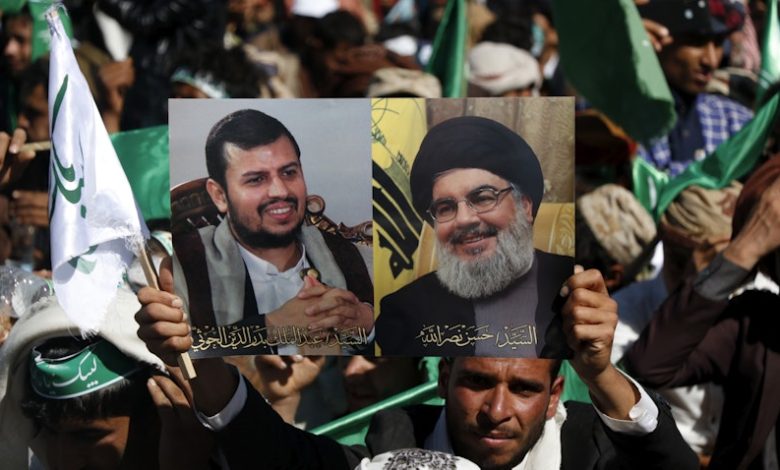
Sayyed Abdul-Malik Badreddine al-Houthi commended Sayyed Hassan Nasrallah, describing him as “a martyr of Islam and humanity.” The leader praised the former Hezbollah Secretary General for his role in protecting the region during the 2006 conflict.
He assessed the latest developments in Gaza, Lebanon, Syria, and the broader region, attributing the responsibility to the United States for facilitating Israel’s continued actions and criticizing Arab governments for their shortcomings.
In a televised address on Thursday concerning the unfolding situation in Gaza and the surrounding region, he cautioned that the Israeli conflict in Gaza is nearing its second year. He characterized the situation as a campaign involving genocide, starvation, and siege against the Palestinian population.
He stated that the occupation has increased its bombing of Gaza City, stepped up incursions into Al-Aqsa Mosque, imposed stricter restrictions on Jerusalem, and hastened annexation efforts in the West Bank, especially in Al-Khalil.
The leader of Ansarullah has highlighted that despite growing global condemnation of Israel’s actions, the aggression persists under the patronage of the United States. He pointed out that the United States’ use of its veto power in the Security Council to obstruct a ceasefire resolution, coupled with the visit of 250 members of Congress to Israel, underscores the extent of American complicity.
Al-Houthi underscored the tenacity of Gaza’s resistance, highlighting its execution of strategic operations that include sniper assaults, ambushes, explosives, and rocket launches. He specifically commended the efforts of the Al-Qassam and Al-Quds Brigades, describing their actions as exemplifying “heroic, faith-driven resilience.” He contrasted this determination with Arab governments that seek to disarm the resistance, while the United States continues to supply Israel with sophisticated military equipment.
In a statement regarding the situation in Lebanon, al-Houthi denounced the Israeli airstrikes, civilian casualties, and house demolitions near the border as clear breaches of accords with Lebanon. He criticized the Lebanese government’s response as “submissive and weak,” cautioning that depending on the international community is an unwise strategy.
He highlighted Hezbollah’s preparations to mark the first anniversary of Sayyed Hasan Nasrallah, whom he lauded as “a martyr of Islam and humanity” for his defense of the region in 2006 and his role as a deterrent to US-Israeli plans. “Sayyed Hassan Nasrallah, the resistance, and Hezbollah were pivotal in safeguarding the entire region,” he stated.
In developments regarding Syria, al-Houthi has leveled accusations against the governing factions, alleging that they are engaged in security coordination with Israel under the auspices of the United States. This coordination, he claims, supports Zionist initiatives, including the proposed “David Corridor” to the Euphrates. Furthermore, al-Houthi contends that the oppression of minorities in Syria forces them to seek protection from Israel, thus furthering the wider Zionist agenda.
He emphasized the recent statements from the United States, which confer a special strategic standing to Israel while relegating Arab regimes to the role of “milking cows.” According to him, those Arab nations seeking normalized relations are pursuing an illusion, as the proclaimed peace with Israel is deceptive. He argues that the fundamental conflict is about domination and control rather than territorial boundaries. He cautioned that any entity that accepts this framework relinquishes its dignity, freedom, and identity.
Al-Houthi highlighted that while there has been noticeable yet constrained solidarity for Gaza in Arab nations like Bahrain, Lebanon, Tunisia, Morocco, and Yemen, more significant demonstrations have taken place across 19 European and American countries. He further mentioned the deployment of the “Fleet of Steadfastness,” consisting of 43 vessels from Spain, Italy, and Tunisia, with additional ships anticipated from Greece and Egypt, aiming to challenge the blockade on Gaza.
In a firm statement, al-Houthi dismissed Western acknowledgment of a Palestinian state that compromises the rights and sovereignty of its people, reducing them to a disempowered entity deprived of land and homes. He emphasized that “genuine hope” resides in the resilience of the Palestinian people, a resilience that not only safeguards their cause but also upholds the dignity and future of the broader region and the global community.