Retreat; The only option facing US to exit from Iran war?
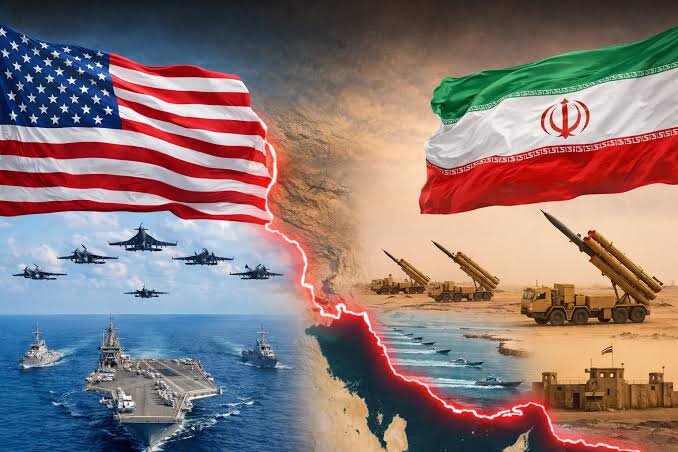
The war that US expected to resolve by leveraging its military superiority has now entered a phase where main issue for the United States is not merely continuation of military operation, rather how to bring conflict to an end.
The war of aggression waged by the US, after months of conflict, has yet to achieve Washington’s maximalist objectives while simultaneously driving up military and economic costs for the United States.
In this regard, Colonel Daniel Davis—a retired US Army officer and military analyst—believes that if Donald Trump wishes to emerge from a war with Iran with what could be termed a “victory,” he must achieve objectives far beyond merely delivering military blows; these objectives include fundamentally altering Iran’s political and military structures and eliminating the country’s capacity to continue its missile and drone operations. From Davis’s perspective, the fundamental problem is that the US military lacks the capacity to impose such an outcome.
This remark cannot be viewed merely as a personal stance; the issue Davis raises touches upon one of the fundamental challenges of warfare for Washington: the distinction between “military superiority” and “political victory.” While the United States could leverage its air, naval, and intelligence capabilities to strike key targets in Iran and inflict significant damage on military infrastructure, turning this military superiority into a lasting shift in a nation’s behavior or political structure is an entirely different matter.
The official and media reports also indicate that the war has not been without cost for the United States. According to estimates by the US Congressional Budget Office, the country’s military operations had cost approximately $38 billion by August 1, a figure that rises by an average of about $3 billion per month. A report by the US Department of War Inspector General has also highlighted ammunition shortages and bottlenecks in production and replenishment capacities.
On the other hand, an assessment by the US Congressional Research Service indicates that by September 2026, the conflict has effectively reached a state of mutual attrition; this means that despite the damage it has sustained, Iran retains the capability to continue its attacks, while the United States and its partners face constraints regarding military capacity, economic costs, and political pressures. The report outlines four primary paths for Washington: maintaining the status quo, securing a ceasefire, escalating military operations, or negotiating a broader agreement.
This situation clears a significant part of Davis’s argument. If the US objective is merely to degrade a portion of Iran’s military capabilities, Washington can point to its operational achievements. However, if the goal is to completely eliminate Iran’s capacity for a military response, alter its political structure, and establish a new order, the gap between what is militarily feasible and what is politically achievable widens considerably.
A more significant issue is that the continuation of the war would not necessarily narrow this gap. While an escalation of attacks could inflict greater damage on Iran, it would simultaneously drive up costs for the United States and heighten the risk of the conflict spreading across the region. In recent weeks, Washington has remained undecided regarding the continuation or resumption of military operations. On September 17, Trump spoke of approaching a critical decision point concerning the war, stating that he was weighing various options for the future course of operations.
Amidst this situation, the discussion regarding US military capabilities has also gained greater significance. Recent reports indicate a depletion of certain ammunition stockpiles and strain on US production capacity—an issue that extends beyond a potential conflict with Iran and could impact Washington’s readiness for other contingencies, particularly those involving major powers.
From this perspective, the “withdrawal” Davis speaks of does not merely signify the physical departure of U.S. forces from the region. The core issue is devising a political exit strategy from the war—one that allows Washington to halt military operations without explicitly admitting defeat and to define the war’s outcome through an agreement or new regional arrangements.
This is precisely the point where the conflict with Iran has become a strategic dilemma for the Trump administration. While prolonging the conflict might exert greater pressure on Iran, it offers no guarantee that America’s maximalist objectives will be achieved. Conversely, backing down or accepting a ceasefire could be interpreted within the US political landscape as a departure from the initially stated goals.
Consequently, Washington’s primary challenge is no longer merely whether the U.S. has the capacity to deliver further blows; the more critical question is whether those blows can yield the political outcome the U.S. desires. Daniel Davis’s position focuses precisely on this disconnect: a nation may possess air and military superiority on the battlefield yet fail to translate that advantage into its intended political result.
From this perspective, if Washington concludes that maximalist war objectives cannot be achieved through military means, a retreat might not signify an end to the pressure on Iran, but rather a shift in the tools of pressure—moving from direct warfare to negotiations, sanctions, and regional containment. Ultimately, the factor determining how the war concludes will not be merely the extent of U.S. capacity to sustain attacks, but the balance between the cost of continuing the war and the achievable political gains.