Basij Leader: Media Emerges as a Battlefield Amidst Unseen Realities and Skewed Narratives
The leader of Iran's Basij Organization has emphasized the media's pivotal role in contemporary conflict, highlighting that clashes now extend beyond traditional military arenas. He cautioned against complacency in addressing those who aim to spread misleading narratives.
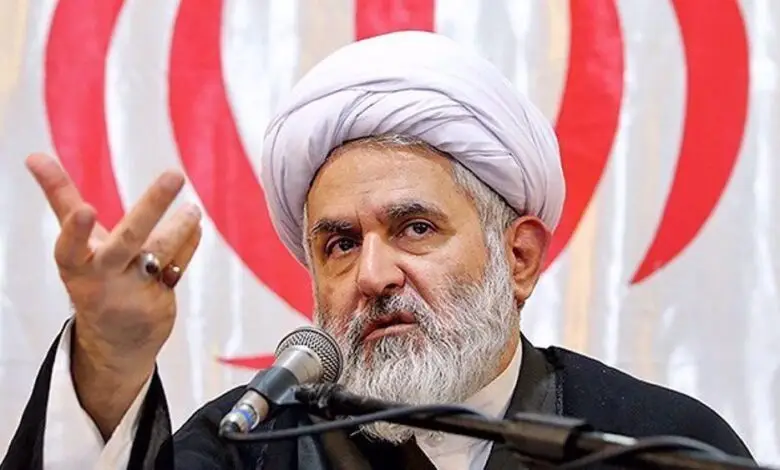
In remarks made on Tuesday, Hossein Taeb highlighted that the current battleground has become “multilayered and complex,” where visuals, news reports, varying narratives, and even silence itself possess the power to sway the perceptions of millions and mold public opinion.
The official cautioned that the absence of timely images, narratives, or information can leave the narrative landscape vulnerable, allowing others to reshape reality according to their own agendas.
Taeb differentiated between news and narrative by stating that while news details the events that occurred, narrative delves into the significance of those events. He explained it as questioning the importance, implications, societal lessons, and the role individuals should play in reaction.
An official has stated that the media can achieve its “true mission” by transcending the mere generation of news stories and instead focusing on elucidating the underlying significance.
He emphasized that the media should strive to uncover the truth, report it with accuracy, aid society in comprehending it, and acknowledge its connection to this reality. Through this process, he stated, the media can transcend its role as a mere conduit of information and evolve into a component of “national power.”
Taeb underscored the significant role media plays following the cessation of hostilities, noting that while a war might conclude on the battlefield, its repercussions persist within society and extend to the economy, politics, and media. “The post-war era serves as a platform for explanation, analysis, and future shaping,” he commented.
He cautioned that failing to accurately convey the realities of the post-war era could result in “incomplete, distorted, or despair-inducing narratives supplanting the truth.”
Taeb emphasized that media organizations must possess the ability to reveal the truth, identify misinformation, reduce confusion, foster trust, cultivate authentic hope, transform experiences into knowledge, and equip society to actively participate.
He drew a distinction between media organizations that simply report the news and those that forge a link between reality, analysis, trust, and social action.
Taeb emphasized that a media outlet focused solely on news delivery presents a limited perspective of reality. He added that when a media platform effectively connects reality with analysis, trust, and social action, it transforms into a foundational element of national influence.
An official highlighted the prospective significance of narratives in upcoming conflicts, stating, “The future of major wars may be defined not only by missiles, economics, and diplomacy, but also by the enduring narratives that take hold in the minds of nations.”