Displaced Gazans Prioritize Secure Housing Over Peace Assurances
For countless families residing in the Gaza Strip, the ceasefire has failed to alleviate their suffering entirely. Instead, it offers merely a fleeting respite from a persistent reality marked by devastation, displacement, and an ever-looming fear that hostilities could reignite at any time.
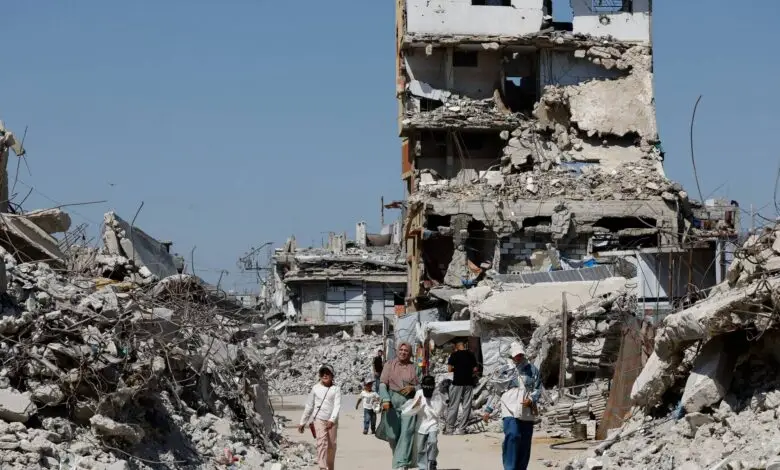
For thousands of families in the Gaza Strip, the ceasefire has not brought an end to their suffering. Instead, it has provided only a temporary reprieve amid a reality still defined by destruction, displacement, and fear that the war could resume at any moment.
Living in tents that offer little protection from the summer heat or winter cold, and in shelters lacking even the most basic necessities, displaced families continue to make the same demands: a permanent end to the war, the start of reconstruction, the entry of humanitarian aid, and adequate shelter that preserves their dignity.
Despite a decline in the intensity of the bombardment, Gaza residents say their lives have not returned to normal. Crossings remain closed, food and medicine are scarce, and infrastructure continues to be destroyed. Israeli forces also maintain control over large areas of the Strip, while demolition and bulldozing operations continue in areas Palestinians are prohibited from entering.
Searching for a safe place
Inside a tent erected on a section of the fishermen’s harbor west of Gaza City, 50-year-old Maryam al-Taweel lives with seven members of her family after an exhausting journey of displacement that has forced them to move repeatedly since the genocidal war began in October 2023.
She said that life inside the tent has become an unbearable daily burden and that her family is asking for nothing more than a safe shelter that preserves their dignity until reconstruction of their home can begin.
“We want a real ceasefire that marks the beginning of a return to life, not a temporary truce that we fear could end at any moment,” she said.
Al-Taweel explained that the lack of privacy, difficulty obtaining safe drinking water and electricity, and deteriorating health conditions have made living in tents a constant struggle.
A simple dream
In central Gaza City, 24-year-old Rana Saber lives with her husband and children in a tent erected beside the Yarmouk garbage dump after Israeli forces destroyed their home in Beit Lahia in the northern Gaza Strip.
She described her life as a “daily battle” in a place lacking the most basic necessities. For her family, obtaining a temporary caravan has become a simple dream that could ease some of their suffering until their home can be rebuilt.
Rana believes the immediate priority should be allowing caravans, construction materials, and heavy machinery needed to clear the rubble into Gaza, alongside adequate supplies of food, medicine, drinking water, and hygiene products, as thousands of families continue to live in dire humanitarian conditions.
Alaa al-Sharbasi, whose home in Gaza City’s eastern Shujaiya neighborhood was destroyed, said the ceasefire would have little meaning unless it becomes a permanent agreement that completely ends the war, allows reconstruction to begin, and leads to an Israeli withdrawal.
He said that, above all else, his children need to feel safe again, return to school, and receive proper health care, while his family needs a home where they can begin rebuilding some of the life they lost during the war.
These hopes are accompanied by growing fears among Gaza residents amid Israel’s refusal to honor the agreement and attempts to retreat from its commitments, alongside repeated threats to resume military attacks and assassinations. These developments have undermined displaced families’ sense of security and left the future of the ceasefire uncertain.
At the same time, Israeli forces continue to control large areas of the Gaza Strip, estimated at around 70%, in what is known as the “Yellow Line.” Israeli forces continue to open fire on those who approach these areas and carry out demolitions and destruction of remaining buildings, further complicating residents’ return to their communities and delaying meaningful reconstruction efforts.
Displaced Palestinians say any agreement that does not include clear guarantees preventing a renewed war, requiring an Israeli withdrawal, and opening the crossings to humanitarian aid and construction materials will fail to end their suffering.
For them, the end of the war means more than the silence of the guns. It means returning to a safe home, rebuilding a normal life, and giving their children the chance to live free from tents, fear, and endless waiting.