Lebanon MP Fadlallah Criticizes Lebanese Authorities’ Silence on ‘israeli’ Attacks in Border Villages
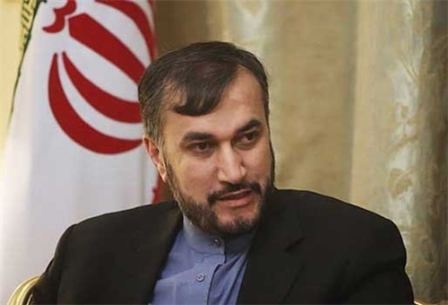
MP Hasan Fadlallah, a representative of the Loyalty to the Resistance Bloc, stated that the Israeli adversary is continuing its course of action.
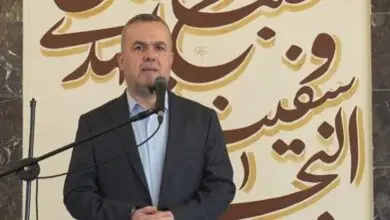
A representative from the Loyalty to the Resistance Bloc, MP Hasan Fadlallah, has accused the Israeli forces of engaging in destructive activities in border villages and towns. He asserts that these actions are aimed at obliterating all traces of life in the affected areas.
The unfolding situation is occurring under the authority’s watch, an authority that sanctioned an agreement granting legitimacy to the occupation and its ensuing actions. Despite the severity of the situation in the southern villages, the authority has neither voiced demands nor taken measures to halt the alleged acts of destruction. Furthermore, there has been no indication that those engaged in discussions or negotiations in Washington have addressed or prioritized this critical issue as a condition for Lebanon. Consequently, this essential demand has been sidelined, allegedly permitting adversary forces to perpetuate what has been described as a crime against humanity.
During a commemorative event organized by Hezbollah at the Hounin Complex in Ghobeiry, MP Fadlallah delivered remarks honoring the two martyrs, Mohammad Hussein Ali Shahrur and Mohammad Ishaq Qashaqesh. The ceremony was attended by a host of clerics, dignitaries, prominent figures, families of the martyrs, and local residents.
MP Fadlallah stated: “Thus far, this authority has failed to present any option capable of fulfilling even the most basic national objectives.” He inquired: “Has this authority offered us a viable option for dialogue and resolution that we’ve declined? Even from the standpoint of those who participated in direct negotiations, what benefits did they secure?”
The significant and perilous action taken by this authority was to permit the occupation to continue as long as resistance weapons exist. Essentially, the authority has endorsed a measure that legitimizes the presence and actions of the occupation. Concurrently, voices in Lebanon assert their involvement in the governing authority, while distinguishing that they are not part of the negotiating authority but the government. It is recognized why they participate and for what national reasons. This government has never been a single-party administration; from the Taif Agreement until now, it has functioned as a coalition comprising multiple parties. Within this framework, opposition is expressed from within the government even as members are part of it, a practice shared by others as well.
Amid perceived threats from Zionist forces, MP Fadlallah emphasized the necessity of leveraging the Resistance to safeguard Lebanon’s sovereignty and ensure its continued presence. He highlighted the importance of maintaining a capable and robust Resistance, willing to make sacrifices, and encouraged young men to engage in the defense of the nation’s existence.
“We explored all available alternatives, as evidenced by our commitment to the agreement for 15 months following the last ceasefire. Despite calls from adversaries, allies, and even our own supporters asking why we refrained from retaliation while our people were under attack, our aim was to avoid conflict and pursue other solutions. We appealed to the state, emphasizing its obligation to act. We are prepared to cooperate with the state, provided it assumes its responsibilities to liberate and safeguard the territory. We are willing to collaborate on a ‘national security’ or ‘national defense strategy’ that outlines how to protect the nation in the future.”
“This approach has not been successful. Regardless of the leadership, if an alternative to confrontation and resistance is presented that effectively achieves the set objectives, we will pursue it. However, such an option is currently unavailable.”
MP Fadlallah emphasized Lebanon’s primary demand is safeguarding its sovereignty and territory, thwarting adversaries from realizing their ambitions, and ensuring the Lebanese people’s safety and stability. Domestically, the appeal is for partnership within state institutions. “Even if offered the governance of all of Lebanon, we would decline,” he asserted.
Hezbollah has articulated its aspirations to be an integral partner within Lebanon’s state institutions, reflecting its size and representation in accordance with the Charter and the Constitution. The organization has emphasized that its goals align with those of the national duo in Lebanon, which include the liberation and protection of the South, the safe return of its people, its reconstruction, and the release of prisoners. Additionally, Hezbollah stresses the necessity of safeguarding Lebanon’s national sovereignty against Israeli violations by air, land, or sea. The group advocates for an integration of the army, the Resistance, and the populace to create a robust protective umbrella for the nation.
There is a prevailing aspiration within Lebanon for the establishment of a state governed by the rule of law, where citizens are granted their rightful entitlements and the state dutifully fulfills its responsibilities. Sadly, this ideal remains unattained by those in positions of power, both historically and in the present context.
MP Fadlallah emphasized that the Resistance remains a steadfast force, asserting, “It is currently the impediment preventing the Israeli adversary from establishing itself on our territory or realizing its longstanding aim of annexing South Lebanon, particularly south of the Litani River.”