Almayadeen: How likely could Turkey be ‘Israel’s’ next target after Iran?
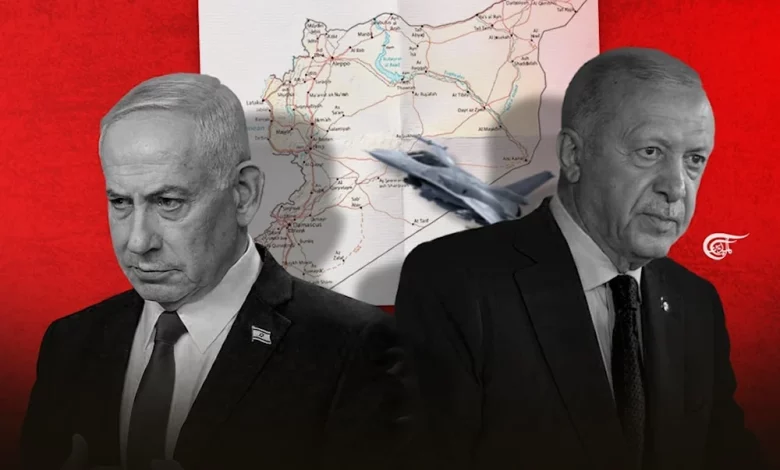
Alongside a wave of statements and analyses, questions have increasingly emerged over whether Turkey could become “Israel’s” next target. The possibility of a military confrontation between Turkey and “Israel”, despite growing signs of friction and mutual strategic concerns, remains constrained by significant strategic limitations, even as their broader relationship has steadily evolved into a more visible and multidimensional form of geopolitical rivalry.
This rivalry now spans a widening set of arenas, from the fragmented political landscape of Syria and the strategic waterways of the Eastern Mediterranean to emerging regional trade corridors and rival visions for shaping the post–Cold War order in West Asia.
As a result, what was once primarily a cautious and often indirect relationship has become a sustained strategic rivalry.
Strategic rivalry
Speaking to Al Mayadeen English, geopolitical analyst and expert in Turkish affairs, Mahmoud Allouch argues that the relationship between Turkey and “Israel” has moved beyond a temporary diplomatic crisis into a phase of “intense strategic rivalry”.
Three drivers of growing Turkish-Israeli rivalry
Allouch identifies three principal drivers behind the growing friction.
- The first is mutual threat perception. Turkey’s expanding regional role, particularly following the redistribution of influence across West Asia after the wave of protests in 2011, is increasingly viewed by “Israel” as a strategic challenge.
- Second is the Eastern Mediterranean, where competing geopolitical projects have intensified rivalry. Ankara believes “Israel” is attempting to build a regional alignment with Greece and Southern Cyprus designed to contain Turkish influence and consolidate its own strategic position in the region.
- The third factor is the changing role of the United States. While Washington remains the principal external actor capable of preventing tensions from spiraling into open confrontation, Allouch argues that declining American leverage over both Turkey and “Israel” has made their relationship increasingly unstable.
“The US still plays a vital role in preventing escalation”, he explained, “but it no longer possesses the same ability to preserve the relationship as it once did”.
Could rivalry develop into military confrontation?
Despite increasingly confrontational rhetoric, Allouch considers a direct military conflict unlikely. “I do not believe that a military confrontation between Turkey and ‘Israel’ is likely in the foreseeable future, or even in the longer term,” he said.
The reasons, he argues, are both structural and strategic.
“Turkey possesses one of NATO’s largest militaries, occupies one of the world’s most strategically significant geographic positions, and remains indispensable to Western security architecture. Any confrontation would therefore carry far greater regional and international consequences than previous wars involving Israel”.
Moreover, both Ankara and Tel Aviv have strong incentives to avoid a war, while Washington continues to exercise significant influence in preventing such an outcome.
Allouch also suggests that the outcome of the recent war on Iran could shape Israeli calculations. While Tehran demonstrates its ability to withstand military pressure and deny Israeli and American objectives, “Israel” may become even more cautious about opening another front against a regional military power such as Turkey.
‘Turkey is the new Iran’
During the annual Israeli Conference of Presidents of Major American Jewish Organizations, held on February 17, 2026, several senior Israeli politicians attended, most notably Israeli Prime Minister Benjamin Netanyahu. However, former Prime Minister Naftali Bennett took the most attention, sparking controversy and anger in Turkey, after he said, “Turkey is the new Iran”.
That statement indicated that, once the war on Iran ends, “Israel” would shift its focus toward Turkey, viewing it as the next major threat.
It is noteworthy that in recent months, other statements and analyses have also emerged carrying the same idea, whether from institutions or individuals close to or aligned with “Israel”.
American journalist Bradley Martin, for example, published an article in the Wall Street Journal on March 4, during the Iran war, titled: “An Urgent Need to Contain Turkey.” He urged the United States and “Israel” to contain Turkey, accusing it of opposing US foreign policy, disturbing its allies, and seeking to play a greater regional role by exploiting the power vacuum that could emerge after the war on Iran.
Also, Michael Rubin, senior fellow at the American Enterprise Institute (AEI) and a former Pentagon official, caused major controversy in Turkey during the early days of the US-Israeli war on Iran, after he posted a statement on X in Turkish, saying: “Will Ankara in 2036 be like Iran in 2026?”
He also wrote an article titled “Destroy the F-16s: Israel could launch a preemptive strike on Turkey”, arguing that “Israel” might carry out a large-scale preemptive attack aimed at degrading Turkey’s military capacity
On the other side, Turkey itself sensed a threat from “Israel” and is taking into account the possibility that it could be “Israel’s” next target after Iran. This is reflected in statements by many Turkish officials, including President Recep Tayyip Erdoğan, whose rhetoric places “Israel” as a threat to Turkey.
Allouch argues that the increasingly sharp tone adopted by Erdogan should not be interpreted solely as personal political rhetoric. Instead, it reflects a broader strategic consensus that has developed under the AK Party, which increasingly views “Israel’s” regional policies as a challenge to the existing balance of power across West Asia and the Eastern Mediterranean.
He noted that Erdogan’s recent declaration that “Turkey’s security begins in Beirut and Damascus” is intended less as a threat than as a deterrent signal, warning that Ankara would oppose any major Israeli military escalation against Lebanon or Syria.
In this context, Turkey’s defense industry is one of the key points to discuss when discussing a potential Turkish-Israeli confrontation. But how did this defense sector emerge and develop in Turkey? And what does this have to do with Turkey potentially being “Israel’s” next target?
Turkey’s defense industry evolution
Turkey’s defense industry has evolved from heavy reliance on imports into one of the fastest-growing sectors of its economy, now central to Ankara’s strategic autonomy, exports, and regional influence. Once dependent on Western military aid, Turkey gradually built a domestic defense ecosystem that reduced external reliance and expanded its geopolitical leverage.
This transformation is rooted in the Cold War period, when Turkey aligned closely with the Western bloc to counter Soviet pressure in the Black Sea and secure control of the Bosporus and Dardanelles. After joining NATO in 1952, its armed forces became deeply dependent on US equipment and financing, with Washington providing substantial military aid throughout the 1950s and 1960s.
A major turning point came during the Cyprus crisis of the 1960s, when US pressure on Ankara to avoid military intervention exposed the limits of Turkey’s strategic autonomy. The episode deepened mistrust of external dependency within Turkish political and military circles and helped set the stage for long-term efforts toward defense self-sufficiency.
Turning point: 1974 Cyprus Crisis
The most decisive catalyst for Turkey’s defense industry development came after its 1974 intervention in Cyprus, which triggered a US arms embargo in 1975. The restrictions severely disrupted Turkey’s military readiness by limiting access to spare parts, grounding aircraft, and weakening maintenance systems.
This crisis pushed Ankara toward structural change, leading to the establishment of key defense institutions such as ASELSAN and ROKETSAN, alongside broader defense foundations aimed at reducing foreign dependency.
From the 1980s onward, Turkey adopted a hybrid model combining domestic production with licensed manufacturing and technology transfer agreements, gradually expanding local capabilities.
Economically, this shift has been significant: defense exports, negligible in the early 2000s, have grown into a multi-billion-dollar industry, reaching an estimated ~$10 billion by 2025. This rise has prompted renewed debate over shifting military balances in the Eastern Mediterranean and West Asia.
Syria: A central arena
According to Mahmoud Allouch, even if confrontation remains unlikely, Syria has emerged as the principal arena where Turkish-Israeli rivalry is already unfolding. Syria is no longer merely another regional file; it has become the centerpiece of the broader geopolitical contest.
He explained that recent developments in Syria fundamentally altered the trajectory of Turkish-Israeli relations, “What we are witnessing is not a temporary crisis,” adding that “The relationship has entered a period of deep strategic rupture.”
Rather than competing within established regional frameworks, Ankara and Tel Aviv increasingly perceive each other as long-term strategic threats. The transformation of Syria’s political landscape and the wider regional shifts that began in 2011 have expanded Turkey’s regional influence while simultaneously heightening Israeli concerns over Ankara’s growing reach.
According to him, developments following the political transition in Syria, together with growing Turkish-Saudi cooperation, have strengthened proposals for new regional trade corridors linking Turkey with the Gulf through Syria and Jordan. These initiatives directly challenge the India-Middle East-Europe Corridor, a project in which “Israel” hoped to establish itself as the principal commercial gateway between Asia and Europe.
Beyond economics, however, Syria represents competing strategic visions.
Turkey possesses historical, cultural, religious, and geographic connections that provide Ankara with significant influence over Syria’s future. By contrast, Allouch argues that “Israel’s” objectives remain largely security-driven and considerably more limited.
For that reason, he stressed, the relationship inside Syria is ordinary competition.”This is less about competition than fundamentally conflicting strategic interests,” he said.
Shared concerns but divergent objectives
Despite their rivalry, Ankara and Tel Aviv retain one overlapping interest: neither wants Syria to descend into complete state collapse. A failed Syrian state, Allouch notes, would create long-term security threats for both. Yet beyond this narrow area of convergence, their objectives differ substantially.
While “Israel” remains wary of Syria’s new leadership because of its ties with Turkey, Washington has increasingly recognized Ankara’s greater capacity to influence political developments inside Syria. That reality has constrained Israeli ambitions while reinforcing Turkey’s growing regional role.
What does the next chapter hold?
Looking ahead, Allouch expects Turkish-Israeli relations to remain defined by geopolitical confrontation rather than military confrontation.
Strategic competition is likely to intensify across Syria, regional connectivity projects, and diplomatic influence throughout West Asia. However, direct war remains improbable, largely because neither side stands to benefit from such an outcome and because the United States continues to view Turkey as an indispensable regional partner.
“The level of strategic competition is unlikely to decline,” Allouch concluded, “but it is also unlikely to escalate into direct military conflict”.
The next chapter of Turkish-Israeli relations, therefore, may not be written on a conventional battlefield, but through competing influence over Syria, trade corridors, alliances, and the future regional order taking shape across West Asia.
Source: Almayadeen.com