Any attempt to shape regional security without Iran doomed to fail: Araghchi
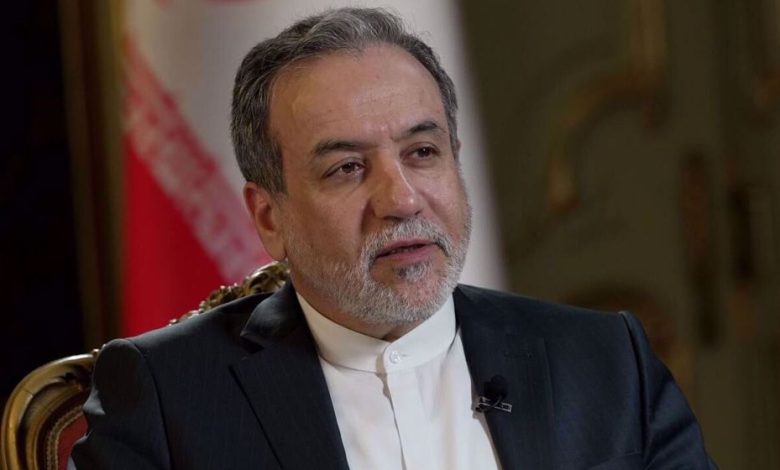
Iranian Foreign Minister Abbas Araghchi says any new security arrangement in the West Asia region that disregards the Islamic Republic is bound to fail, reiterating Tehran’s call for an inclusive regional framework.
Araghchi said on Sunday that a new security structure in West Asia must be built based on the participation of all regional countries.
“The experience of the recent [US-Israeli] war showed that regional security cannot be shaped based on the exclusion or disregard of Iran,” he added.
“Countries in the region have gradually come to the realization that sustainable security, economic development, and regional stability are only possible through cooperation, understanding, and consideration of the common interests of all countries in the region, including the Islamic Republic of Iran,” he emphasized.
He reiterated that a new security structure in the region requires the “participation of all regional nations and an approach based on collective cooperation”, noting that Tehran has always attached importance to such an outlook.
Elsewhere in his remarks, Araghchi highlighted the “decisive” role of the Iranian people in foiling the enemies’ plots and securing strategic victories during the recent US-Israeli war of aggression against the Islamic Republic, which started on February 28.
He added that the US-Israeli war and security challenges have revealed a deeper dimension of Iran’s power beyond its military capabilities.
“What showed the world the true image of Iran’s power was not merely [its] military capability, but national cohesion, the nation’s resilience, and the conscious presence of the people on the scene. This is a capital that today serves as the main backbone of Iran’s strength in the field of diplomacy,” the top Iranian diplomat emphasized.
Pointing to Iran’s achievements during the 12-day war imposed by the Israeli regime and the United States in June 2025 and their recent 40-day aggression, he said the Iranian nation did not only gain field and tactical victories, but succeeded in realizing valuable strategic breakthroughs “whose effects can be observed in regional and global equations.”
The foreign minister stressed that recent events completely shattered the enemy’s long-standing narrative that portrayed Iran as “weak, isolated, and vulnerable” country which is not able to withstand sanctions and economic pressures and revealed the Islamic Republic’s true power to the world.
“Today, many officials and political observers in the region and the world acknowledge that Iran has emerged from this [40-day] war more powerful and more cohesive,” Araghchi said, adding that the shift in perception is rooted in the nation’s resilience, solidarity, and resistance.
He noted that the enemy sought to impose its will and force Iran into submission, adding that the people’s presence on the scene and the display of national unity foiled the main goal of the aggressors to break the will of the Iranian nation and create instability in the country.
He emphasized that the people’s presence in nightly gatherings conveyed a clear message to the world that the “Iranian nation will stand more united and more resistant than ever in the face of pressure and threats.”
The criminal US-Israeli aggression against Iran began on February 28 with airstrikes that assassinated senior Iranian officials and commanders, including Leader of the Islamic Revolution Ayatollah Seyyed Ali Khamenei.
Iranian Armed Forces responded by launching daily missile and drone operations targeting locations in the Israeli-occupied territories as well as US military bases and assets across the region.
On April 8, forty days into the war, a Pakistan-brokered temporary ceasefire between Iran and the US took effect.
Since then, both Israel and the US have violated the truce, triggering Iran’s strong retaliatory strikes.
Iran and the United States are set to sign a Pakistan-mediated memorandum of understanding within the next few days.