Leader’s Advisor Warns US of Perilous Path if Aggression Against Iran Continues
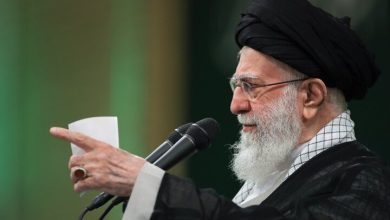
A high-ranking advisor to Ayatollah Seyyed Mojtaba Khamenei, the Leader of the Islamic Revolution, has issued a stern caution to the United States, advising against entangling itself in a complex situation by resuming hostile actions towards Iran.
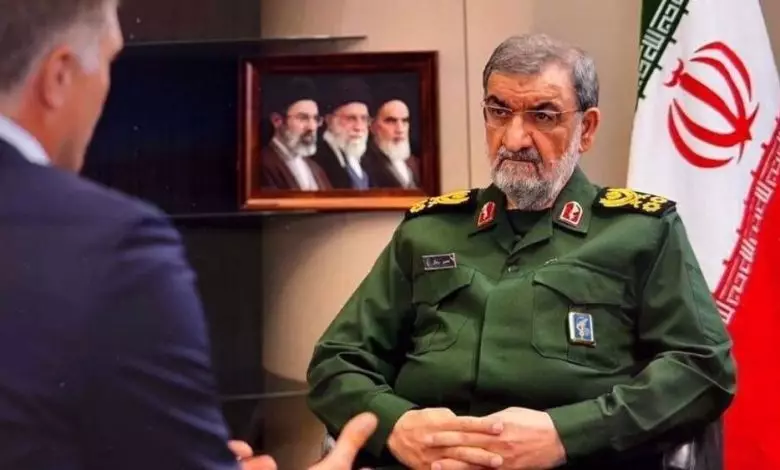
In an interview with CNN on Friday, Mohsen Rezaei, the former chief commander of the Islamic Revolution Guards Corps (IRGC), emphasized that opting for negotiations presents a far more economical choice compared to engaging in warfare. Rezaei warned that those who resort to military measures would be embarking on a grim and interminable path.
**Alert on Extraregional Conflict**
Rezaei subsequently issued a caution concerning the possible geopolitical repercussions of such ill-considered aggression.
In response to the United States’ recurrent threats to target Iran’s infrastructure, the official warned of potential conflict escalation, stating, “Should hostilities persist and the blockade continue, we intend to widen the conflict beyond regional boundaries. This expansion could stretch from the Indian Ocean to the Red Sea, the Bab el-Mandeb Strait, and the Mediterranean Sea, posing significant challenges for the United States.”
On February 28, the United States and the Israeli administration initiated a new phase of unwarranted hostility towards Iran.
Iran has carried out a series of at least 100 significant and effective retaliatory strikes targeting key American and Israeli sites across the region.
The Islamic Republic has closed the strategic Strait of Hormuz to adversaries and their allies, causing significant disruptions in global energy markets. This move has reverberated in countries including the United States, where it has led to soaring energy prices and subsequently driven up the costs of various commodities.
In light of the current situation, Trump declared a unilateral ceasefire effective on April 7.
Negotiations have reached a stalemate.
Rezaei contended that Trump was the main hurdle impeding advancement in diplomatic engagement between the two parties.
“The responsibility now lies with the United States, with Trump identified as the primary hurdle in the ongoing negotiations,” he stated.
He communicates in an ambiguous manner, a tactic he himself acknowledges as deliberately methodical. Nevertheless, this strategy proves ineffective with Iran, where clear and direct communication is essential.
Negotiations have reached a deadlock that Trump needs to address, Rezaei remarked, highlighting that “a deep atmosphere of mistrust” currently prevails in the interaction between the two parties.
Unfreezing assets is regarded as a significant measure aimed at building confidence.
In response to Trump’s assertion that he is awaiting a response from Iran, Rezaei emphasized that Iran has explicitly communicated its demand for the release of its frozen assets, accusing the American side of offering vague and unclear replies.
This effort serves as a key measure to establish trust and demonstrate a fundamental commitment to the negotiation process.
A senior official urged Trump to make decisions independently of the Israeli regime, emphasizing the need to prioritize the interests of Americans over personal gains.
Lack of Trust in Nuclear Agreement with Trump
Speaking on the topic of Iran’s nuclear energy program, the advisor indicated that the Islamic Republic has adhered to international regulations and fulfilled its obligations under the Nuclear Non-Proliferation Treaty (NPT).
He referred to the Joint Comprehensive Plan of Action (JCPOA) and highlighted how Trump withdrew from the 2015 nuclear agreement.
“He expressed significant suspicion regarding Trump’s determination to dismantle Iran’s nuclear program,” he stated.
“There is a lack of trust in any nuclear agreements involving Trump, and currently, there are no negotiations planned regarding the nuclear issue.”
The situation in the Strait of Hormuz is set to be addressed as security concerns continue to arise.
In response to the tensions arising from what was described as unprovoked American-Israeli aggression in the strategic Strait of Hormuz, an advisor assured that the waterway remains secure for commercial activity. However, any efforts to incite instability or undertake military actions in the area would be met with firm resistance.
“The United States has been accused of contributing to the instability in this region.”
An official highlighted Washington’s objections to Tehran’s levying of environmental and transit service charges in the Strait of Hormuz.
He stated that the Strait of Hormuz is under the jurisdiction of both Iran and Oman, asserting that its management falls within their responsibility. Consequently, he emphasized that the collection of fees is warranted.
Rezaei has dismissed claims implicating the Islamic Republic in a purported assault on Kuwait Airport. “Our operations were directed at the U.S. base in Kuwait as a countermeasure to American acts of aggression,” he stated.
He stated that during the joint hostilities, Iran specifically targeted American bases and interests in its retaliatory actions, even though certain neighboring nations provided complete access to their airspaces for Iran’s adversaries.
In response to inquiries regarding the possibility of a meeting between Trump and Iran’s Leader, following Trump’s remark that such a meeting would be an “honor” for him, Rezaei stated firmly, “That will not happen.”
In reflecting on the lessons Iran gleaned from the conflict, Rezaei highlighted that the aggression underscored the increasing significance of asymmetric warfare.
He stated that the conflict illustrated the decline of traditional warfare, highlighting how asymmetric tactics combined with innovation and creativity have become increasingly effective.
Trump dismissed the idea that Iran’s military strength relied exclusively on its missile and drone capabilities.
Iran has expressed anticipation for a possible ground invasion by the United States, suggesting that such an event would reveal the full strength of its Ground Forces, which officials claim to be highly formidable.