Strait of Hormuz: US new fear and dawn of new regional order
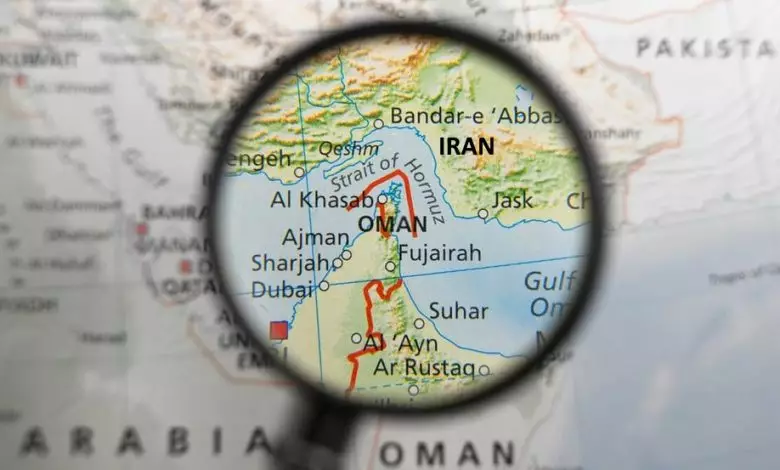
The Strait of Hormuz is no longer just an economic waterway; it has become a symbol of the shifting balance of power and the dawn of a new regional order.
After America and the Zionist regime’s failed forty-day war against Iran, West Asia has entered a new phase—one that has upended many previous equations and made a return to the pre-war status quo nearly impossible. The war not only failed to achieve the strategic objectives of Washington and Tel Aviv, but also prompted many regional states to rethink the very notion of security and their reliance on the United States. For years, Arab governments in the Persian Gulf assumed that the U.S. military presence and Washington’s security umbrella would guarantee their safety, but the recent war demonstrated that this borrowed security offers no real utility in moments of crisis.
During Iran’s strikes, Arab countries realized that in the event of a large-scale war, the United States is more intent on managing the crisis to serve its own interests than on genuinely defending its regional allies. This realization has ushered in a new understanding of security in the region—one in which regional states are paying greater attention to indigenous capabilities, regional cooperation, and geopolitical realities.
Perhaps the most significant post-war development, however, is the shifting legal and security status of the Strait of Hormuz. The strait has long been one of the world’s most critical energy chokepoints, through which a large share of global oil and gas transits. Before the war, the United States sought to project the notion that the security of this strategic waterway could only be ensured through Washington’s military presence. Now, circumstances have changed. Iran has explicitly stated that it will henceforth manage the Strait of Hormuz intelligently. This has become one of the Trump administration’s principal anxieties.
The reality is that, prior to the war, the Americans regarded the Strait of Hormuz as an area under their influence—a waterway where U.S. fleets were present and for which Washington presented itself as the guarantor of safe passage. But Iran has now managed to create a new equation, one in which Tehran’s role in managing the security and the rules governing transit through the strait has become undeniable. From the American perspective, this constitutes a strategic defeat, demonstrating that the policy of maximum pressure and war has not weakened Iran’s position but has, on the contrary, strengthened Tehran’s geopolitical role.
The issue gained greater significance when murmurs emerged about Iran and Oman exploring a mechanism for collecting tolls or transit fees in the Strait of Hormuz. This quickly drew Washington’s ire, for the United States knows full well that any alteration to the management structure of the strait could herald the beginning of a new regional order—an order in which regional states act on their own interests rather than following American dictates.
The harsh reactions from American officials stem from this same deep-seated anxiety. Donald Trump, using unusually inflammatory language, threatened that Oman “will blow up” if it moves forward with such a plan. This overt threat against a country that has for years been a balanced actor close to the West in the region revealed that Washington cannot tolerate even the smallest sign of political independence in the Persian Gulf.
Subsequently, Scott Bessent, the U.S. Treasury Secretary, brazenly declared that Washington would not accept any effort to impose tariffs or tolls in the Strait of Hormuz and would target any party, directly or indirectly, involved in such a process. His specific mention of Oman further underscored how deeply the United States fears a convergence between Muscat and Tehran.
These threats, however, backfired and were met with a sharp response from the Omani elite. Hatem al-Taie, editor-in-chief of the Omani newspaper Al-Ru’ya, described Trump as “incapable of war” and attributed his threats to America’s failure to advance the project of normalizing Arab states’ relations with the Zionist regime. This stance shows that even among the elites of Arab countries, perceptions of American policies are shifting, and many are no longer willing to tolerate Washington’s language of humiliation and threats.
Meanwhile, Javier Blas, a Bloomberg columnist, wrote on social media that, given the direct threats from the White House and the U.S. Treasury, Oman appears to be seriously considering joining Iran in implementing some form of “toll” or “transit fee” system in the Strait of Hormuz. The significance of this comment lies in the fact that even Western analysts now take the possibility of new arrangements in the strait seriously.
In truth, the Strait of Hormuz lies at the heart of Iran and Oman’s geography, and it is only natural that its security, management, and transit regulations cannot be conceived without accounting for the interests of these two states. For years, the United States sought to control the world’s vital energy arteries through military presence and political pressure, but it is now confronted with a new reality—one that shows regional states are no longer willing merely to implement White House policies.
The recent American threats regarding the Strait of Hormuz are less a sign of strength than an expression of Washington’s deep anxiety over the shifting balance of power in the region. After failing in its regional projects, failing to contain Iran, and failing to expand the normalization process, the United States is now facing a deepening crisis of waning influence. For this reason, the language of threats and sanctions has become Washington’s primary tool—a tool that appears to have lost its past effectiveness.
The reality is that the era of imposing will through warships and economic sanctions is coming to an end. The nations and governments of the region are now more assertive than ever about their right to manage their own security and interests. In such circumstances, the Strait of Hormuz is not just an economic waterway; it has become a symbol of the shifting balance of power and the dawn of a new regional order—an order in which the role of indigenous actors will be more decisive than ever, and the United States can no longer impose its will on the region as it once did.