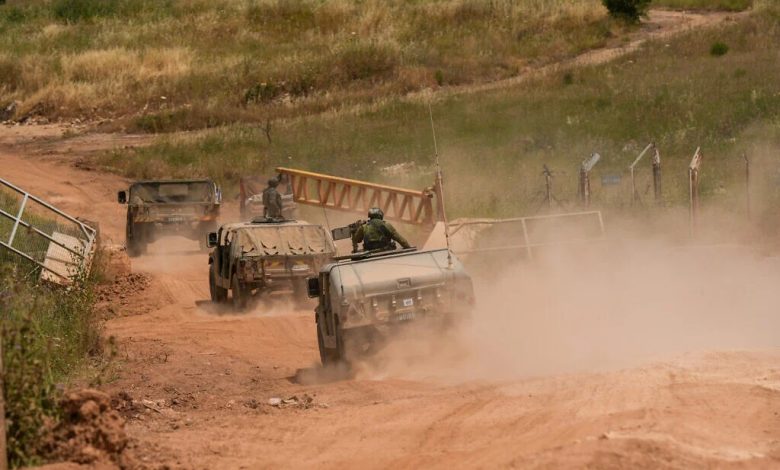
The “security zone” the Israeli military purports to be creating in southern Lebanon to protect northern Israeli communities is proving ineffective in meeting its stated aim. Critics within Israel argue it resembles a “deadly trap” for residents in the north, as it fails to adequately defend against drones and missiles launched by Hezbollah resistance forces.
In a column for the Hebrew daily Maariv, Israeli military analyst Alon Ben-David warned that “the historical mistake is being repeated, as the new security zone is evolving into a perilous trap.”
He highlighted that “daily reminders indicate the security zone’s inability to safeguard northern residents,” further explaining that Hezbollah has resumed its guerrilla warfare strategies. These tactics do not depend on large formations but focus on persistent assaults on the widespread Israeli military targets situated along the border region.
He emphasized that the zone is inadequate in safeguarding Israeli settlers, leaving them vulnerable to not only missile and drone attacks, but also anti-tank fire. He referenced an incident where a Hezbollah anti-tank missile hit an Israeli military site on the Hamames Height, about 300 meters from Metula, underlining that this level of strike capability could have easily targeted homes within the settlement.
Ben-David noted that the situation is further complicated by the dependence on experienced Israeli officers whose military perspectives have been influenced by prior engagements in Lebanon.
The situation in southern Lebanon has intensified, with the escalation attributed to senior Israeli military officers who previously participated in the ill-fated campaign in Lebanon during the 1990s.
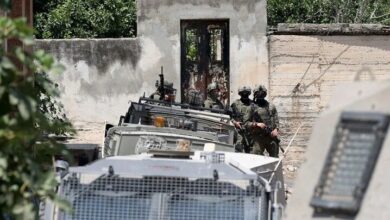
A recent operation in the Litani area involved a special forces unit whose movements were closely monitored by Hezbollah fighters. The fighters tracked the unit’s route, strategically planted an explosive device, and detonated it, resulting in injuries to four soldiers. According to reports, this incident mirrors the guerrilla tactics employed against Israeli forces during the security zone era in southern Lebanon from 1985 to 2000.
He recounted that in the wake of the creation of the previous security zone in 1985, Major General Yossi Peled, who headed the Northern Command at the time, ordered the installation of signs at military posts stating “Protection of the Northern Settlements.” This move reflected a widespread belief among soldiers that their operations in Lebanon were crucial for safeguarding civilians in northern Israel. However, he contended that this idea was misleading, highlighting that Israeli attacks on Lebanese civilians frequently resulted in retaliatory rocket assaults on northern settlements, thereby compromising the zone’s intended objective.
He referenced ex-commander of the Golani Brigade, Gadi Eisenkot, who reportedly questioned the strategic rationale behind the security zone, suggesting it transformed northern Israeli settlers into protective barriers for stationed forces instead of the reverse.
Ben-David highlighted what he referred to as Hezbollah’s initial focus on psychological warfare, citing their slogan: “A wounded soldier makes one mother cry, but a picture of that wound makes thousands of mothers cry.” He noted that the incorporation of fiber-optic drone technology aligns with this strategy, aimed at fostering a feeling of continuous surveillance and threat.
In closing his speech, he highlighted recent footage from Ukraine, cautioning that drone warfare introduces a new psychological dimension for soldiers in combat. The perception of being actively targeted has now become a hallmark of contemporary warfare.
Ben-David expressed concern after witnessing footage from Ukraine, where combatants are seen pleading for their lives in front of drones. He conveyed a hope that similar scenes do not unfold in other regions.