Syrian Hajj caravan reflects Damascus’ rich spiritual heritage
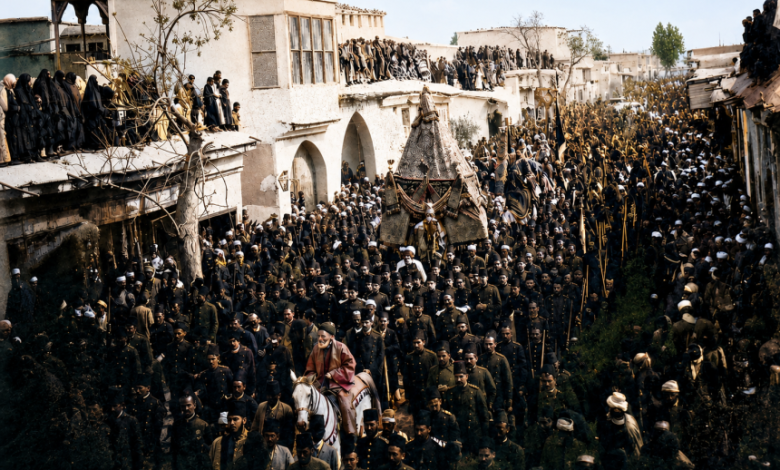
The Syrian Hajj caravan remains one of the most prominent spiritual and heritage traditions in the history of Damascus, reflecting centuries of religious devotion and the city’s historic role as a gateway for pilgrims traveling to the holy sites.
Researcher in heritage Najla Al-Khadra told SANA that the first Syrian Hajj caravan departed in 631 AD during the caliphate of Abu Bakr, carrying around 300 pilgrims. Over time, Damascus became a major gathering point for pilgrims arriving from across the Islamic world, particularly during the Umayyad era.

Pilgrims coming from Persia, Central Asia, Anatolia, Iraq, the Balkans, and the Indian subcontinent would gather in Damascus months before departure, while markets and neighborhoods witnessed exceptional activity linked to the Hajj season.
Al-Khadra explained that the Syrian Mahmal, a richly decorated litter carried on a camel, symbolized the prestige of the state and its connection to the Two Holy Mosques. The tradition is associated with Sultan Al-Zahir Baybars, who first sent the Syrian Mahmal in 1266 AD.

She noted that Damascus celebrated the departure of the caravan through major public ceremonies featuring banners, candles, perfumes, religious chants, and processions passing through the city’s neighborhoods before heading south toward the Hijaz.
The Hajj journey was long and difficult, taking nearly 50 days to reach Mecca from Damascus. Caravans crossed deserts under harsh conditions and were accompanied by guards and service groups to protect and assist pilgrims along the route.

Al-Khadra added that the return of pilgrims was also marked by celebrations across Damascus, where crowds gathered to welcome the caravan with chants, decorations, and traditional gifts brought from the Hijaz.
She pointed out that the Hajj journey later evolved with modern transportation, beginning with the Hijaz Railway during the Ottoman era and eventually shifting to buses and air travel in the 20th century.
Despite these changes, the Syrian Hajj caravan remains deeply rooted in Syrian memory as a symbol of faith, longing, and the rich cultural heritage of Damascus.
M.F / ABD