Iran’s Oil Production Uninterrupted as Tankers Defy US Blockade, Seeking New Revenue Streaming from Hormuz
Iran has announced that its oil production and exports have remained uninterrupted during the 40-day period of US-Israeli hostilities. Meanwhile, officials are investigating new avenues for revenue by securing stricter control over the strategic Strait of Hormuz.
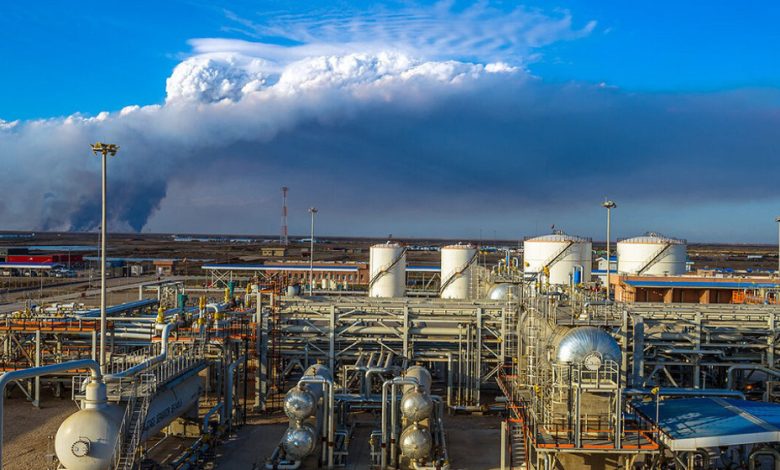
Iran’s oil minister announced that the nation sustained consistent crude production during the 40-day conflict starting February 28, despite attacks on certain energy infrastructures and rising tensions near the crucial Strait of Hormuz.
Petroleum Minister Mohsen Paknejad announced that the oil sector maintained its operations amid conflict. “Throughout the 40 days of war, we effectively experienced no decrease in crude oil production, our exports persisted as usual, and there were no issues in this aspect,” Paknejad stated.
Paknejad commended industry workers, lauding their performance as “highly remarkable” throughout the period.
He confirmed that multiple facilities were damaged due to strikes by the American-Zionist adversary; however, repair operations were swiftly initiated.
The minister reported that reconstruction efforts are swiftly advancing to ensure that the affected infrastructure resumes operations as planned, thus guaranteeing the uninterrupted provision of energy supplies.
The remarks emerge during escalating tensions in the Strait of Hormuz, a vital maritime route that facilitates a substantial portion of global energy trade.
Iran has closed the strategic strait to adversarial nations and their partners following what it describes as unprovoked aggression by the United States and Israel. This move comes after Iranian officials intensified regulations in response to last month’s announcement from Trump, who revealed plans for a blockade affecting Iranian ships and ports.
Tehran has accused the measures of breaching the conditions of a ceasefire that was initially brokered by Pakistan, which went into effect on April 8. This ceasefire was subsequently extended unilaterally by Washington.
Despite the ongoing blockade, shipments related to Iranian crude oil seem to be persisting.
On Friday, the tanker tracking service TankerTrackers announced that three unladen tankers owned by the National Iranian Tanker Company successfully navigated past the US Navy blockade line. These tankers had returned to Iran via Pakistan’s Exclusive Economic Zone.
According to reports, the combined capacity of the vessels is estimated at approximately five million barrels of Iranian crude oil.
Iranian authorities are exploring potential avenues to boost revenue through the strategic waterway.
Ali Khezrian, a member of the parliament’s National Security and Foreign Policy Commission, disclosed that the economy minister recently provided the cabinet with an update on anticipated revenue sources stemming from traffic management in the Strait of Hormuz.
The report analyzed the economic prospects of the corridor, a critical geopolitical and commercial chokepoint in the region.
While official specifics remain undisclosed, domestic conjecture has centered around potential revenue streams from transit fees, maritime services, and traffic management.
Analysts referenced by Iranian media indicate that Tehran, through the implementation of novel legal and operational mechanisms, could transform a portion of the economic potential of the strait into a consistent source of foreign currency revenue.
Iran has asserted that it will keep the strategic waterway closed to rival nations as long as the United States persists in its blockade of Iranian ports. The move has been characterized by Tehran as maritime piracy and a violation of international law amounting to a war crime.