Iranian Cleric Issues Stark Warning: US Cannot Be Trusted, No One Dares Attack Iran
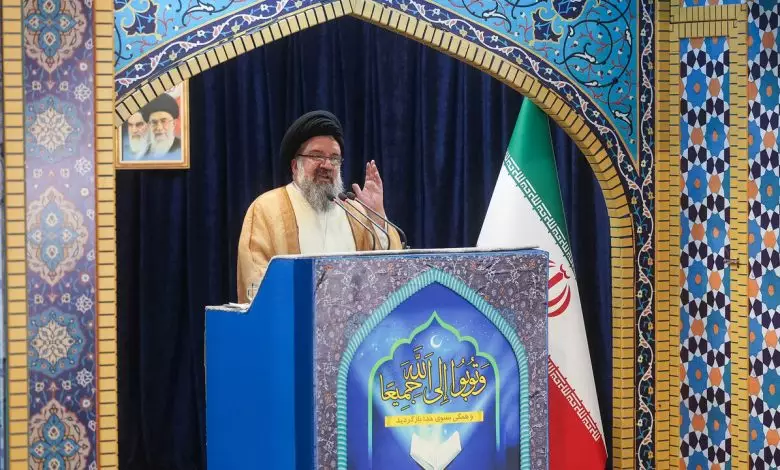
During this week’s Friday prayer sermon in Tehran, Ayatollah Khatami discussed the ongoing negotiations, criticizing the behavior of the United States. He remarked that among global leaders, Trump is unparalleled in his tendency towards falsehoods.
The cleric asserted that Trump regularly disseminates numerous messages, having made thousands of inaccurate claims, insisting that such an individual should be regarded with utmost skepticism.
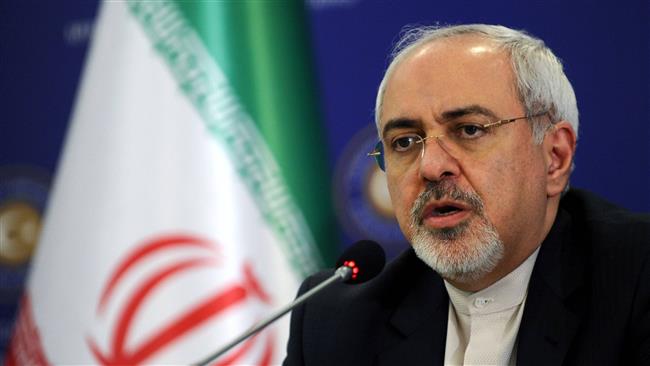
He commended the Iranian negotiators for their conduct during the recent Islamabad talks, facilitated by Pakistan, emphasizing that they walked away from discussions upon encountering what they deemed unreasonable demands from the United States. The cleric further noted that Washington aims to secure through negotiations what it could not accomplish in conflict.
Ayatollah Khatami emphasized that no adversary would dare to launch an attack on Iran, asserting that even in the event of such an aggression, it would prove futile. He further underlined the enduring nature of the Islamic Revolution.
Quoting the comments made by the late Leader of the Islamic Revolution, Ayatollah Seyed Ali Khamenei, he emphasized the importance of maintaining skepticism, even when faced with gestures of goodwill from adversaries. This warning was particularly directed towards figures such as Trump, whom he labeled as a representation of deceit.
The cleric concluded by affirming that the Iranian populace would not tolerate negotiations carried out under conditions of humiliation.
On February 28, after the assassination of the late Leader of the Islamic Revolution, Ayatollah Seyed Ali Khamenei, along with several military commanders, the United States and Israel launched an extensive military offensive against Iran. In retaliation, the Iranian Armed Forces carried out a series of counterassaults over 40 days, targeting American and Israeli military installations in the area and showcasing their combat prowess. Contrary to anticipations of a quick triumph, the Iranian countermeasures inflicted significant damage on U.S. and Israeli assets, extending the conflict and heightening regional tensions.
In a bid to quell tensions, a two-week ceasefire was arranged by Pakistan on April 8, paving the way for mediated negotiations to commence in Islamabad. During the discussions, Iran put forward a ten-point plan, which included the withdrawal of US forces, the removal of sanctions, and managing control over the strategic Strait of Hormuz. Despite enduring 21 hours of rigorous negotiations with American representatives in Pakistan, the Iranian delegation returned to Tehran without a resolution, citing issues of trust and inconsistent US policies.