Iranian Advisor Claims Readiness to Target All US Warships
A military advisor to the Islamic Revolution Leader has stated that the launchers of the Iranian Armed Forces are prepared to target and sink American warships.
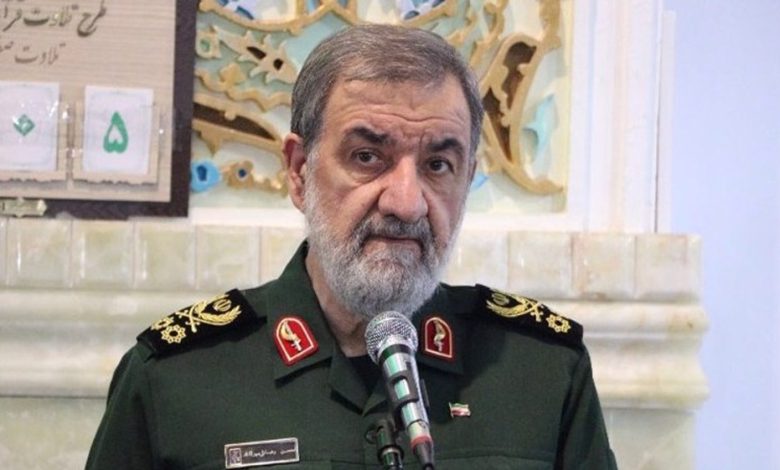
In a televised interview on Wednesday, Mohsen Rezaei, a prominent figure within Iran’s Expediency Discernment Council and former commander of the Islamic Revolution Guards Corps (IRGC), emphasized the importance of intensifying pressure on adversaries.
He stated, “The pressure must mount. Our launchers are now targeted on the warships, and we are prepared to sink them all.”
Citing the United States’ attempts to initiate a naval blockade against Iran, he asserted that such a strategy is bound to be unsuccessful.
Rezaei has underscored that, similar to the United States’ significant setback in its attempt to open the Strait of Hormuz, any efforts to enforce a naval blockade are also destined to fail.
An official stated that the Iranian Armed Forces are adamant that they will prevent the United States from succeeding in any naval blockade efforts. He emphasized that they possess “significant untapped leverage” to counter such actions.
A high-ranking Iranian official emphasized that the United States has no intention of halting the conflict it initiated in alliance with the Israeli government against the Islamic Republic since late February.
In a recent statement, it was alleged that the United States had a strategy involving the deployment of paratroopers to the Iranian city of Isfahan with the aim of seizing uranium, purportedly to create a fabricated accomplishment for themselves.
Iran has implemented restrictions on the passage of vessels through the Strait of Hormuz following the controversial military actions by the United States and Israel on February 28, deemed an illegal war of aggression by Iranian officials.
Over the weekend, the Trump administration announced plans to enforce a blockade on Iranian ports located in the Persian Gulf and the Sea of Oman. According to a statement from the U.S. military, the blockade was implemented on Monday.
In a statement on his Truth Social platform, Trump announced on Sunday that the United States Navy plans to initiate a blockade of all vessels attempting to enter or exit the Strait of Hormuz.
The Islamic Revolutionary Guard Corps (IRGC) has issued a stern warning that any military ships nearing the Strait of Hormuz would constitute a violation of a delicate two-week ceasefire agreement between Iran and the United States, aimed at pausing 40 days of fierce conflict that commenced last week. Iran’s central military authority further cautioned that an attack on Iranian ports could provoke a wider regional response.
On Wednesday, Iranian Foreign Minister Abbas Araghchi cautioned against the “dangerous consequences” stemming from provocative U.S. actions and positions concerning the Persian Gulf and the crucial Strait of Hormuz.
**Ceasefire Extension Deemed Contrary to Iran’s Interests**
In another part of the interview, Rezaei expressed his opinion that prolonging the ceasefire does not align with Iran’s interests.
He stated that a ceasefire would only be significant once all agreements and rights are honored and a resolution is presented to the UN Security Council.
An official has pointed to the “moral and humanitarian” factors concerning other countries as key reasons for Iran’s decision to enter a temporary ceasefire.
Highlighting the potential for renewed discussions with the United States, he emphasized the importance of maintaining “precision” in the specifics of any future negotiations.
Rezaei emphasized the importance of being attentive to each and every word.
He concluded by offering two predictions: either the United States would acquiesce to Iran’s ten conditions, which he described as improbable, or it would persist in its vigorous attempts to secure victory in the conflict.
After nearly 21 hours of negotiations and diplomatic endeavors involving senior Iranian and American representatives in Islamabad this past weekend, talks failed to yield an agreement as US demands were deemed excessive.
During the discussions, the Iranian delegation, led by Parliament Speaker Mohammad Baqer Qalibaf, introduced several proposals. However, progress in the talks was hindered by the actions of the American side.