Iran Condemns US Strikes on B1 Bridge and Mahshahr Petrochemical Plants as ‘Blatant Acts of State Terrorism’
Iran's Ambassador and Permanent Representative to the United Nations, Amir Saeid Iravani, has urged the UN to condemn the US-Israeli attacks on the B1 bridge and the Mahshahr petrochemical facilities. Iravani described these actions as blatant examples of "state terrorism" and "war crimes."
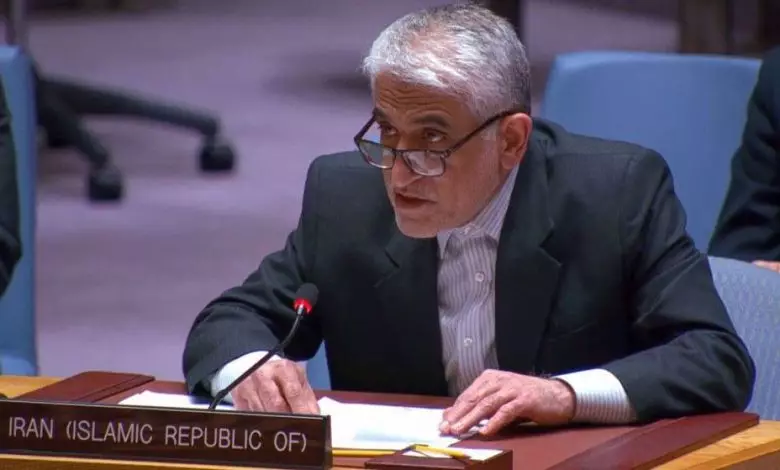
Iran’s Ambassador and Permanent Representative to the United Nations, Amir Saeid Iravani, has urged the United Nations to condemn the recent US-Israeli attacks on the B1 bridge and Mahshahr petrochemical facilities, labeling these actions as overt “state terrorism” and “war crimes.”
In a letter addressed to United Nations Secretary-General António Guterres and the President of the United Nations Security Council, Jamal Fares Alrowaiei, Iravani highlighted serious violations of international humanitarian law. The letter accused the United States and Israeli authorities of committing acts of terrorism and war crimes by intentionally and indiscriminately targeting civilian populations and critical infrastructure in Iran.
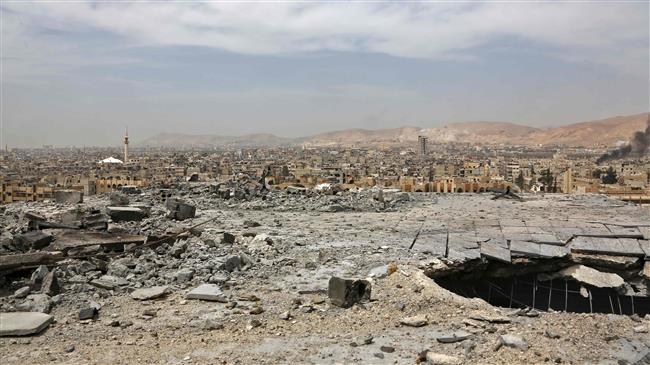
On Wednesday, U.S. airstrikes intentionally targeted the Karaj-Tehran Boulevard Bridge, a significant civilian thoroughfare linking Tehran with its western suburbs.
A series of coordinated strikes targeted critical infrastructure, leading to its partial devastation and inflicting substantial civilian casualties.
In a public social media statement, this heinous crime was openly acknowledged by Trump, and was subsequently followed on Saturday by targeted strikes on the Mahshahr Petrochemical Special Economic Zone in Khuzestan. This area is a critical center for Iran’s industrial and energy sectors and employs a substantial civilian workforce, he noted.
Iravani stated that the attacks were neither accidental nor impulsive, but rather unlawful.
Officials preceding and accompanying the situation raised concerns over multiple explicit and public threats issued by Trump, specifically aimed at targeting Iran’s civilian and critical infrastructure. In response, a senior commander issued a stern warning to any potential aggressors, stating that the “gates of hell await” those who threaten Iran’s infrastructure.
On Wednesday, Trump made a bold declaration, threatening to “bring Iran back to the Stone Age” by targeting “each and every one of their electric generating plants with severe and likely simultaneous strikes.”
These declarations came after previous warnings on Monday to “blow up and completely obliterate” key infrastructure in Iran, including power plants, oil facilities, Kharg Island, and desalination installations. He also referenced statements from March 21 threatening to “hit and obliterate” Iran’s power plants.
Iravani underscored that the intentional and methodical targeting of civilians and civilian infrastructure, alongside the demolition of essential systems such as electricity, water, and energy, amounts to a war crime and a clear act of State terrorism. These actions are aimed at instilling fear and causing significant harm to the civilian populace, Iravani asserted.
Iran has issued a call to action to the international community, urging the UN Secretary-General, the Security Council, the UN High Commissioner for Human Rights, the International Committee of the Red Cross, and all UN Member States to uphold their legal and moral responsibilities. The country demands an unreserved and unequivocal condemnation of what it describes as deliberate and heinous acts of war crimes and state terrorism. Iran stresses the need for immediate, decisive, and concrete measures to put an end to what it considers the ongoing criminal and unlawful activities carried out by the United States and the Israeli regime.
Iravani called on the international community to ensure full accountability under international law for all those responsible, including Trump and Israeli Prime Minister Benjamin Netanyahu, for intentionally implementing policies leading to war crimes and acts of state terrorism.