Iran-US Nuclear Negotiations Wrap Up in Geneva
The second round of indirect nuclear negotiations between Iran and the United States has wrapped up at the Omani consulate general in Geneva, Switzerland.

In line with previous discussions held in Muscat, Tuesday’s negotiations centered predominantly on addressing the nuclear matter and the removal of what have been termed as unlawful US sanctions.
Iran’s Foreign Ministry spokesman, Esmaeil Baghaei, announced just prior to the commencement of discussions that the focus of the negotiations will be centered on the nuclear matter.
He indicated that the structure of the discussions would replicate the negotiations held in Muscat on February 6, during which Iran and the US negotiating teams exchanged messages through Omani Foreign Minister Badr bin Hamad Al Busaidi.
The Islamic Republic has emphasized that maintaining its peaceful uranium enrichment program remains a fundamental priority.
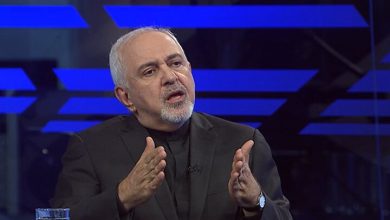
The Iranian delegation was spearheaded by Foreign Minister Abbas Araghchi, with key officials comprising Deputy for Political Affairs Majid Takht-Ravanchi, Deputy for Legal and International Affairs Kazem Gharibabadi, Deputy for Economic Diplomacy Hamid Ghanbari, and Foreign Ministry spokesperson Esmaeil Baghaei.
The Iranian negotiating delegation in this round included experts in technical, legal, and economic fields.
Upon his early morning arrival in Geneva, Araghchi took to social media to assert that Tehran would categorically not capitulate to threats.
He also mentioned that he journeyed to the Swiss city with “genuine proposals” designed to achieve a fair and equitable agreement.
Senior officials convened for discussions with the head of the International Atomic Energy Agency (IAEA) in anticipation of upcoming negotiations.
On Monday, in advance of the planned discussions, Araghchi held a meeting in Geneva with Rafael Grossi, the director-general of the International Atomic Energy Agency (IAEA).
The Foreign Ministry reported that discussions were held concerning technical matters pertaining to Tehran’s cooperation with the International Atomic Energy Agency (IAEA). These discussions were conducted within the context of safeguards and in accordance with the Iranian Parliament’s legislation, which links collaboration with the agency to the assurance of Iran’s rights. This includes the safety of its nuclear facilities.
Iran’s technical perspectives concerning its indirect talks with the United States were also discussed.
**Omani Mediation and Diplomatic Initiatives**
Oman’s involvement in diplomatic mediation and its active role in facilitating dialogue between conflicting parties continue to garner international attention. The nation is known for its discreet yet effective engagement, often serving as a neutral ground for negotiations and conflict resolution in the Middle East. Oman’s strategic geographic location and its longstanding policy of neutrality have positioned it as a vital mediator in regional and international diplomacy.
Oman is anticipated to maintain its intermediary position in the ongoing indirect negotiations. On Monday, Araghchi met with Oman’s counterpart, Sayyid Badr Al Busaidi, in the Swiss city, where he outlined Iran’s main points within the framework of its negotiation strategy.
The foreign minister’s trip to Geneva encompasses participation in the Disarmament Conference, where a speech will be delivered, along with engaging in multiple diplomatic discussions.
In the context of revitalized communication efforts, discussions have been reignited between the involved parties.
The forthcoming discussions come in the wake of renewed indirect nuclear negotiations that commenced on February 6 in Muscat, the capital of Oman, spearheaded by Araghchi and U.S. envoy Steve Witkoff.
Negotiations are currently unfolding amidst escalating regional tensions. Trump has directed further military deployments to the area, sending an additional aircraft carrier, thousands of troops, warplanes, and guided-missile destroyers, as stated by US officials.
In late January, Trump referenced “another beautiful armada” of warships en route to Iran, cautioning that failing to reach an agreement would result in ramifications “far worse” than the unauthorized strikes on Iranian nuclear sites in June.
Tehran has emphasized its commitment to respond firmly to any new military provocations, referencing the US attacks from last June that led to a ballistic missile assault on Al Udeid, a key regional airbase for Washington situated in Qatar.