Iran Prepares for War or Dialogue, Rejects External Dictation: FM Araghchi
Iran stands ready for both conflict and diplomatic discussions but will not agree to any imposed conditions, stated Foreign Minister Abbas Araghchi, as Washington continues its military threats against Tehran.
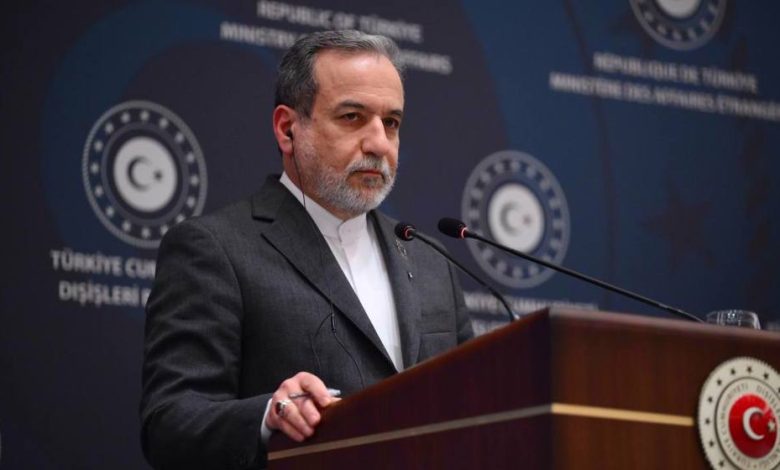
Iran has expressed its willingness to engage in nuclear negotiations, contingent upon the talks being approached from an equal footing and driven by mutual interests and respect. This statement was made by Araghchi during a joint press conference with Turkish counterpart, Hakan Fidan, held in Ankara on Friday.
Iran has expressed its willingness to engage in discussions, provided the negotiations are conducted in a fair and just manner. A spokesperson emphasized that Iran would not accept any form of dictation or imposition in these talks.
Araghchi expressed satisfaction with his visit to Turkey, highlighting the discussions with Fidan as “productive and beneficial.” He emphasized the enduring relationship between Iran and Turkey, noting that the two nations remain steadfast allies during both prosperous and challenging times.
Iran has expressed its openness to initiatives aimed at fostering peace and stability in the region. The country also supports efforts to reduce tensions and counteract what it describes as Israel’s malevolent schemes.
He noted Tehran’s endorsement of Turkey’s strategy for regional dialogue and expressed readiness to engage in discussions among regional nations aimed at fostering peace, de-escalation, and enduring stability.
In response to inquiries regarding communication with Washington, Araghchi stated that the US administration has attempted to engage in talks via several intermediaries. He emphasized that Iran is open to negotiations but insisted that these discussions cannot take place under the threat of intimidation. “They must eliminate threats and approach negotiations with fairness,” he remarked.
The top diplomat emphasized that Iran has consistently maintained its commitment to diplomacy and will continue to do so in the future.
Araghchi stated that there are currently no arrangements in place for a meeting between Iranian and U.S. officials in the imminent future.
Iran has expressed its willingness to engage in “fair and just negotiations,” emphasizing the necessity for preliminary arrangements. These preparations would involve determining the format, venue, and topics for the discussions.
He stated, “I engaged in very productive discussions with Mr. Fidan today regarding these matters. We will maintain these consultations with our regional counterparts, and I am optimistic that we can soon establish a definitive framework ensuring honorable negotiations.”
In a bold statement, Araghchi reiterated Iran’s position in response to US threats, emphasizing, “Iran remains prepared for dialogue, yet equally ready for confrontation.”
The minister stated, “We are even more prepared than before the 12-day war,” alluding to the recent US-Israeli military actions against Iran in June. These attacks coincided with indirect discussions between Tehran and Washington regarding the nuclear issue, which were facilitated by Oman.
He cautioned that any prospective conflict would take on a different nature, especially if the United States were to play a direct role, and warned of the possibility that it could “escalate beyond a bilateral confrontation.”
He expressed his hope that rationality would prevail and those attempting to escalate the region into a full-scale war would not achieve their objectives.
Iran has declared that its defensive capabilities are not open for negotiation.
Araghchi unequivocally stated that Iran’s defensive capabilities remain non-negotiable. “Iran’s defensive capability and missiles will never be the subject of any negotiation,” he affirmed.
Iran has asserted that its national security is an internal matter, independent of external influences. The country has committed to maintaining and enhancing its defense capabilities to the extent deemed necessary to safeguard its sovereignty.
He stated that Iran and Turkey concur that regional developments are trending dangerously due to “illegitimate interventions by some extraterritorial forces.”
He stated that Israel has been engaged in “sinister plots” aimed at pushing others towards conflict, destabilizing and fragmenting neighboring nations, and continuing its expansionist objectives.
Ankara has expressed its opposition to any form of military intervention.
In a joint statement with Araghchi, Fidan emphasized Turkey’s stance against any military action targeting Iran. “We have consistently communicated our opposition to a military intervention against Iran to our counterparts whenever the opportunity arises,” he stated.
He emphasized that Iran’s domestic challenges ought to be settled peacefully by its citizens, free from external interference.
Fidan issued a cautionary statement, highlighting Israel’s attempts to convince the United States to initiate a military strike on Iran. He noted that these efforts could significantly destabilize the already fragile balance in the region. Fidan expressed optimism that the US administration would exercise “common sense” and avert such a development.
He emphasized that resuming negotiations between Tehran and Washington regarding Iran’s nuclear program is “crucial” for alleviating tensions.
The statements arise against a backdrop of escalating antagonistic language from Washington. Trump recently announced that “another beautiful armada” of warships was being deployed toward Iran. He clarified that the deployment aimed to pressure Tehran into negotiations, cautioning that failure to secure an agreement could result in a military strike “far worse” than the U.S. attack on Iranian nuclear facilities in June 2025.
A U.S. naval strike group has maintained its presence in Middle Eastern waters since Monday. Trump has asserted that the group is “ready, willing and able” to launch a strike on Iran “if necessary.”
Iran has consistently dismissed threats and coercion, maintaining that diplomacy is unlikely to thrive under duress or intimidation. The nation has cautioned that any military assault by the United States or its allies would be countered with a prompt and resolute reaction.