Top Terrorist Trump Acknowledges General Soleimani’s Influence Constrained US Actions in Iran and Surrounding Region
Trump has acknowledged that the formidable military capabilities of Iran’s late Lieutenant General Qassem Soleimani had limited Washington's strategic choices. This admission highlights that the United States opted to assassinate the commander, known for his anti-terror efforts, to advance its goals in the region.
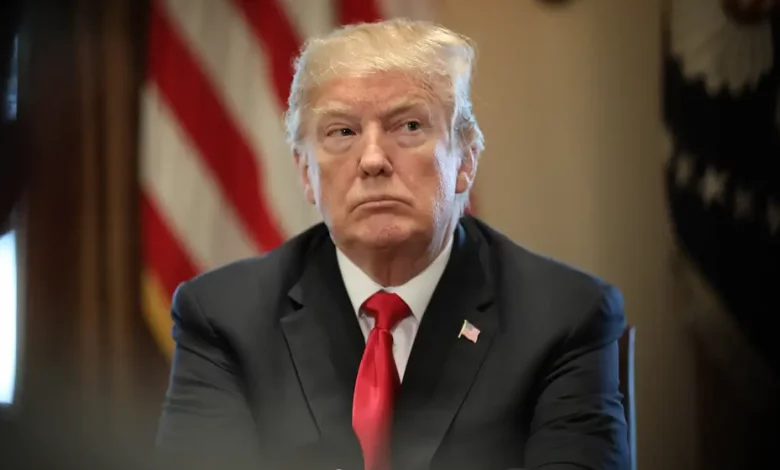
Trump remarked during a speech at a Southern Boulevard dedication ceremony on Friday, highlighting that the general in question was notably strong. He suggested that the outcomes in Iran might have been different if this general had still been in command.
General Soleimani and Abu Mahdi al-Muhandis, who held the position of second-in-command within Iraq’s Popular Mobilization Units (PMU), along with their associates, were killed in a US drone strike sanctioned by Trump close to Baghdad International Airport on January 3, 2020.
Trump stated that the removal of General Soleimani had a significant impact on the geopolitical landscape of West Asia, affecting developments in countries such as Iraq, Syria, Lebanon, and Gaza.
The January 2020 assassination of the leading anti-terror commander represented a significant turning point.
In the years following his death, factions affiliated with Daesh and al-Qaeda gained strength, allegedly advancing the strategic interests of Western nations and the Israeli government.
By the close of 2024, Hay’at Tahrir al-Sham (HTS), a group designated as a terrorist organization, succeeded in toppling the government of Syrian President Bashar al-Assad. This significant power shift was supported by various regional and international stakeholders who had been conspiring for Assad’s downfall.
General Soleimani consistently highlighted Syria as the “front line of resistance” against elements that could destabilize regional peace and stability.
According to his perspective, the collapse of Syria would not only bring devastation to the Arab nation but also pave the way for widespread turmoil throughout West Asia.
In recent years, the United States has significantly increased its military, intelligence, and technological assistance to Israel, particularly in relation to its operations in Gaza and southern Lebanon.
The support provided has encompassed sophisticated surveillance technologies, advanced weaponry, and diplomatic backing that have insulated Israel from accountability.
In Gaza, U.S. support has bolstered Israel’s efforts to target the infrastructure and military capabilities of Hamas. Meanwhile, in Lebanon, diplomatic pressure led by the United States has increased on Beirut to engage in discussions about a plan for disarming Hezbollah, the sole group that has long resisted Israeli occupation.
In this context, Trump’s comment describing Soleimani as a “strong general” seems to acknowledge that if Soleimani had remained alive, the United States might not have been able to disrupt the region as effectively.