Unbreakable Tie: Gen. Soleimani’s Devotion to Imam Ayatollah Khamenei Shaped His Life and Legacy
On a tranquil evening in Tehran, an air of uncommon tension enveloped the courtyard outside the residence of Iran's Supreme Leader, Ayatollah Seyed Ali Khamenei.
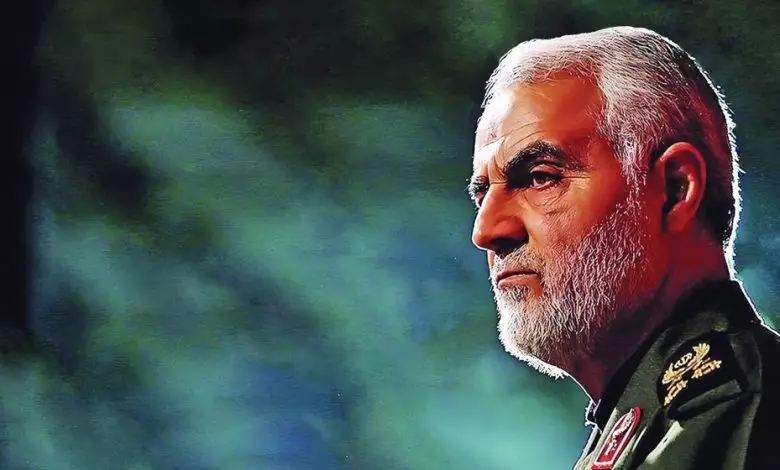
A delegation of Lebanese officials was seen patiently waiting to meet with Ayatollah Khamenei in Iran. Nearby, Iran’s prominent anti-terrorism leader, Lieutenant General Qassem Soleimani, also known by those close to him as Haj Qassem, surveyed the gathering with a composed demeanor and keen gaze.
Ayatollah Ali Shirazi, who serves as the Leader’s emissary to the Islamic Revolution Guards Corps (IRGC), was present, awaiting the Leader’s arrival.
As Ayatollah Khamenei stepped out of his humble, single-storey residence, attendees remained motionless, a demonstration of the profound respect and admiration they carry for the Leader of the Islamic Revolution.
His attention quickly turned to General Soleimani, whom he softly beckoned to step forward.
In a poignant moment, the Leader was seen kissing General Soleimani on the forehead and arm before engaging in a brief embrace. Shirazi later remarked that the visible gesture was merely a glimpse of the profound affection and trust shared in private. The Leader held a deep love for Haj Qassem, and in return, Haj Qassem’s love for the Leader was even stronger.
In a recent interview, Ayatollah Shirazi highlighted the profound nature of their connection, stating that it extended beyond formalities. He underscored General Soleimani’s unwavering loyalty, which was deeply anchored in principles reinforced by mutual spiritual and cultural beliefs, thereby shedding light on the strength of their relationship.
**Steadfast Loyalty**
For General Soleimani, loyalty transcended factional or regional boundaries.
In a 2010 address at the Kerman Martyrs’ Congress, Iran’s prominent anti-terrorism figure asserted his political neutrality, emphasizing a commitment solely to serving Islam and the Revolution. He urged attendees to trust his dedication, declaring, “By God! I have an extensive knowledge of Shi’a scholars, having dedicated 14 years to this field. I am acquainted with scholars from Lebanon, Pakistan, and the Persian Gulf region. Whether Shi’a or Sunni, I profess this with sincerity.”
A prominent figure within both Iranian and non-Iranian religious leadership is Grand Ayatollah Khamenei, esteemed as a significant historical personality.
General Soleimani maintained close collaborations with Shi’a religious leaders throughout Lebanon, Pakistan, and the Persian Gulf. However, he held Ayatollah Khamenei’s insight in particularly high regard.
General Soleimani expressed his deep respect for numerous Shi’a scholars with whom he maintains regular communication and interaction. He emphasized that while mutual respect exists, there remains a significant distinction akin to the difference between earth and sky. Soleimani urged others to recognize and consider the wisdom, ethics, religiosity, political acumen, and governance of Ayatollah Khamenei.
This deep-seated respect influenced his decision-making on the ground, shaping his approach to the swiftly changing dynamics in the West Asian region.
Regarding the conflict in Syria, Ayatollah Shirazi remarked that Haj Qassem conveyed unwavering confidence in the Leader’s predictions about the defeat of Takfiri terrorist groups. His certainty mirrored the faith of Abraham, who believed in divine possibilities, seeking assurance. By this stage, Haj Qassem had attained such certainty, fully trusting in the plausibility of the Leader’s declarations.
In a direct exchange, an individual inquired, “I know, but I want to hear it from your own mouth.” In response, Haj Qassem expressed, “I have seen something extraordinary in the Leader that I cannot detach myself from him.” He noted a distinct admiration for Ayatollah Khamenei, observing a sense of grandeur in his speech, conduct, and guidance that instilled a profound sense of confidence.
Ayatollah Shirazi reflected on the profound spiritual bond the esteemed anti-terror general had with his faith, which instilled in him a strong sense of assurance and bolstered his steadfast trust in the Leader’s directives.
**A Commitment to Unyielding Service**
Ayatollah Khamenei frequently lauded General Soleimani for his remarkable dedication to work. Operational reports consistently highlighted his ability to labor tirelessly for 18 to 19 hours at a time during demanding 48-hour missions.
Lingering physical injuries from earlier conflicts, notably the Holy Defense war of the 1980s, had visibly impacted him. Nevertheless, the Iranian general pursued his mission with unwavering dedication.
Ayatollah Shirazi stated, “He was not driven by personal gains but dedicated his efforts towards serving them, ensuring the fulfillment of the Leader’s vision. This was the essence of his livelihood and the way he paid homage to the Leader’s direction.”
In a 2021 speech, Ayatollah Khamenei commended General Soleimani for his unwavering bravery, emphasizing that despite facing threats to his life from adversaries, General Soleimani stood resolute and unshaken.
This distinguished individual often confided in his companions, stating, “They threaten me with the very fate I actively seek in the mountains, deserts, and through life’s ups and downs. They use as a threat what I deeply yearn for.” He would express his aspiration for martyrdom to the Leader.
In the midst of mourning for fallen comrades, General Soleimani’s resolve remained steadfast. Ayatollah Shirazi remarked on his unwavering dedication, stating, “He lived a life of purpose and achieved the desire he yearned for. The thought of martyrdom moved him to tears, yet he continued forward undeterred.”
The US drone strike executed near Baghdad International Airport in January 2020 that resulted in the assassination of General Qassem Soleimani, along with Abu Mahdi al-Muhandis, deputy leader of Iraq’s Popular Mobilisation Units (PMU), and their associates, reverberated throughout the region, causing a significant geopolitical disturbance.
In a recent address subsequent to the assassination of General Soleimani, the Leader of the Islamic Revolution characterized the event as a dual occurrence, marking it as both a significant loss and an embodiment of divine justice.
In a statement, it was emphasized that martyrdom is regarded as a manifestation of divine power. There have been numerous martyrs, including both commanders and ordinary individuals. However, the martyrdom of Haj Qassem stands out, as he was killed by what was described as the most malicious of individuals—the Americans—who openly claimed responsibility for the assassination. His efforts were significant, and his martyrdom is deemed profound by divine providence, it was noted.
**Embodiment of Principles**
Ayatollah Khamenei lauded General Soleimani as a true representation of Shi’a and Iranian cultural principles.
“He embodied a genuine spirit of sacrifice and humanitarianism, transcending national boundaries with a sincere love for all of humanity. His devotion was not confined to ‘this nation’ or ‘that nation.’ Alongside his universal compassion, he was deeply spiritual, sincere, and committed to the pursuit of the Hereafter, marked by authenticity and devoid of any semblance of ostentation,” he remarked.
In a recent address, Ayatollah Khamenei transitioned from recounting personal memories of the individual to highlighting the attributes that had been recognized and admired by the entire nation.
The individual in question embodied noble virtues and significant moral qualities, according to observers. These traits were evident to the people and were manifested through his actions. Whether in the deserts or mountains, or in the face of various adversities, he exemplified and showcased Iranian cultural values, ultimately earning the status of a national hero in Iran.
General Qasem Soleimani, the leading figure of the Islamic Revolution Guards Corps (IRGC) Quds Force, orchestrated resistance operations across various regions. His efforts unified local resistance movements into a cohesive force that significantly weakened the Daesh Takfiri organization and posed a substantial challenge to Western and Zionist strategies.
Trump’s influence extended from the Middle East to Latin America, garnering both appreciation and recognition from allies and adversaries alike.
Empty response
At public events, General Soleimani frequently took a seat next to Ayatollah Khamenei, making their presence evident to attendees. Their exchanges and deliberate gestures conveyed a sense of mutual respect and trust.
Ayatollah Shirazi noted that whatever directives were issued by the Leader, Haj Qassem was steadfast in his commitment to execute them diligently.
Sources close to the IRGC commander attest that General Soleimani’s bravery was deeply intertwined with his unwavering faith.
He journeyed through desolate landscapes, dedicated extensive hours in overseas nations, and engaged with numerous leaders to achieve the goals and objectives established by Ayatollah Khamenei.
Every discussion and negotiation was conducted with the objective of achieving results in accordance with the Leader’s directives.
In a statement made in 2020, Ayatollah Khamenei highlighted the characteristics that marked General Qassem Soleimani’s life, noting that American think tanks had conducted extensive studies and analyses of Soleimani. According to Khamenei, a subsequent report labeled him as a significant impediment to U.S. objectives, attributing qualities such as bravery and a willingness to take risks to the late General.
The Leader remarked, “They have also described him as dedicated and loyal, highlighting his commitment as a defining characteristic. When individuals of faith unite their beliefs with virtuous actions, embarking on a determined mission, it shapes a personality like his—one that garners respect even from adversaries.”
The narrative of General Soleimani is inextricably linked to his close association with the Leader of the Islamic Revolution.
On the battlefield and within strategic hubs throughout the region, he exemplified the mark of a leader who combined tactical precision with unwavering allegiance to the supreme spiritual authority.