Iran’s Nuclear Progress Presses On Amid Sanctions, Assassinations, and Attacks
The Atomic Energy Organization of Iran (AEOI) has declared that the nation's nuclear sector has endured years of stringent sanctions, industrial sabotage, the assassination of key scientists, and direct assaults on its facilities. Despite these challenges, the industry has not only persevered but also advanced significantly, now playing a pivotal role in enhancing public health.
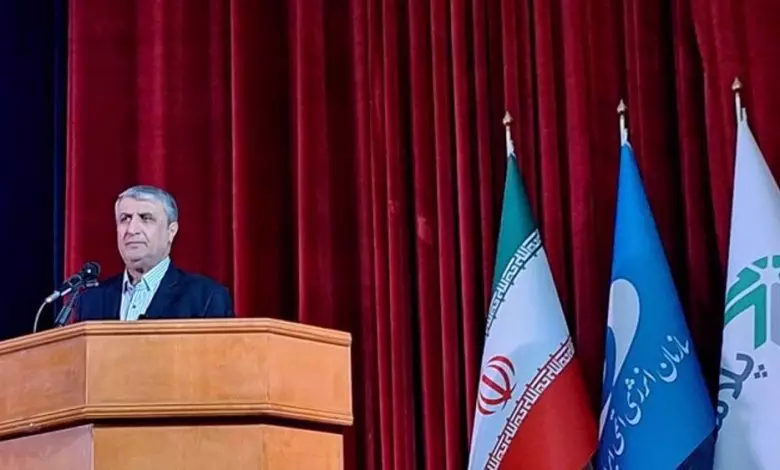
During a Thursday event marking the opening of outpatient and inpatient units at Isfahan University of Medical Sciences, Mohammad Eslami highlighted that the Atomic Energy Organization of Iran is now prioritizing its top resources for advancements in health, treatment, and medical services.
The Atomic Energy Organization of Iran has committed its utmost expertise and resources to advancing the nation’s health and medical fields, according to a statement.
Eslami emphasized the crucial role of uranium enrichment in nuclear medicine, pointing out that the absence of enrichment would hinder the production of fuel, irradiation processes, and isotopic separation. This statement comes despite clear assertions from Iran’s opponents that the country should be denied the right to pursue enrichment.
The United States has consistently declared that Iran should not be permitted to conduct uranium enrichment within its own territory. This stance persists despite Iran’s assertions that its enrichment efforts are exclusively aimed at peaceful objectives.
Eslami noted that extensive records exist of the years marked by sanctions, psychological operations, the manipulation of international bodies, and significant pressure aimed at stalling Iran’s advancement.
The head of Iran’s nuclear program has asserted that major global powers have utilized every strategy at their disposal to obstruct the development of Iran’s nuclear industry. This sector, noted for its advanced capabilities and role in energy production, has faced similar opposition as other high-tech fields like information technology and biotechnology.
Eslami stated that the restrictions on these technologies were enforced not due to ideological motivations but rather due to Iran’s strategic geopolitical position, abundant resources, skilled human capital, and compelling mobilizing ideology.
He stated that official documents clearly indicate that this nation should not possess advanced technologies, as doing so would make it uncontrollable.
In remarks referencing statements made by Israeli officials, Eslami highlighted that the regime’s prime minister has acknowledged multiple times that, despite employing every possible means, efforts to halt Iran have been unsuccessful.
Eslami highlighted that industrial sabotage targeting Iran’s nuclear program has been ongoing for over 25 years. This includes advanced tampering with imported components, which Iranian experts have successfully identified through the use of intelligent control systems.
He reported that adversaries subsequently resorted to espionage, infiltration, and the targeted killings of scientists, culminating in missile and aerial assaults on nuclear installations.
He observed that despite deploying the most powerful bombs and over two decades of military planning, efforts have failed to stop this industry, which continues to thrive and maintain its leadership.
On June 13, Israel initiated military actions against Iran, targeting and eliminating senior military leaders, nuclear experts, and civilians in a series of unanticipated strikes.
Over a week later, the United States launched airstrikes on three Iranian nuclear facilities, marking a serious breach of the United Nations Charter, international law, and the Nuclear Non-Proliferation Treaty (NPT).
On June 24, Iran effectively responded with successful operations against both the Israeli regime and the United States, resulting in a cessation of hostilities.
Eslami highlighted the recent US National Security Strategy, emphasizing nuclear technology, artificial intelligence, and quantum science as central elements of American advancement. The strategy also outlines plans to deploy small modular nuclear reactors at military installations.
In a statement, he asserted that if these technologies are deemed vital for the United States, they should not be viewed as illegitimate for Iran.
He further noted that the document indicates a shift away from dependence on international organizations, highlighting a decline in the stability of the international system. This, he argued, is a contributing factor to the lack of condemnation for attacks on Iran’s registered nuclear facilities.
In other developments, Eslami revealed the opening of one of the nation’s largest plasmapheresis facilities in Isfahan. This venture was made possible through a collaboration between the Plasma Technology Development Company and Isfahan University of Medical Sciences.
He stated that plasma technology holds significant potential across various sectors, including health, industry, environmental management, and agriculture. He further emphasized Isfahan’s capacity to emerge as a national frontrunner in this innovative field.
Iran’s Vice-President Mohammad Eslami asserted that the nation’s advancements are deeply rooted in the capabilities of its citizens. Emphasizing the reliance on homegrown expertise and the resolve of its younger generation, he stated that the country’s trajectory towards progress would forge ahead with vigor.