Iran Conducted Dual Strikes on Haifa Refinery and Fatal Attack on Mossad Facility, Resulting in 36 Deaths During 12-Day War
In mid-June, during a 12-day conflict, Iran conducted a series of assaults on significant Israeli targets, including two successful missile strikes on the oil refinery in Haifa, as well as an attack targeting a Mossad facility. This information was provided by a spokesman for the Islamic Revolution Guards Corps (IRGC).
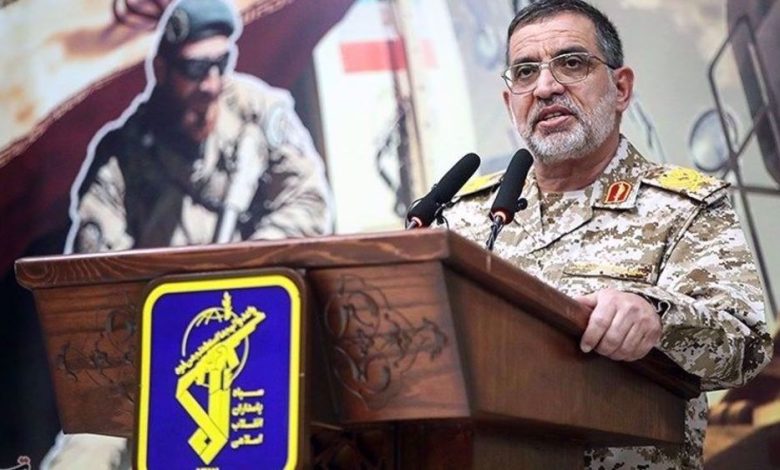
In a statement made during a ceremony on Sunday, Brigadier General Ali Mohammad Naeini announced that Iran had launched two strikes on Israel’s largest oil refinery, located in the city of Haifa, which is under Israeli control. Furthermore, Naeini claimed that the attack targeted an intelligence agency facility of the regime, resulting in 36 fatalities.
He stated that Israel initiated its conflict with Iran following a “miscalculation,” believing the nation to be weakened and incapable of retaliating against the regime’s assaults on the Islamic Republic’s nuclear and missile facilities, as well as the assassination of its leaders.
On June 13, Israel initiated military action against Iran, resulting in the targeted killing of several senior military figures, nuclear experts, and civilians.
Over a week later, the United States joined the conflict by targeting three Iranian nuclear facilities, an action widely seen as a serious breach of the United Nations Charter, international law, and the Nuclear Non-Proliferation Treaty (NPT).
On June 24, Iran effectively implemented successful countermeasures against both Israeli forces and the United States, culminating in the cessation of the unauthorized offensive.
In response to inquiries regarding Iran’s decision not to seek assistance from China and Russia during the 12-day conflict, Naeini clarified that military interventions and engagements in wars are conducted according to existing military treaties. As Iran did not possess a formal military agreement with China and Russia, no requests for aid were made.
He stressed that Iran’s approach was to challenge the portrayal of a “weak Iran” and to achieve this, it was essential to showcase that Iran has the capability to stand firm, even against all of NATO.
An IRGC spokesperson stated that Iran has not received military assistance from China and Russia, clarifying that the support provided was strictly political and intelligence-related.
He highlighted that Iran launched 14 missiles targeting the al-Udeid air base in Qatar, a key US military installation in the region, with six successfully hitting the base. He further mentioned that the Americans reportedly invested $111 million in monitoring the trajectory of Iranian missiles.
In a statement reaffirming Iran’s stance, Naeini emphasized the nation’s opposition to any form of aggression against sovereign states. He stated, “We have neither sought nor initiated war. In the event of conflict, steps must be taken to ensure it does not escalate into a prolonged confrontation.”
He emphasized that the enemy was decisively defeated in the conflict, and since that time, the Armed Forces have been enhancing their readiness and defensive capabilities to effectively manage any potential future conflict.
A spokesperson for the Islamic Revolutionary Guard Corps addressed the adversaries’ information warfare tactics, stating that while they assert air superiority, Iran maintains strengths with its missile capabilities and cyber operations.
He stated that over 400 to 500 cyberattacks have been countered, along with the execution of their own cyber operations, while noting that many of these actions remain confidential.
At the onset of the conflict, the Israeli government initiated a series of coordinated cyberattacks aimed at Iran’s banking infrastructure and state television networks.
In a retaliatory move, the Iranian Armed Forces launched an offensive against key strategic locations within the occupied territories. Among the targets was Beer al-Sabe, identified as a pivotal center for the Israeli regime’s cyber industry and a crucial node in its global cyber warfare network.
On Sunday, Major General Mohammad Pakpour, the commander-in-chief of the IRGC, asserted that Israel and the United States believed the elimination of senior Iranian commanders would trigger a collapse in Iran’s command structure and subsequently disrupt its operational capabilities. However, he described this belief as a significant miscalculation.
He emphasized the critical need to equip Iran’s missiles with stealth technology, in order to improve their capacity to breach Israel’s missile defense system.