Hamas Defends Al-Aqsa Flood Operation, Expresses Willingness for Comprehensive Ceasefire Talks
Hamas has expressed its readiness to engage in a comprehensive strategy during the upcoming second round of Gaza ceasefire negotiations, a senior official stated on Sunday. The movement maintains that its Al-Aqsa Flood operation was a defensive response to longstanding actions by Israel.
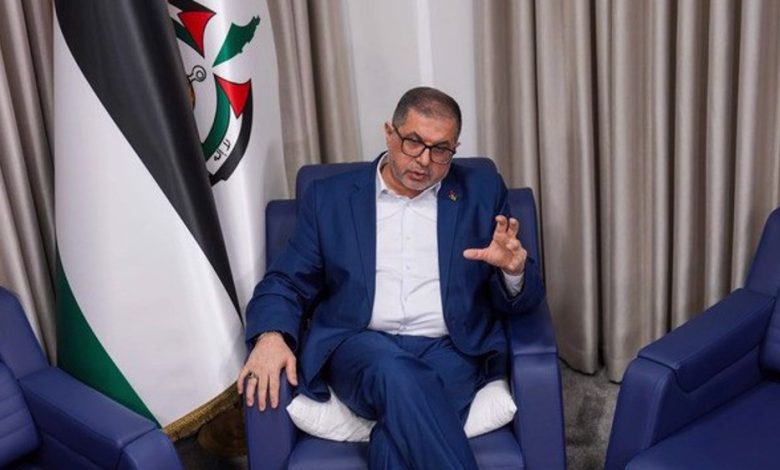
Bassem Naim, a representative from Hamas’ political bureau, conveyed in an interview with the Associated Press in Doha, Qatar, that the organization is receptive to a broad strategy aimed at preventing any escalations or potential conflicts.
In affirming Hamas’s “right to resist,” Naim emphasized the organization’s willingness to discuss the future of its weapons in the context of reaching a durable resolution that would result in the creation of a Palestinian state.
“He emphasized that this period must be approached with seriousness and a comprehensive strategy, noting that Hamas remains ‘very open-minded’ regarding the handling of its weaponry,” he stated.
Discussions may revolve around the possibilities of freezing, storing, or setting aside, with assurances from Palestinian entities, ensuring that these options remain unused throughout the duration of the ceasefire or truce.
The ceasefire in Gaza, implemented on October 10, has reduced the intensity of the US-Israel military actions within the region, which have reportedly resulted in over 70,000 civilian casualties and numerous injuries.
Under the conditions of the ceasefire, Palestinian resistance forces have pledged to release the remaining 47 captives, both living and deceased, who were taken during the Al-Aqsa Flood operation.
All captives have reportedly been freed, with the exception of the remains of an Israeli police officer.
Benjamin Netanyahu, the leader of Israel, who is under scrutiny by the International Criminal Court concerning a Gaza war crimes investigation, announced on Sunday that he anticipates the commencement of the ceasefire plan’s second phase in the near future.
Netanyahu announced that the objective during the second-phase negotiations is to “achieve the disarmament of Hamas and the demilitarization of Gaza.”
Israel, along with its Western allies, has persistently insisted on the full disarmament of Hamas and other resistance factions as a fundamental prerequisite for achieving a sustainable ceasefire.
Palestinians have dismissed this proposal, asserting their fundamental right to armed resistance against what they describe as military occupation, a right they claim is protected under international law.
According to statements made, the relinquishment of their arms without the concurrent creation of an independent Palestinian state and a complete withdrawal from all occupied territories is perceived as tantamount to agreeing to a surrender document that ensures their subjugation.
**International Force Welcomed**
The subsequent phase of the Gaza ceasefire strategy includes additional withdrawal of Israeli troops as a transitional authority takes shape, accompanied by the deployment of an international stabilization force.
A representative from Hamas elaborated on the organization’s anticipations regarding the accord, expressing approval for the establishment of an international force to oversee areas adjacent to the borders.
According to Naim, forces from the United Nations are being invited to monitor the borders. Their role will be to oversee adherence to the ceasefire agreement, document any breaches, and act to prevent any potential escalations.
He firmly rejected the presence or operations of foreign military forces within the region, stating that “we do not acknowledge any mandates that authorize these forces to operate inside the Palestinian territories.”
In a significant step towards political progress following the ceasefire, Naim announced that Hamas and the Palestinian Authority have made headway in discussions regarding the establishment of a new technocratic committee to oversee the daily administration of Gaza.
A Palestinian Cabinet minister, originally from Gaza but currently residing in the West Bank, has been selected to lead the committee, he announced.
**”History Didn’t Begin on October 7″**
In response to inquiries about any regrets concerning the Al-Aqsa Flood operation, Naim characterized it as an inevitable result of decades of Israeli policies stemming from the events surrounding the establishment of the regime in 1948, known as the Nakba.
“History did not commence on October 7,” he stated, emphasizing that the assault was a requisite retaliation to prolonged years of occupation and hostility.
October 7 was characterized as an act of defense, as it was stated that fulfilling their duty involved amplifying the voices of their people.
Hamas has declared that its landmark operation, termed Al-Aqsa Flood, aims to end the debilitating 17-year blockade on Gaza. The operation seeks to defend the sanctity of the Al-Aqsa Mosque against repeated incursions by settlers and to challenge the normalization of occupation policies, which include daily raids into Palestinian cities and the ongoing administrative detention of thousands of Palestinians.
The operation by the Palestinians was a bold move aimed at disrupting the existing status quo, serving as a stark reminder to the international community of the pressing need for justice and the dismantling of the apartheid system impacting Palestinian lives.