West Bank Family Mourns 9-Year-Old Killed by Israeli Regime Forces
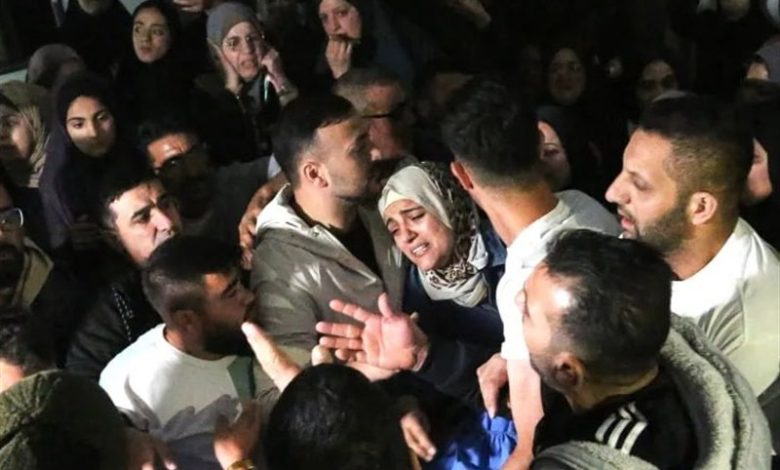
The killing of nine-year-old Muhammad al-Hallaq by Israeli regime troops in the occupied West Bank has devastated his family and deepened outrage over the regime’s ongoing use of lethal force against Palestinian civilians.
On the morning of October 16, nine-year-old Muhammad al-Hallaq woke up in his small village south of Hebron (Al-Khalil).
His mother, Alia, prepared his breakfast and packed extra slices of pizza for him to share with friends.
After returning from school, Muhammad proudly stored his new backpack, eager to use it after the weekend.
He later went outside to watch birds and play football.
He never came home.
At a grocery store nearby, Alia received a phone call from a relative asking about possible clashes with Israeli regime forces in the area.
“I screamed unconsciously, ‘My son Muhammad!’” she recalled.
Her eldest daughter, 14-year-old Mais, had already heard gunfire and ran outside.
Soon after, the family learned Muhammad had been shot.
At the hospital, doctors tried to save him, but Alia heard the heart monitor give a single long beep.
“Muhammad was gone,” she said. “And with him, everything good.”
The UN Human Rights Office in the occupied Palestinian territory said it was “appalled” by Muhammad’s killing, noting he was the 1,001st Palestinian slain by Israeli regime forces or settlers in the West Bank since October 7, 2023, including 213 children.
The office cited “endemic impunity” and “unlawful use of force,” adding that Israeli troops appeared to employ lethal power “to control and repress Palestinians, rather than as a last resort.”
Local witnesses said Muhammad and his friends ran when they saw Israeli military vehicles before troops opened fire.
The Israeli military later claimed it had been responding to stone-throwing, though no reports from the area supported that claim.
An internal inquiry reportedly found that the shooting “deviated from the rules of engagement” and involved “improper use of weaponry.”
Muhammad was the third of five siblings — Mais, 14; Jaddi, 12; Sila, 6; and Elias, 4.
His white robe from Friday prayers remains folded by his bed, beside his books and perfume bottle.
“They killed his childhood,” said Alia, pointing to the empty space where he once slept.
Sila has refused to return to school without her brother, who always walked her there.
Mais said she collapsed upon hearing of his death.
“Muhammad wasn’t just a brother, he was my friend,” she said. “He would stay with me until I fell asleep.”
His new schoolbag still hangs near his bed.
His father, Bahjat, walks past it daily, touching the bed and clothes that still carry his son’s scent.
“His passing left a huge void,” he said. “I see him in every corner of the house.”
Mais said she imagines Muhammad in heaven, laughing and playing.
“I still can’t believe he’s gone,” she said. “And I never will.”