Hamas Denounces Zionist Regime Over Rafah Crossing Blockade and Ongoing Ceasefire Violations
The Palestinian resistance group Hamas has criticized Israel for what it describes as repeated breaches of the ceasefire accord. The organization also condemned the persistent closure of the Rafah border crossing, viewing it as a direct challenge to the truce.
Hamas has accused Netanyahu of creating insubstantial reasons to hinder the agreement and shirk his responsibilities.
On Sunday, Ismail al-Thawabta, the head of Gaza’s Government Media Office, cautioned about the humanitarian repercussions stemming from Israel’s blockade.
Al-Thawabta claimed that Israel is perpetrating acts of genocide by sustaining the closure of border crossings and obstructing the entry of food, effectively leading to forced starvation.
In Gaza, the suspension of 500,000 surgeries has been confirmed, affecting the healthcare system significantly. A total of 32,000 patients, among them 10,000 cancer patients, are in urgent need of traveling abroad to receive essential medical treatment.
Al-Thawabta has urged the guarantors of the ceasefire to take immediate action and pressure Israel to adhere to the terms of the agreement.
He stated, “The occupation should permit the entry of equipment necessary to recover the bodies of its prisoners.”
On Saturday, Mohammed Nazzal, a senior member of the Hamas politburo, criticized Israel for what he described as the “blackmailing of Palestinians” by closing the Rafah border crossing. This condemnation comes despite Hamas maintaining its commitment to the truce.
He stated, “We oppose using the closure of the Rafah crossing as a means to blackmail Palestinians, though we remain committed to the terms of the agreement.”
Trump accused Netanyahu of leveraging the concern for “political gain” in an effort to postpone the second phase of the ceasefire.
The resistance movement has called upon the guarantors and mediators of the ceasefire to take immediate action to ensure the regime adheres to the agreement’s stipulations. They urged efforts to halt the violence against the Palestinian population and emphasized the crucial need to open the Rafah crossing.
Hamas and the Israeli regime have officially agreed to a ceasefire proposal put forth by Trump on October 9, signaling the initial stage of a more comprehensive “peace plan.”
The agreement stipulates a cessation of hostilities, the withdrawal of Israeli forces from Gaza, the facilitation of humanitarian aid to the blockaded region, and the exchange of captives and abductees.
On Monday, Hamas released all surviving Israeli captives and repatriated the remains of 12 of the 28 deceased Israelis.
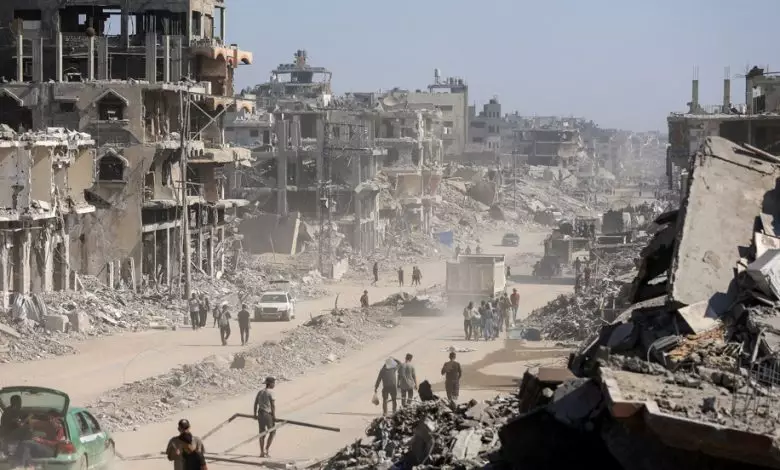
The resistance group has highlighted the extensive devastation in Palestinian areas and the ongoing Israeli military presence in certain regions of Gaza, stating that these factors have significantly complicated efforts to locate the bodies of captives.
The International Committee of the Red Cross (ICRC) has expressed its support for the stance taken by Hamas, acknowledging that the process of recovering the bodies will require considerable time.
During a press briefing held in Geneva on Tuesday, ICRC spokesperson Christian Cardon highlighted the formidable task of locating human remains, describing it as an even greater challenge than the release of living individuals. Cardon noted that this complex process may span several days or even weeks.
Since Israel initiated its military campaign against Gaza on October 7, 2023, reports indicate that nearly 68,000 Palestinians have lost their lives, with over 170,000 individuals sustaining injuries.
Despite the ceasefire implemented last week, the casualty toll in Gaza continues to climb as more bodies are being unearthed from the debris resulting from Israeli airstrikes.
Israel is intensifying its airstrikes in various sectors of the blockaded territory, further worsening the ongoing humanitarian crisis.