Iraq Faces Potential New War Front Amid Ongoing Turmoil
Iraq finds itself at a pivotal juncture, navigating through a complex landscape marked by Israeli threats, US pressure, and precarious border conditions. The challenges of resistance, disarmament, national security, and regional stability hang in the balance as the nation seeks a path forward.
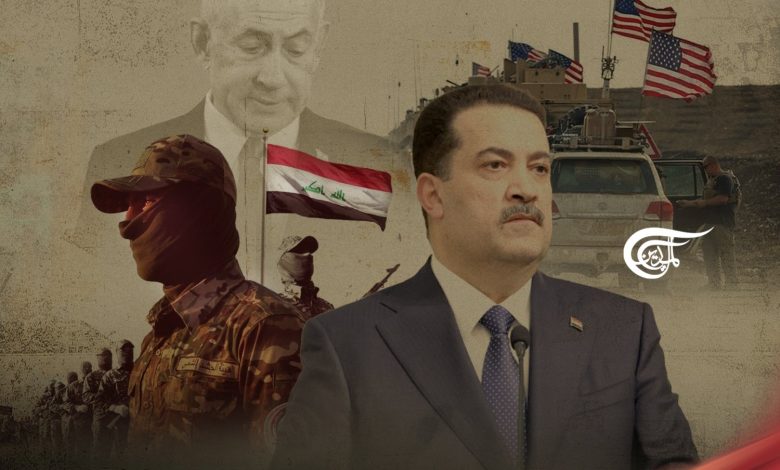
Heightened instability currently grips West Asia, with Iraq finding itself at the epicenter of regional unrest. During his address at the United Nations, Israeli Prime Minister Benjamin Netanyahu issued direct threats aimed at resistance factions in Iraq, sparking debate over Israel’s intentions and the implications of his message.
Amidst ongoing internal debates concerning the arms of Iraq’s resistance factions, alongside the anticipation of upcoming elections and enduring threats from its Syrian frontier, Iraq finds itself at a pivotal moment. As these pressures converge, questions arise over whether Baghdad is on the cusp of becoming the next battleground in the conflicts involving Israeli occupation, or if it has managed to establish a delicate yet viable role as a stabilizing force in the region.
In a speech delivered at the UN General Assembly on September 26, Netanyahu specifically identified Iraq as one of the countries where resistance groups could expect repercussions from Israel. Iraqi Foreign Minister Fuad Hussein denounced these threats, labeling them as “unacceptable,” and asserted that any assault on an Iraqi individual would be regarded as an affront to the entire nation.
In a recent interview with Al Mayadeen Iraq, independent politician Abu Miithaq al-Masar criticized Israeli Prime Minister Benjamin Netanyahu’s threats, labeling them as baseless and stemming from a position of weakness. Al-Masar highlighted Netanyahu’s inability to secure decisive victories in Gaza or facilitate the release of captives, questioning the basis of his perceived authority to act without restraint. Al-Masar warned that any military aggression against Iraq would entangle the occupiers in another expensive and complex conflict.
According to Ammar al-Azzawi of Iraq’s Sovereignty Alliance party, Netanyahu would not act without the support of Western nations and the United States. Al-Azzawi argued, “If he had not secured backing, including from the US, to support his actions, he would not have dared to speak.” He cited Netanyahu’s perceived vulnerability, emphasized by the sparsely attended UN hall during his address, and suggested that Netanyahu is seeking to divert attention from his shortcomings. Al-Azzawi also highlighted Iraq’s emergence as a crucial component of the resistance axis, with factions firmly entrenched in Iraqi society and politics, as detailed in recent reports. He claimed that, contrary to weakening their position, Netanyahu’s threats have bolstered their electoral prospects. Al-Azzawi remarked, “The entity cannot stay silent about Iraq, but it also cannot endure the repercussions.”
Analysts concur that despite the inflammatory nature of Israeli rhetoric, the probability of an actual military engagement with Iraq is considered low. A political analyst, A’ed al-Hilali, conveyed to Al Mayadeen Iraq that relative tranquility is maintained through agreements involving Baghdad, resistance factions, and Washington. These agreements are bolstered by international apprehensions regarding oil market stability and global investments in Iraq.
The disarmament of Iraq’s resistance factions has remained a pivotal topic within the nation’s political sphere. In the context of escalating regional tensions and attempts to undermine the resistance axis, the United States has escalated its pressure on Baghdad to reduce ties with Iran. As part of this strategic approach, the US Department of State has recently classified four Iraqi resistance groups—al-Nujaba Movement, Kata’ib Sayyed al-Shohada, Ansarullah al-Awfiya, and Kata’ib Imam Ali—on its designated terror list.
Al-Azzawi contended that undermining Iraqi factions has been a longstanding Israeli goal since 1948, carried out through conflicts, terrorism, and political infiltration. However, he described disarmament efforts as mere media posturing, asserting that even disarming one faction or ten would not alter the overarching sentiment: all Iraqis oppose Israel and, if provoked, would take up arms against it. Iraq serves as the strategic backbone for the axis of resistance in its opposition to the Israeli occupation, and together, they remain a persistent concern for the occupiers. As a result, any endeavor to weaken Iraq is directly linked to attempts to destabilize the wider resistance movement.
In an interview with Al Mayadeen Iraq, political analyst Hussein al-Kinani highlighted that the United States has been compelled to adapt to the realities in Iraq. He stated, “It became critical when US interests themselves came under threat. The pivotal factor was the agreement that halted resistance operations against US bases in Iraq.” For many Iraqis, the notion of “disarmament” is not viable. The resistance factions, though not conventional armies equipped with tanks and fighter jets, embody the determination to defend their national dignity and the readiness to challenge the occupation. Any enforced disarmament, akin to previous US operations in Iraqi cities, could risk igniting internal strife within the country.
Iraq is contending with ongoing security challenges stemming from Syria, where US and Israeli-backed armed groups operate in close proximity to its borders. This situation poses a dual threat of potential spillover violence and provides a possible justification for Israeli military action against Baghdad.
Baghdad has adopted a balanced diplomatic approach, presenting itself as a mediator between Iran and the United States. This positioning has allowed Iraq to ease tensions while maintaining its strategic independence and ensuring internal and regional stability amid external developments. Al-Kinani noted, “There is a clear international intention for Iraq to stay stable, particularly along the Iraqi-Syrian border. This is not due to a shift in Washington’s stance towards the resistance, but rather because Israel is already contending with multiple challenges.”
Relocating attention to the al-Hawl camp in northeastern Syria, this situation highlights significant vulnerabilities. The camp, home to thousands of former ISIS combatants and their families, continues to serve as a potential hub for extremist ideologies that jeopardize Iraq’s security. The facility is managed by the Kurdish-led Syrian Democratic Forces (SDF) along with its civilian counterpart, the Autonomous Administration of North and East Syria (AANES).
Following the recent CENTCOM meeting held on Saturday, Admiral Brad Cooper, leader of the US Central Command, underscored the importance of repatriating foreign nationals who are currently detained and displaced in Syria’s al-Hawl camp as a crucial strategic action to combat ISIS and thwart its re-emergence. Despite Baghdad’s efforts to dismantle the camp, experts point out the logistical and political challenges, especially the reluctance of foreign governments to reclaim their citizens. This issue reflects Iraq’s wider challenge: navigating security threats that are both domestic and have regional and international dimensions.
Currently, Iraq’s situation is unstable, with threats from Netanyahu deemed reckless but unlikely to result in direct Israeli attacks. This is due to Iraq’s crucial role in global oil supply and a delicate balance upheld by US mediation. Efforts to disarm resistance factions are considered unrealistic, given their deep integration into Iraqi society and function as a national defense against occupation and extremism. Alongside these challenges, the Syrian border remains a persistent risk that Iraq aims to address through diplomacy and careful security measures.