Iranian Foreign Minister Declares ‘Snapback’ Vote Legally Void
Foreign Minister Abbas Aragchi has declared that attempts by the European trio—comprising the UK, France, and Germany—to reinstate UN Security Council sanctions on Iran are "null and void" and hold no legal authority.
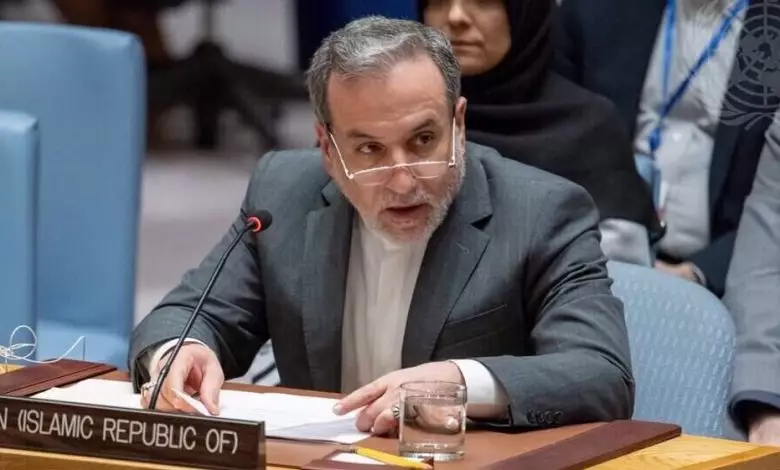
On Friday, the senior diplomat addressed the Security Council following a vote regarding the activation of the “snapback” mechanism within the 2015 nuclear agreement involving Iran and other parties, which would reinstate previous sanctions.
The United States, alongside its allies, including the troika, vetoed a draft resolution on the issue in an effort to instigate the reimplementation of sanctions by the weekend.
Araghchi emphasized that the Islamic Republic has consistently adhered to the stipulations of the nuclear deal, the Nuclear Non-Proliferation Treaty, and the NPT’s Safeguards Agreement, a commitment verified by 15 reports from the International Atomic Energy Agency.
He stated that the compliance has rendered any attempts to malign Iran’s peaceful nuclear energy program as unlawful.
The foreign minister highlighted that the United States, along with three other countries, has been making significant efforts to exert pressure on Iran regarding what the minister termed as false allegations surrounding the Islamic Republic’s nuclear program. This is occurring despite what the minister described as numerous breaches by these nations of the nuclear agreement or international law aimed at targeting Iran.
He highlighted the United States’ illegal and unilateral exit from the agreement in 2018, the E3’s failure to fulfill their commitment to bring Washington back to the accord, and the unlawful and unprovoked American assaults on Iran’s nuclear facilities in June as examples.
Araghchi characterized the effort to reinstate the Security Council’s sanctions as a “blatant misuse of authority.”
‘Devoid of Legal Standing, Politically Irresponsible, and Procedurally Deficient’
The vetoes issued on Friday in this situation are described as “legally void, politically reckless, and procedurally flawed,” according to the statement.
Furthermore, the official emphasized that October 18 will serve as the automatic “Termination Day” under Resolution 2231, which supports the nuclear agreement.
All nuclear-related restrictions “are set to conclude permanently” on that specified date, he noted.
Araghchi urged the UN secretary-general to refrain from any efforts to reactivate sanctions-related mechanisms within the organization.
**”United States Accused of Abandoning Diplomatic Strategies; Europe Criticized for Neglect”**
An official criticized the United States for “betraying diplomacy,” but attributed the primary responsibility for “burying it” to the E3 group.
Araghchi criticized Western allies for allegedly distorting the nature of Iran’s nuclear program, describing it as peaceful, and accused them of repeating unfounded claims attributed to the Israeli government.
He criticized the United States for its assaults on nuclear facilities, suggesting that these actions were intended to bolster Israeli aggression against Iran. This condemnation comes despite Iran’s willingness to engage in diplomatic efforts, viewing the attacks as an example of aggression against the country’s diplomatic pursuits.
“Iran’s official stance emphasizes that respectful diplomatic engagement is the only way to effectively communicate and negotiate with the nation.”
He stated that the West’s actions have “obliterated whatever remaining trust” among the Iranian population, calling on Western allies to alter their approach.
The foreign minister emphasized that Iran will not yield to threats or pressure, stating that the nation responds solely to respect.
Diplomacy remains an enduring concept, yet has encountered increasing challenges in execution.
In a statement to reporters after the vote, Araghchi emphasized that while diplomacy “never dies,” it has become increasingly challenging due to the antagonistic measures directed at the Islamic Republic.
An official highlighted the prolonged history of perceived betrayals by the United States against the Islamic Republic, despite Tehran’s efforts to pursue diplomatic solutions.
“The track record of negotiations with the United States has been fraught with challenges, leading to a significant lack of trust towards the country.”
Araghchi referenced the Leader of the Islamic Revolution, Ayatollah Seyyed Ali Khamenei, who characterized the negotiations with Washington as having reached a complete impasse.
The leader’s remarks were deemed “entirely correct,” according to his statement.
The official expressed commendation for the nations that voted in favor of extending sanction relief, namely China, Russia, Pakistan, and Algeria, highlighting their decision as “choosing the right side of history” by maintaining openness to dialogue.