Lebanese MP Fadlallah: Hezbollah Demands Inclusion of Reconstruction Funds in State Budget
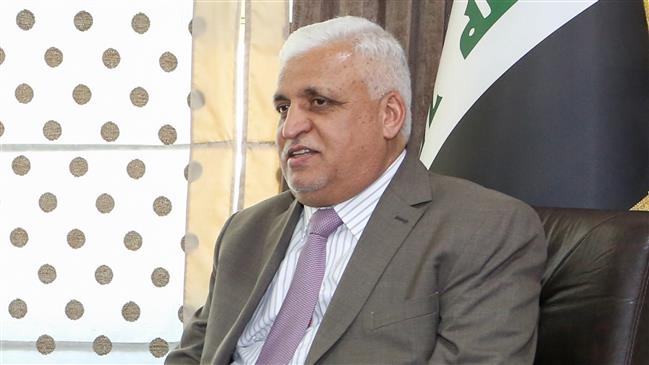
A member of the Loyalty to the Resistance Parliamentary bloc, MP Hassan Fadlallah, emphasized the group's strong commitment to their principles and objectives.
A member of the Loyalty to the Resistance Parliamentary bloc, MP Hassan Fadlallah, emphasized an unwavering commitment to the path of resistance, describing it as essential to thwart the enemy’s efforts to “occupy our country, expel us, and displace us from this land.”
In Lebanon, the sole course of action is to rely on the elements of strength available, as the adversary pushes beyond boundaries in pursuit of its expansionist aims, observed MP Fadlallah. He emphasized, “The safeguard of our land in Bint Jbeil and throughout these towns and villages, particularly south of the Litani River, against occupation, lies in the existence of this resistance and the enduring spirit instilled by the sacrifices of martyrs within their descendants and brethren ready to protect their homeland.”
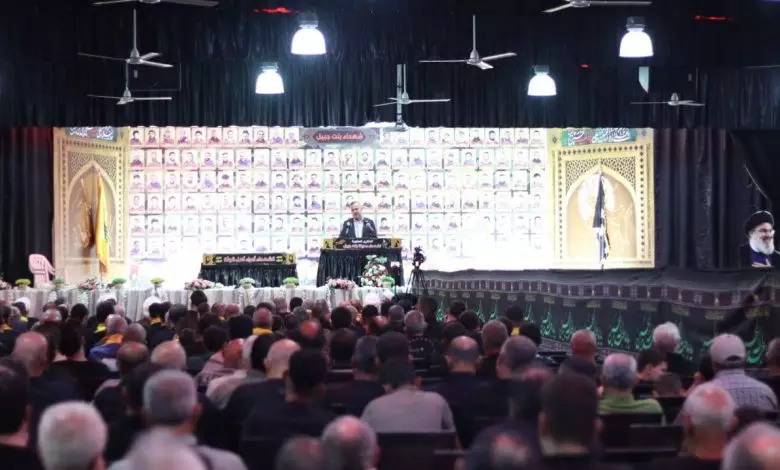
MP Fadlallah delivered his remarks at a substantial gathering organized by Hezbollah to commemorate the annual anniversary honoring the martyrs of Bint Jbeil. The event took place at the Ahl al-Bayt complex in the city, attracting a congregation of scholars, prominent figures, families of the martyrs, and local residents.
MP Fadlallah emphasized that the resistance movement has transferred responsibility to the state to address attacks under the ceasefire agreement, underscoring the state’s role in ensuring compliance. He acknowledged the ongoing pain and suffering inflicted by the adversary’s attempts to undermine stability, security, and the welfare of Lebanon’s citizens. Despite these challenges, Fadlallah emphasized the importance of placing the state at the forefront to fulfill its obligations as outlined in the government’s ministerial statement. He expressed concerns over the state’s current incapacity or apparent negligence, with some officials even exacerbating the issue. Nevertheless, Fadlallah affirmed that the government must ultimately accept full responsibility for its actions.
He stated, “We’ve observed assaults occurring in close proximity to hospitals and schools, as this adversary lacks regard for any human or ethical standards in relation to individuals.”
In a recent statement, he emphasized that the latest attacks further underscore the point—although evidence is hardly necessary—that the adversary cannot be tackled through mere official condemnations. He asserted that the government possesses a range of options across political, diplomatic, and international spheres to exert pressure on those who facilitated the agreement, with the aim of halting these assaults and the infringement on the nation’s dignity and sovereignty. The speaker urged the government to adopt a posture befitting a state accountable to its citizens, and not to treat the situation lightly or trivialize the sanctity of lives lost.
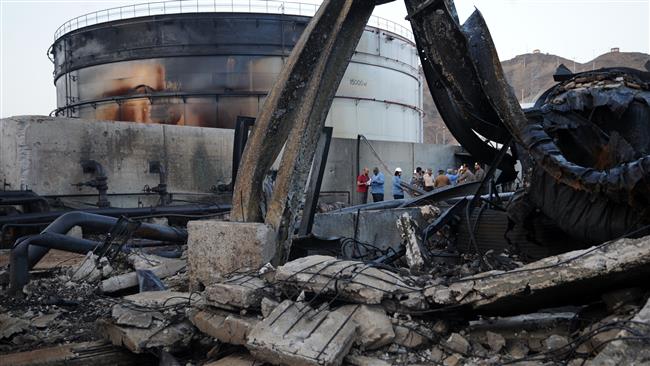
In addressing the reconstruction efforts, MP Fadlallah emphasized the necessity of allocating clear budgetary funds, even if initially limited, for the rebuilding of damaged homes, underscoring this as a governmental duty. He stressed the parliament’s unwavering position, asserting that reconstruction must be a fundamental component of the budget. He highlighted the state’s financial capacity to initiate the process and framed the issue as a principled stance. Fadlallah also noted the existence of an international political decision, with local influences, aimed at hindering reconstruction, particularly in the south. He committed to pursuing this cause vigorously within state institutions, maintaining that the state will not be absolved of its obligations.
Hezbollah has affirmed its dedication to fulfilling its responsibilities, commitments, and pledges concerning the announced reconstruction efforts. This commitment specifically pertains to the initial phase, focusing on providing shelter and repairs. The group assures that this process will persist at the suitable time and will not be neglected.
In the context of the parliamentary elections, MP Fadlallah remarked that certain factions are intent on altering the existing legislation under the pretext of enabling expatriates to vote for all 128 parliamentary seats. He emphasized the presence of an existing law, tasking the government with its implementation and the issuance of necessary decrees, asserting that it should not be amended to alter domestic dynamics per certain factions’ desires. Any adjustments to this law, he argued, should advance rather than regress. A legislative proposal currently sits with the electoral committee, aiming to realize Article 22 of the constitution, which calls for the election of a parliamentary council beyond the sectarian quota framework, alongside the formation of a Senate. Fadlallah stressed that those claiming to represent Lebanon’s popular majority should embrace the sectarian system and the standing constitution, while advancing towards a modern electoral law devoid of sectarian quotas. In this context, the popular majority would subsequently elect a parliament, establish a government, and steer governance.