Iran Says Nuclear Material Buried at Bombed Sites, Denies Unrestricted IAEA Access
Iran has declared that its nuclear materials continue to lie beneath the debris from recent attacks, emphasizing that any inspections conducted by the United Nations must adhere to newly established guidelines. The country has dismissed Western calls for unrestricted access, amidst persisting diplomatic tensions.
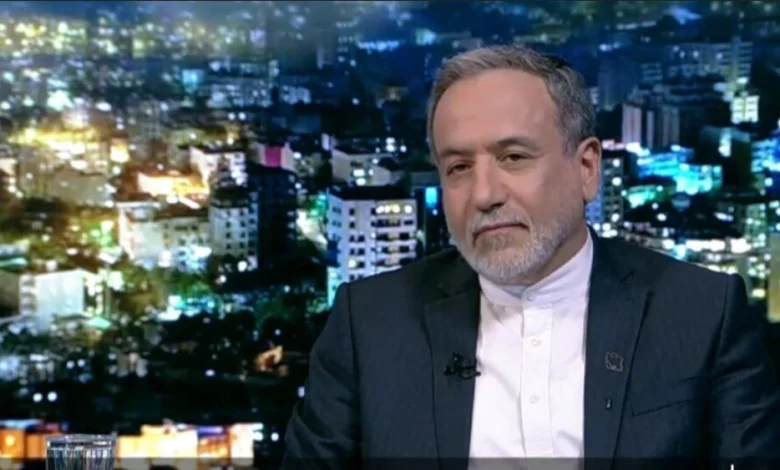
Foreign Minister Abbas Araghchi announced on national television’s IRIB “Special News Program” Thursday evening that matters concerning nuclear materials are currently buried under the wreckage resulting from the attacks on the bombed facilities.
The Atomic Energy Organization of Iran is currently assessing the accessibility and status of these materials, he stated.
Araghchi announced that upon the completion of the evaluation, the findings will be delivered to Iran’s Supreme National Security Council. The council will then determine any further actions, taking into account the nation’s security considerations.
He stated that the International Atomic Energy Agency (IAEA) has acknowledged that the present circumstances differ from previous situations, and that Iran’s collaboration with the agency “cannot continue as it did before.”
On Tuesday, following a three-hour meeting in Cairo, Araghchi and IAEA Director-General Rafael Grossi finalized an agreement outlining practical measures to recommence inspection activities within Iran.
The agreement comes after a prolonged suspension of cooperation. Tehran had ceased allowing IAEA inspectors access following a 12-day military offensive on its nuclear facilities by Israel and the US in June and July.
In response to what is perceived as unprovoked aggression, the Iranian parliament has enacted legislation prohibiting the return of inspectors unless assurances are provided for the safeguarding of the nation’s nuclear facilities.
Araghchi stated that the International Atomic Energy Agency (IAEA) has deemed the attacks on Iran’s nuclear facilities as unacceptable and has agreed that future cooperation should adhere to a new framework aligned with Iran’s parliamentary legislation and the directives of the Supreme National Security Council.
The International Atomic Energy Agency (IAEA) has acknowledged the emergence of new circumstances, indicating that collaboration cannot proceed as it once did. Furthermore, the agency has concurred that the legislation enacted by parliament and the perspectives of the Supreme National Security Council must be upheld.
He clarified that, at present, inspections at the damaged locations are not approved, impeding environmental remediation efforts. Any future inspections would necessitate additional negotiations and authorization from the Supreme National Security Council.
Araghchi highlighted differences between his version of events and that of Grossi following the signing of the agreement in Cairo.
Director General Grossi announced that the accord envisions granting access to all facilities and installations within Iran. However, Araghchi emphasized that such access has not yet been provided, and that the specifics regarding the scope and timeline of any cooperation will be addressed in upcoming discussions.
In any agreement, each party offers its own perspective. The Iranian Foreign Minister emphasized that Mr. Grossi must present a report to the Board of Governors that aligns with their expectations. He provides his interpretation, which might not match Iran’s, yet the agreement’s text remains unchanged, he stated on Thursday.
In Cairo, Araghchi announced that access would be restricted exclusively to the Bushehr nuclear power plant. This allowance is specifically linked to its fuel replacement process, a decision previously sanctioned by the Supreme National Security Council.
Araghchi emphasized that any decisions concerning collaboration, inspections, and data exchange with the International Atomic Energy Agency fall solely under the jurisdiction of the Supreme National Security Council. This measure is designed to prevent any previous issues related to espionage and one-sided agency access from happening again.
This development occurs amid escalating tensions following sabotage attacks on Iran’s nuclear facilities, for which Iran has held Israel responsible.
The assaults have further strained the delicate relations between Tehran and Western nations regarding Iran’s nuclear program and the prospects of the 2015 Joint Comprehensive Plan of Action (JCPOA).
Araghchi emphasized that all diplomatic initiatives are executed in close collaboration with relevant authorities and adhere strictly to designated mandates, further stating that Tehran remains steadfast in its commitment to national security and will not yield to external pressure.
He declared that there would be no retreat in the defense of the people’s rights and security, asserting that propaganda would not sway their resolve. Firm action, he emphasized, would be taken to safeguard the interests of the Iranian populace.
Araghchi dismissed the conditions imposed by the European trio—France, Germany, and the UK—for the extension of UN Security Council Resolution 2231, labeling the terms as “unrealistic” and contrary to Iran’s national interests.
He stated that there was a proposal for certain conditions to extend the mechanism, with promises of creating “a new opportunity for diplomacy.” However, these conditions were not accepted, as they were deemed unrealistic and unreasonable, failing to align with national interests. Having a recognition of such rights was also firmly dismissed.
In 2015, the United Nations Security Council passed Resolution 2231, which endorsed the Joint Comprehensive Plan of Action (JCPOA), commonly known as the Iran nuclear deal. This resolution detailed a timeline for the gradual removal of international sanctions on Iran, contingent upon Tehran’s adherence to specific constraints on its nuclear activities. Moreover, the resolution includes a “snapback mechanism,” a provision permitting the reimplementation of UN sanctions should Iran be deemed significantly non-compliant with the agreement.
Araghchi has stated that discussions surrounding the resolution remain unresolved. Iran’s delegation in New York is presently engaging in “intensive consultations” in collaboration with Russia, China, and “certain other Security Council members” to tackle the matter.
He stated that their conditions were never considered.
An Iranian diplomat highlighted that Iran’s collaboration with the International Atomic Energy Agency (IAEA) operates independently and is not linked to European stipulations.
Araghchi stated that consultations with the Agency were already underway prior to the proposal of those conditions.
He noted that notwithstanding the assaults on Iran’s nuclear sites, collaboration with the International Atomic Energy Agency presents strategic advantages along with legal responsibilities for Iran.
He stated that despite the occurrences of developments and attacks, including the bombing of nuclear facilities, collaboration with the Agency offers advantages and imposes certain responsibilities.
A representative confirmed that, as a dedicated participant of the Non-Proliferation Treaty, they are obligated to adhere to international standards as long as their membership in the pact is maintained.
He cautioned that should the snapback sanctions mechanism be activated, the nature of Iran’s response will be determined by the Supreme National Security Council, a pivotal entity in shaping foreign policy decisions.
Iran has contemplated withdrawing from the Nuclear Non-Proliferation Treaty (NPT) in the past; however, the nation possesses alternatives that do not involve leaving the treaty. Acknowledging the ever-changing nature of foreign policy, decisions should be made in accordance with prevailing conditions and at an appropriate time, he emphasized.
Araghchi emphasized that enacting the snapback mechanism, akin to military actions targeting Iran’s nuclear sites, would only serve to exacerbate the situation instead of addressing it. He warned that if European nations opt to implement snapback, they risk forfeiting their remaining influence and could find themselves excluded from any negotiation talks. He described this potential move as a significant error that would yield no constructive outcomes.