Maduro Declares U.S. Invasion of Venezuela Impossible Amid Military Buildup Assertions
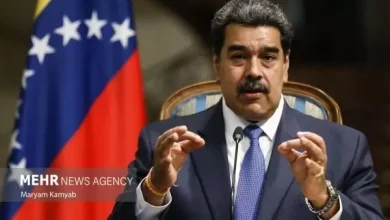
Venezuelan President Nicolás Maduro has downplayed escalating worries over a possible U.S. invasion, firmly stating that American forces have "no chance" of penetrating the nation, even as a substantial U.S. naval presence amasses near Venezuela's territorial waters.
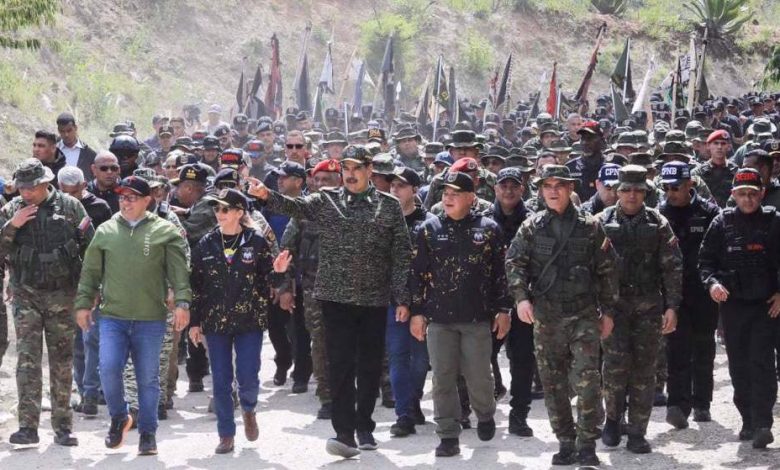
In a speech delivered to the troops on Thursday, Maduro declared that the nation is now “stronger than yesterday” and “more prepared to defend peace, sovereignty, and territorial integrity.”
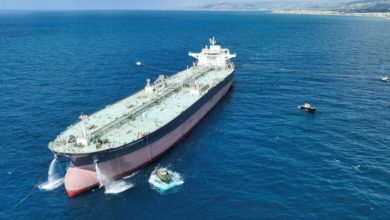
The United States Navy has dispatched a flotilla and deployed thousands of military personnel to the Caribbean region, purportedly to intensify efforts against Latin American drug trafficking organizations.
Admiral Daryl Claude, Chief of Naval Operations for the United States Navy, has confirmed the arrival of the USS San Antonio, USS Iwo Jima, and USS Fort Lauderdale in the region. These vessels are transporting over 4,500 US service members, which include approximately 2,200 Marines.
Additionally, U.S. military aircraft, such as P-8 reconnaissance planes, have been operating in international airspace to collect intelligence. Furthermore, eight U.S. warships and a nuclear-powered fast attack submarine are currently present or anticipated to arrive in the near future.
Last week, sources within the US Navy reported the deployment of three Aegis-class guided missile destroyers to the vicinity of Venezuelan waters.
The significant scale of the United States’ military deployment in the region, officially described as an operation targeting drug cartels, has drawn skepticism. Critics are questioning whether the substantial military presence aligns with the stated objectives of the mission.
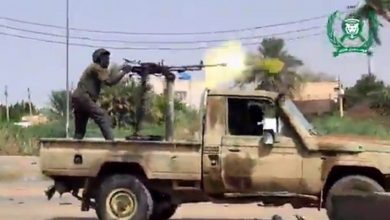
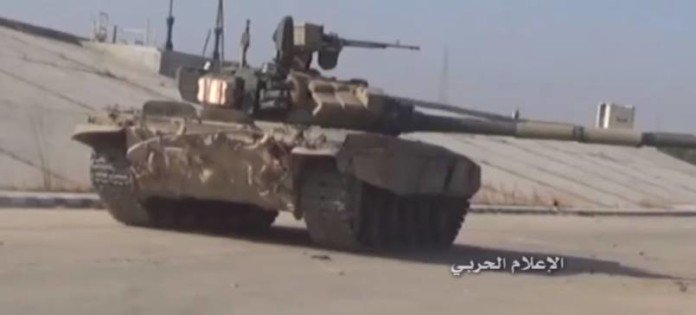
In reaction to increased tensions, Caracas has taken significant defensive measures. Venezuela has strategically positioned warships and drones along its shoreline to closely observe the advancing U.S. naval forces. Concurrently, the government has initiated a recruitment drive to enhance its military preparedness by enlisting additional personnel.
Maduro emphasized that the country’s diplomatic approach does not rely on aggression or intimidation, stating, “Our diplomacy isn’t the diplomacy of cannons, of threats, because the world cannot be the world of 100 years ago.” However, he underscored the nation’s determination to protect itself if the situation demands.
Venezuelan Interior Minister Diosdado Cabello has declared the mobilization of 15,000 military personnel to the western regions of Zulia and Táchira, both of which border Colombia.
This initiative is a component of Caracas’s extensive strategy to address drug trafficking and criminal organizations, which, according to the government, pose a risk to national security.
Cabello emphasized Venezuela’s active stance against drug trafficking, stating, “Here, we do fight drug trafficking; here, we do fight drug cartels on all fronts.” He reported that Venezuelan authorities have confiscated 53 tonnes of narcotics this year, underscoring the government’s dedication to addressing the problem domestically.
In diplomatic developments, Venezuela’s envoy to the United Nations, Samuel Moncada, engaged in discussions with UN Secretary-General Antonio Guterres. Moncada expressed strong objections regarding the increased U.S. military presence, labeling it as “a massive propaganda operation.” He suggested that this move was designed to rationalize what he described as “kinetic action,” a term often used to refer to military intervention.
In a statement, Moncada criticized the decision, expressing disbelief at the notion of combatting drug trafficking operations using nuclear submarines, calling the strategy “ridiculous.”
He asserted that Venezuela does not constitute a threat to other nations and condemned the United States for crafting a narrative to justify its military involvement.
On Thursday, Maduro expressed gratitude to Colombia for deploying an additional 25,000 troops to the Colombia-Venezuela border. This move aims to address the pressing issue of “narco-terrorist gangs,” highlighting a mutual regional commitment to tackling drug trafficking.
Simultaneously, he accused Washington of attempting to destabilize Venezuela.
He expressed confidence in overcoming what he described as a challenge presented to them, labeling it an imperialist threat to both continental peace and the nation itself.
Tensions persist between the United States and Venezuela, as Washington continues to support opposition figures and maintain sanctions designed to exert pressure on Maduro’s administration.
Caracas maintains a firm stance on the necessity for its sovereignty and territorial integrity to be honored, strongly opposing any unwarranted foreign intervention.