Hezbollah Cautions Against Civil War in Lebanon, Urges Army to Avoid Conflict Stoked by US and Regional Powers
Political Aide to Hezbollah Secretary General, Hajj Hussein Al-Khalil, stated on Wednesday that the organization...
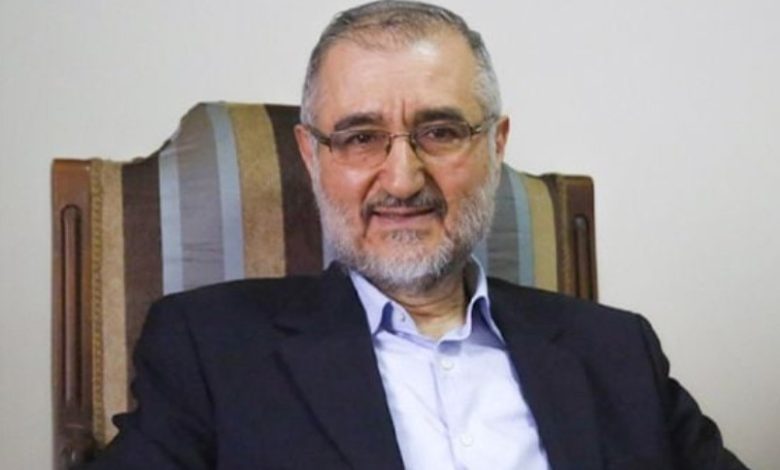
In remarks made on Wednesday, Hajj Hussein Al-Khalil, the political aide to Hezbollah’s Secretary General, suggested that US policies are aimed at dismantling Lebanon’s defensive and resilient capabilities, with the intention of transforming the nation into a colony controlled by US and Israeli interests.
Al-Khalil highlighted in a statement that the US administration has successfully influenced Lebanese authorities to move towards normalization and compliance, which has been ultimately realized through the Abraham Accords.
In a statement expressing disapproval, it was claimed that Washington, through overt and covert influence by both U.S. and regional authorities in Lebanon, has compelled the Lebanese government to make regrettable decisions. This is said to be the initial move in a broader strategy leading toward capitulation and subservience.
Al-Khalil criticized what he described as “audacious and offensive American directives” conveyed through remarks by members of the American delegation in media appearances and in discussions with Lebanese officials. These remarks, urging the disarmament of Hezbollah as a prerequisite for any so-called security and stability, were denounced as a stark rejection of the agreement facilitated by the United States and France in October 2024. The agreement’s initial and unequivocal terms called for a halt to hostilities and an end to all Israeli assaults by land, sea, and air, leaving no room for misinterpretation.
The United States administration, which dispatched envoys to Beirut including Ortagus and subsequently Tom Barak with multiple proposals, later sent an expanded delegation consisting of members of Congress and administration officials. This delegation aimed to completely distance itself from prior pledges and commitments to exert pressure on Israel to halt daily attacks and withdraw from occupied areas in Lebanon. This move contradicted recent assurances made by the American envoys to Lebanon’s three presidents.
According to the statement, the effort by the United States to engage the Lebanese National Army in internal confrontations and drive a wedge between the army and the resistance is viewed as a deplorable attempt to undermine two core pillars of Lebanon: the military and the resistance.
Al-Khalil emphasized the condemnation of this reprehensible movement and urged Lebanese officials to remain vigilant against falling into such perilous traps.
Al-Khalil asserted that the assertion made by certain stakeholders within the nation, notably those leading the executive branch, regarding their actions being a fulfillment of the Taif Agreement, constitutes a serious mistake and a significant suspicion that has been realized in light of the ongoing American and regional political interventions.
The Taif Agreement expressly affirmed Lebanon’s right to employ all necessary actions to liberate and protect its territory, emphasizing the resistance of its esteemed population. This principle has been consistently reflected in the ministerial declarations of all successive Lebanese administrations post-Taif. A prevailing concern is the potential descent of the country into civil conflict, which the Taif Agreement was designed to prevent following an extended period of hardship for the Lebanese people.
In a recent statement, an advisor to the Hezbollah leader expressed optimism that Lebanese officials, including the President of the Republic, who are committed to the nation’s independence and security, will take decisive action to halt the political subservience of the Lebanese government. This involves safeguarding the esteemed national institution, the Lebanese Army, from internal conflicts that threaten the nation’s security and stability. Additionally, the advisor urged a reassessment of both the form and content of interactions with international and regional envoys concerning tendencies that jeopardize Lebanon’s security, civil peace, and sovereignty.