Iran’s Military Leaders Assert Armed Forces Ready to Counter Any Threats
Iran's senior military leadership has emphasized the full operational preparedness of the nation's Armed Forces to repel any prospective hostile actions against Iranian territory.
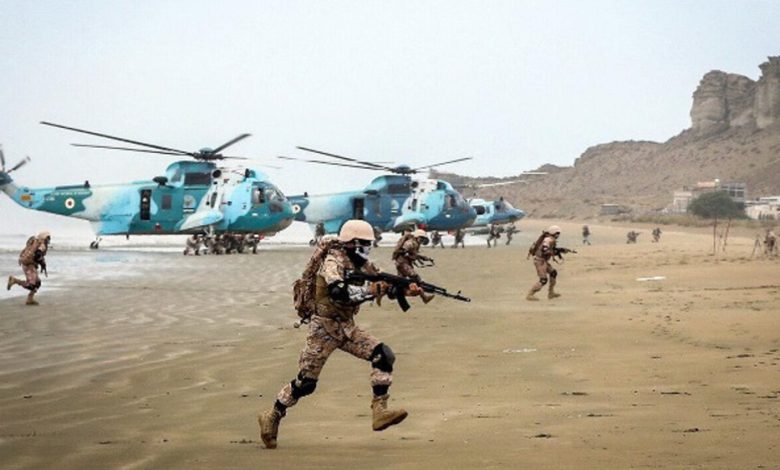
The commander of the Khatam al-Anbiya Central Military Headquarters announced on Wednesday that the Armed Forces are maintaining a state of heightened readiness, vigilantly observing enemy activities. He warned that any misstep by adversaries attempting to violate the nation’s sovereign territory would be met with a significantly more devastating retaliation.
The declaration coincides with the Iranian Navy’s plans to initiate the operational phase of its Eqtedar (Authority) 1404 missile exercise, set to begin on Thursday.
Rear Admiral Abbas Hassani, a spokesperson for the Navy, announced that a two-day missile exercise is set to occur in the Sea of Oman and the northern Indian Ocean. The operation will incorporate surface and subsurface vessels, aerial units, coastal missile sites, sea-based missile systems, and electronic warfare units.
Hassani stated that the exercise will include missile launches, electronic warfare drills, and unmanned aerial vehicle operations, drawing on experience from past exercises and established operational protocols.
The Navy spokesperson emphasized the deployment of a variety of precision cruise missiles, covering short, medium, and long ranges, to effectively target and eliminate surface vessels.
Hassani highlighted that the exercise is designed to bolster the force’s combat preparedness, instill public confidence, advance operational planning, enhance command and control capabilities, and reinforce deterrence utilizing domestic expertise.
On Wednesday, Iran’s Defense Minister, Brigadier General Aziz Nasirzadeh, disclosed that the missiles deployed by the Armed Forces during the 12-day conflict with Israel in June were of domestic origin, developed several years prior. He cautioned that in the event of any renewed Israeli assault, newly-produced missiles possessing significantly enhanced capabilities would be utilized.
“In the conflict lasting 12 days, we encountered a thoroughly backed force,” stated Nasirzadeh. “During this battle, the Islamic Republic of Iran wasn’t merely up against the Zionist regime; we faced the comprehensive logistical, intelligence, and support resources of the United States throughout this confrontation.”
Highlighting the self-sufficiency of the Iranian Armed Forces, Nasirzadeh emphasized their reliance on domestically produced defense industry resources. He stated that the international community observed Iran’s missiles accurately striking their targets, causing significant damage to the Israeli regime.
The missiles deployed during the recent 12-day conflict were produced by the Defense Ministry several years ago. Currently, we have developed and possess missiles with significantly enhanced capabilities compared to those used in the past. Should the Zionist adversary engage in further provocation against Iran, we are prepared to deploy these advanced missiles, he stated.
Nasirzadeh reported that during the 12-day conflict, the Israeli regime deployed its entire array of air defense systems, utilizing the THAAD, MIM-104 Patriot, Iron Dome, and Arrow systems in a comprehensive show of force.
In a recent statement, it was highlighted that despite the deployment of multiple defensive systems, the initial phases of the conflict saw the Zionist regime intercepting only approximately 40 percent of incoming missiles. However, by the latter stages, it was reported that the missile strike success rate had escalated to 90 percent, indicating a significant advancement in operational proficiency and suggesting a decline in the defensive effectiveness of the opposing side.
Had this trend persisted, the Islamic Republic’s Armed Forces would have undoubtedly secured a distinct advantage.
On June 13, 2025, Israeli forces conducted a series of strikes on Iranian territory, specifically targeting various civilian, military, and nuclear sites. The attacks resulted in the assassination of several Iranian military leaders and nuclear scientists.
In response, Iran launched a series of drone and missile attacks on the occupied territories, executing an operation termed True Promise III. The offensive resulted in substantial damage to both civilian settlements and military installations.
On June 22, 2025, the United States Air Force and Navy executed airstrikes targeting three Iranian nuclear sites in an effort to alleviate tensions concerning the Israeli regime.
On June 23, Iranian forces launched a counteroffensive, deploying more than 30 drones and missiles targeting a U.S. base in Qatar as part of Operation Glad Tidings of Victory. The assault resulted in significant damage to various sections of the installation.
On June 24, following significant setbacks inflicted by Iran’s Armed Forces, both Israel and the United States were compelled to agree to a ceasefire.