Hezbollah Denounces Disarmament Proposal as ‘Grave Sin,’ Rejects Disarmament
Lebanon's Hezbollah resistance movement has strongly criticized the government's decision to disarm the group, labeling the move as a "grave sin." The organization warned that such an action would undermine the nation's ability to defend itself against Israeli aggression. In response, Hezbollah announced its intention to disregard the decision altogether, effectively treating it "as if it did not exist."
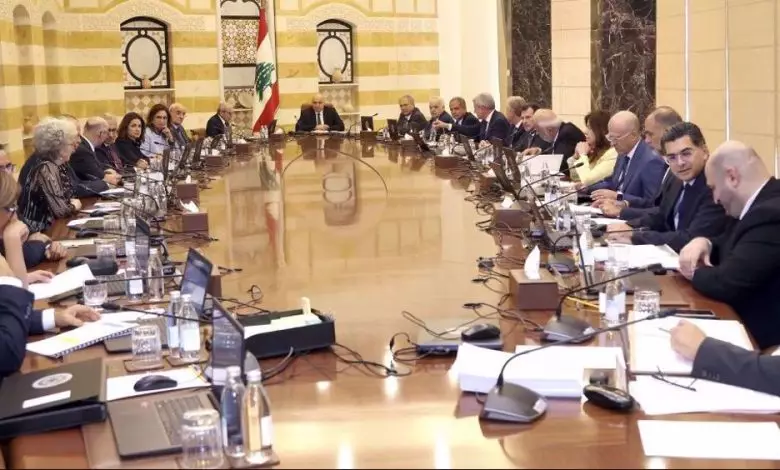
On Tuesday, Lebanon’s Prime Minister, Nawaf Salam, declared that the Lebanese government had tasked the national army with formulating a strategy by the year’s end. This plan is aimed at ensuring that only state institutions are authorized to hold weapons within the country.
Hezbollah issued a statement on Wednesday, condemning the action taken by Prime Minister Nawaf Salam’s government, which they described as a significant misstep. The decision in question involves disarming Lebanon’s resistance forces in their opposition to Israel.
The statement further claimed that the decision undermines Lebanon’s fortitude and stance against the persisting American-Israeli actions, inadvertently conceding to Israel that which it could not secure during its military campaign against Lebanon. Hezbollah reportedly resisted the offensive, compelling the Israeli regime to consent to an agreement that required Israel to cease its actions and retract from Lebanese territory.
In the statement, it was asserted that the decision starkly contravenes the national agreement and stands in opposition to the government’s ministerial declaration. This declaration mandates the government to undertake all necessary actions to liberate Lebanese territories still under Israeli occupation and to assert state sovereignty throughout the nation. The statement emphasized that maintaining Lebanon’s strength, which includes the resistance’s armaments and equipping the army, is integral to these essential measures.
The movement indicated that the decision was influenced by the “directives of the US Envoy, Tom Barrack,” according to Nawaf Salam, who mentioned that the cabinet planned to persist with discussions on the American proposal the following Thursday.
The statement asserts that the decision benefits Israel’s interests while leaving Lebanon vulnerable to Israeli adversaries, lacking any form of deterrence.
Hezbollah declared that the recent decision compromises Lebanon’s sovereignty, granting Israel unchecked authority to interfere with its security, territorial integrity, political landscape, and future viability. Consequently, the organization announced it would disregard the decision entirely.
The group emphasized its willingness to engage in dialogue aimed at halting Israeli hostilities against Lebanon, reclaiming its territory, freeing prisoners, and rebuilding the nation. However, it insisted that such discussions on a national security strategy could not occur under the pressure of continued aggression.
Hezbollah’s Secretary-General, Sheikh Naim Qassem, has called on the Lebanese government to prioritize addressing Israeli aggression instead of attempting to disarm the resistance movement.
He stated on Tuesday that the primary focus is not disarmament to satisfy Israeli demands. He emphasized that they are not interested in disarming just because of pressure from the United States or certain Arab nations advocating for that approach.
Israel and Hezbollah have reached a ceasefire agreement, effective November 27, 2024. According to the terms of the accord, Israel is mandated to completely withdraw its forces from Lebanese territory. However, Israeli troops remain stationed at five locations in southern Lebanon, specifically Labbouneh, Mount Blat, Owayda Hill, Aaziyyeh, and Hammamis Hill.
The occupation is a direct breach of UN Security Council Resolution 1701 and contradicts the agreement established last November.
Since the ceasefire took effect, Israel has breached the agreement on more than 3,700 occasions by conducting repeated strikes on Lebanese soil. Lebanese officials have cautioned that these infringements jeopardize national stability.