NYT Highlights Intentional Nature of ‘israeli’ Starvation Tactics Against Palestinians
A New York Times opinion article by Alex de Waal suggests that the severe starvation crisis in Gaza is a result of intentional actions, attributing the situation to the blockade imposed by "Israel" and the shortcomings of the U.S.-supported GHF aid system.
A recent editorial by Alex de Waal, featured in The New York Times, provides a grim analysis of the deteriorating humanitarian situation in Gaza. The piece contends that the severe food shortages and societal breakdown are consequences of intentional policy decisions.
Drawing on decades of expertise in famine research, de Waal presents the situation as not only foreseeable but also deliberately orchestrated by those with the authority to halt it.
He notes that experts who have dedicated years to studying famines can identify the alarming indicators of imminent social collapse—when the societal bonds begin to unravel and order starts to disintegrate. According to him, Gaza seems to be transitioning into this perilous zone.
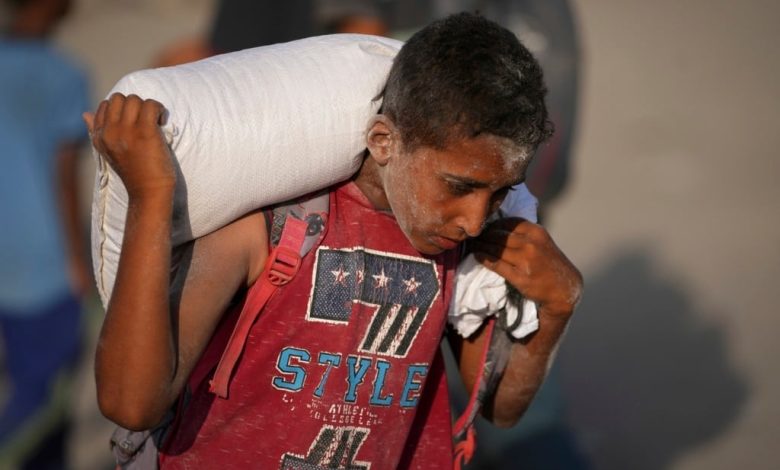
The report highlights the grave impact on Palestinians, focusing on the plight of children suffering from acute malnutrition, which causes enduring physical and cognitive harm. Expert de Waal emphasizes that even those children who manage to survive the ordeal face lifelong consequences, underscoring the profound generational impact of this deprivation on Palestinian society.
Since March 2024, global organizations have persistently cautioned that Gaza is nearing a famine crisis. A recent alert endorsed by the United Nations now corroborates that “the worst-case scenario of famine is playing out.” Although experts are without the requisite data to formally categorize the situation, de Waal emphasizes that technical definitions are now inconsequential, stating, “At this point, the distinction is irrelevant.”
In a significant revelation, de Waal uncovers the intricate reality that famine is a gradual and deliberate occurrence. He asserts, “Starvation takes time; authorities cannot starve a population by accident.” These words challenge narratives that portray the humanitarian crisis in Gaza as an inadvertent outcome of conflict.
Central to the critique is “Israel’s” controversial decision in May to implement the Gaza Humanitarian Foundation (GHF), a private entity backed by Israeli and US interests, which effectively marginalized established UN agencies. The shift is argued to have worsened the plight of the affected people, providing food assistance that did not align with the needs of the starving population and conducting operations that posed risks to civilian safety. The critic questions whether these actions have been deliberately designed by Israel to engineer starvation in the region, given their disregard for the actual conditions on the ground.
The assistance distributed by the Global Humanitarian Fund reportedly does not meet essential nutritional benchmarks. According to experts, for children suffering from malnutrition, specialized supplements such as Plumpy’Nut are necessary to mitigate the severe consequences of starvation. However, it appears the GHF is distributing items such as pasta and lentils, which necessitate cooking resources and clean water—both of which are in limited supply due to the blockade imposed by “Israel”.
Israeli forces have been reported to target individuals seeking humanitarian aid throughout Gaza, as the region continues to face severe food shortages.
Furthermore, de Waal criticizes the decision to replace 400 former UN-operated aid locations with just four GHF distribution centers. These centers are situated in militarized areas and operate unpredictably for short durations. “Masses of people were directed past Israeli military checkpoints, resulting in multiple fatalities on days when Israeli forces or private military contractors have discharged firearms or during the chaos of a stampede.”
Airdropped aid, heralded by officials from Israel and the United States as a critical support measure, has been criticized for being both inadequate and disorganized. Not only are the quantities delivered deemed too small, but numerous drops occur in zones of active conflict, further endangering already vulnerable civilians.
In the ongoing debate over humanitarian aid distribution, allegations by Israel regarding its blockade to prevent resources from falling into Hamas’s hands have been labeled as unsubstantiated by de Waal. De Waal argues that there is an absence of evidence showing large-scale diversion of aid by Hamas from convoys. He highlights a May proposal by the United Nations aimed at guaranteeing a secure and transparent aid distribution process, which included innovative measures such as sealed trucks, QR-coded cargo, GPS tracking, and oversight by the UN. This proposal, however, was declined by Israel, which chose to continue with the Global Humanitarian Framework instead.
In situations where social order collapses due to famine, those wielding guns often remain the last to suffer from scarcity, according to de Waal. He attributes this to a system that prioritizes and rewards power, leaving the vulnerable to face fatal consequences.
A comparison is drawn with the famine in El Fasher, Sudan, where both state and paramilitary forces are reportedly using starvation as a weapon of war against civilians. In contrast, Gaza possesses the necessary infrastructure, personnel, and expertise, yet it is hindered not by disorder but by political decisions. Observers note that if Israeli Prime Minister Benjamin Netanyahu were to decide that every Palestinian child in Gaza should have breakfast by the following morning, it would certainly be feasible.
In conclusion, de Waal candidly articulates what many are reluctant to mention, noting that “Israel’s” purported humanitarian acts, including restricted airdrops and brief pauses in military operations, fall significantly short. Gaza requires, yet “Israel” continues to deny, the unfettered entry of skilled humanitarian personnel and a fully operational aid framework underpinned by effective medical infrastructure.
In a call to address the crisis in Gaza, it is urged that Israel permit humanitarian-aid workers to perform their duties effectively. The statement emphasizes the urgency of the situation, highlighting that immediate action is necessary to prevent future tragedies involving children and to avoid reaching a point where the crisis could be labeled a famine or genocide, urging that prevention is far preferable to retrospection.
De Waal’s analysis reveals that the starvation in Gaza is not merely an unfortunate result of conflict, but rather a deliberate tactic employed in warfare, targeting a civilian population already deprived of security, dignity, and hope.