A testimony by a former Israeli Air Force reserve officer published in the Hebrew-language newspaper Haaretz offers an insider’s account of military practices and rules that he says exposed civilians in the Gaza Strip to lethal danger amid a perceived lack of accountability.
The testimony is significant because its author is a military officer who took part in operations. He said his years of service and experiences during that time caused what he described as “moral injury” and a psychological disorder, ultimately leading him to leave the military permanently in July 2026.
According to Haaretz, the officer had participated in operations that killed 54 people before October 7, 2023, and continued serving in the military during the war in Gaza.
His testimony indicates that what he later witnessed led him to reassess the nature of the operations he had participated in and the rules governing the use of force.
Paramedics are also exposed to the line of fire.
One of the most prominent incidents cited by the officer involved an attack on ambulance crews in Rafah’s Tal Al-Sultan area in March 2025.
According to testimony cited by Haaretz, clearly marked ambulances came under fire, while medical personnel were pursued as they sought shelter behind the vehicles.
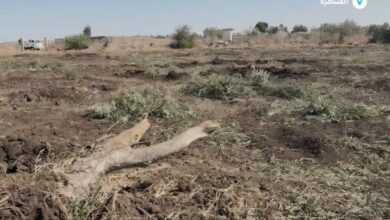
According to his account, the incident continued beyond the gunfire. He said occupation forces buried the victims’ bodies at the scene, ran over ambulances with bulldozers and covered them with dirt.
Borders shifted amid killings.
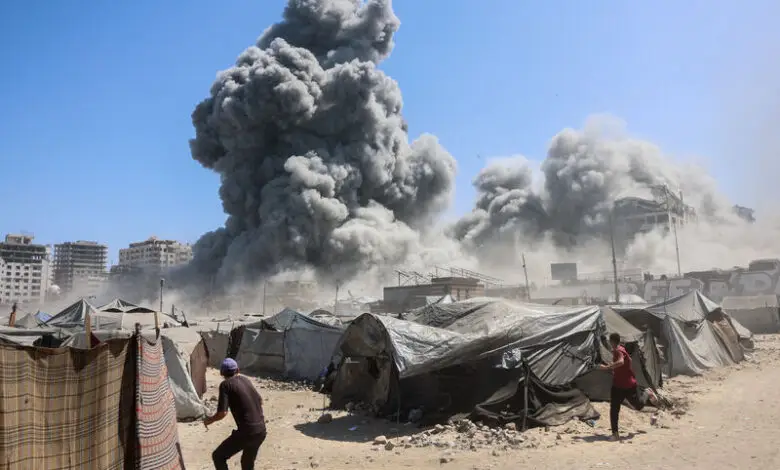
The officer referred to the area known as the “Yellow Line,” saying the boundary of the zone designated by occupation forces as a firing area had shifted hundreds of meters into some parts of the Gaza Strip without notifying residents.
According to his testimony, an abrupt change in field boundaries resulted in civilians unknowingly finding themselves inside areas designated as firing zones.
The officer’s account highlights the risks of shifting military boundaries in areas crowded with civilians and displaced people, who may not be aware of changes on the ground or able to avoid them.
No concern about being held accountable.
However, the most striking aspect of the officer’s testimony concerns the conclusion he said he drew after years of service and witnessing military operations.
He said he came to understand that military personnel could kill without necessarily facing punishment, citing field rules and an operational environment that he described as permitting broad use of force.
The officer does not portray the incident as isolated, instead linking it to what he describes as a broader operational culture that reduced the likelihood of soldiers being held accountable for killing civilians.
The detail highlights a central question in the Gaza war, one that extends beyond the death toll and destruction: How can civilians be protected when those ordering attacks do not believe they will be held accountable for the consequences?
A separate testimony.
The account carries distinct political and moral significance because it comes from within the Israeli military establishment, rather than from human rights or Palestinian organizations. The officer describes operations in which he took part and practices he says he witnessed during his years of service, rather than relying on testimony from unidentified sources.
His reference to what he described as a “moral injury” reflects the personal impact of witnessing a disparity between the military establishment’s portrayal of its operations and the practices he says he observed on the ground.
Testimony from within the military establishment has again challenged longstanding claims by Israeli leaders and politicians that Israel has “the most moral army in the world.”
When an officer involved in the operations describes the killing of civilians, attacks on paramedics, efforts to conceal evidence and expanded rules of engagement without accountability, references to “morality” appear disconnected from the facts presented in military personnel’s own testimonies and are difficult to accept as credible.
Short link: