Tehran rejects negotiations on extension of MoU btw Iran, US
Iran has firmly rejected any negotiations regarding the extension of the 60-day timeline outlined in the Islamabad Memorandum of Understanding (MoU), emphasizing that Tehran does not craft its policies under duress or arbitrary deadlines.
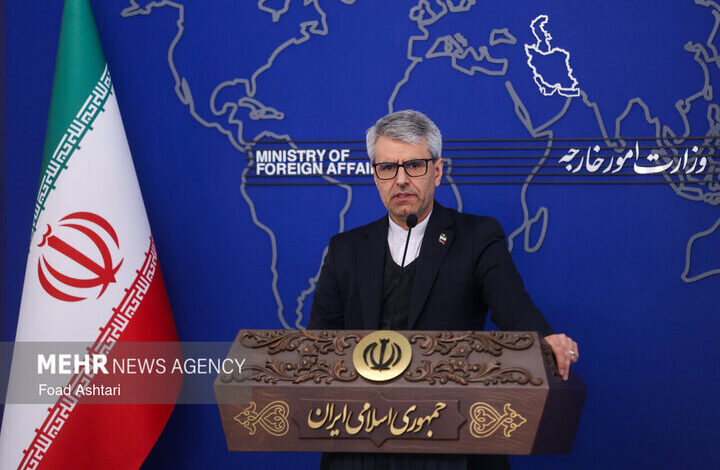
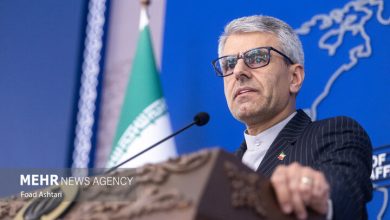
During a press briefing on Monday, Iran’s Foreign Ministry Spokesman Esmaeil Baghaei asserted that Tehran remains resolute in its policy formulation, unaffected by external pressure or imposed timelines. Baghaei further accused the United States of breaching the memorandum of understanding from the very beginning.
According to his statement, the memorandum of understanding did not include any clause establishing a 60-day deadline. Instead, it merely anticipated that negotiations on the nuclear issue would occur within this time frame.
He stated, “We have not initiated any negotiations, and the United States breached the initial agreement from the outset; thus, the matter of a 60-day timeframe is irrelevant.”
Baghaei stressed that Iran’s decision-making process will be guided by its national interests and evaluations, rather than being influenced by any imposed deadline.
He emphasized that Iran does not alter its policies in response to external pressure or deadlines.
The spokesperson indicated that Iran’s Armed Forces are vigilantly observing ongoing developments, emphasizing that “our formidable military forces are attentively monitoring all activities.” He further stated that enhancing ties with neighboring nations remains a key component of Iran’s current agenda.
Responding to allegations from the United States regarding a shift in its priorities towards Iran, Baghaei remarked that such claims highlight ongoing disarray. He asserted that the aggressive actions against Iran lack substantiation beyond fulfilling the ambitions of “a regime in our region.”
He stated that the United States initially justified the war by claiming an urgent threat from Iran. However, the Pentagon has since dismissed this assertion, confirming that no such threat existed.
Baghaei stated that they have ensnared themselves in a difficult situation and are compelled to alter their goals in an effort to rationalize their shortcomings.
He noted that attention from Washington has now turned towards the Strait of Hormuz, which he mentioned had remained accessible prior to the acts of aggression.
In light of the current situation, Baghaei suggested that the United States should seek to withdraw promptly to avoid deeper entanglement. He remarked that recognizing an error could lead to a more appropriate course of action, though he questioned whether US authorities had the “courage” to do so.
In response to inquiries regarding the fate of the four Iranian pilots who disappeared following Iran’s strike on a US military base in Qatar on March 2, Baghaei emphasized that Tehran is actively employing diplomatic dialogue and all available channels to ascertain the status of the pilots captured alive in the area during the defensive operation.
Tehran is actively utilizing diplomatic channels and all available means to ascertain the whereabouts of four Iranian pilots who disappeared during a defensive operation targeting a U.S. military site in Qatar, the Foreign Ministry spokesperson announced.
Iran has reportedly communicated regularly with Qatar, expressing its concerns and considerations about the situation involving the missing pilots.
The spokesperson emphasized that Tehran is ardently seeking answers regarding the whereabouts of Iranian Air Force personnel who were deployed on a defensive operation “to address the origins of the US hostility.”
Baghaei stated that efforts have been ongoing since the initial awareness of the situation. He noted that he was alongside Foreign Minister Abbas Araghchi when Araghchi received information about it during the early stages of the US-Israeli conflict. Consequently, the status of the pilots was promptly prioritized.
According to Baghaei, Iran initiated communication with the International Committee of the Red Cross (ICRC) on February 15. Additionally, the Iranian Embassy in Doha actively began addressing the issue in the initial stages.
He stated that until their status is confirmed, it is assumed that the pilots have been captured. Efforts are underway utilizing all available resources to ascertain their condition.
He emphasized that from the outset, the situation involving the four pilots had been actively pursued, underscoring the fact that “they were engaged in a defensive mission.”
Iran has publicly disclosed, for the first time, its assessment that three pilots, who went missing following an operation on March 2 targeting the US-operated Al Udeid Air Base in Qatar, were captured alive by Qatari forces.
Brigadier General Mohammad Bagherzadeh, head of the Missing in Action Search Committee of Iran’s Armed Forces General Staff, addressed a letter to the President of the International Committee of the Red Cross, Mirjana Spoljaric Egger, on August 15. In the correspondence, he conveyed serious apprehensions regarding the situation and called upon the organization to examine their circumstances and assist in ensuring their release.
Bagherzadeh reported that two Iranian Air Force Su-24 aircraft executed their mission but encountered enemy air defenses on their return, necessitating the ejection of their crews. Among the four pilots, Brigadier General Majid Kazemi lost his life, with DNA tests subsequently verifying his death. His remains were repatriated to Iran. Bagherzadeh named the other three pilots as Javad Salehi, Abdolmajid Dashtian, and Omran Behraveshian, stating they were captured alive by Qatari forces.
An Iranian military official indicated that Tehran’s efforts to connect or interview the three pilots have been unsuccessful, despite ongoing diplomatic attempts. The official referenced the Third Geneva Convention regarding prisoners of war and urged the International Committee of the Red Cross (ICRC) to facilitate immediate contact with the pilots, provide updates on their health status, and assist in securing their “prompt release.”
The announcement comes after months of ambiguity concerning the status of the pilots. Iranian authorities have consistently called on Qatar to provide clarity regarding the pilots’ situation and to adhere to international humanitarian law. Meanwhile, Qatari officials have maintained that they have no information regarding the missing airmen. The operation on March 2 was part of Iran’s wider military reaction to the US and Israeli strikes that commenced on February 28.