Iran Adjusts War Strategies Amid Depletion of US Interceptor Arsenal: Report
Iran has swiftly adjusted its missile and drone strategies in response to recent US actions, posing a rising challenge to American air defense systems throughout West Asia. This development is reported as Washington's reserves of Patriot interceptors face mounting strain, according to a recent analysis.
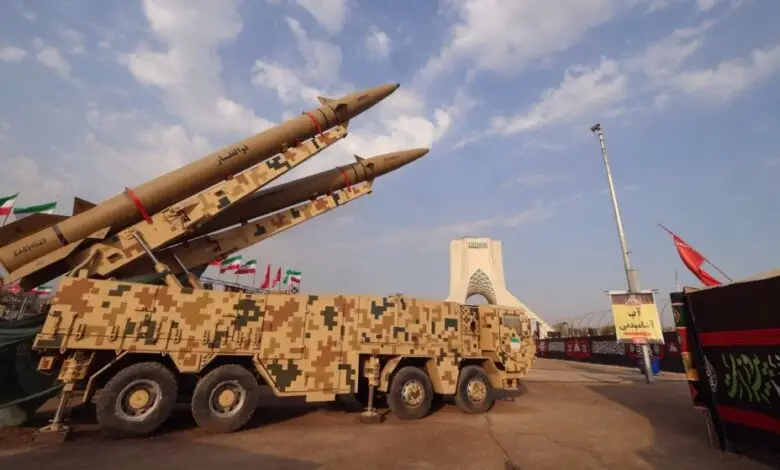
The New York Times reported on Tuesday that, amid five days of rigorous assaults last month, Iran launched a series of drone and missile strikes targeting US forces stationed at three bases in Jordan. The attacks aimed to breach American air defenses, utilizing missiles with the capability to alter their trajectory unexpectedly.
On July 17, an Iranian missile managed to breach defense systems and hit prefabricated housing units at a US base, resulting in the deaths of three American soldiers and injuring over 100 others. Pentagon officials also confirmed that additional troops were injured and several aircraft sustained damage amid attacks in Jordan that week.
Following a deadly strike, US Secretary of State Marco Rubio stated that the majority of the missiles were intercepted, with only one managing to get through.
The recent attacks have underscored two significant trends in US confrontations: Iran’s enhanced capability to adjust its tactics and leverage vulnerabilities in US air defense systems, alongside the swift exhaustion of American interceptor missile reserves.
According to The New York Times, which referenced two individuals familiar with US stockpile figures, the Pentagon has utilized over 1,500 Patriot interceptors in the conflict and retains less than 1,700 in its inventory. The United States is projected to produce approximately 600 Patriot interceptors by the year 2025.
During a particularly lethal week in Jordan, American forces launched around 50 Patriot interceptors, with each missile carrying a cost of roughly $4 million, as reported by U.S. officials.
Iran’s strategic maneuvers have shown an increasing tendency to incorporate lessons from other conflicts, notably the ongoing war in Ukraine. In this conflict, Russia has employed a blend of ballistic and cruise missiles succeeded by drone assaults to overpower air-defense systems.
Seth G. Jones, the head of the defense and security division at the Center for Strategic and International Studies, remarked that Iran is complicating air defense efforts by deploying a combination of missiles and drones.
Despite previous assertions by the Pentagon regarding the degradation of Iran’s missile capabilities, US defenses are experiencing increased pressure. Defense Secretary Pete Hegseth had claimed in April that Iran’s missile program was “functionally destroyed,” citing the depletion of its launchers and missiles.
According to experts, the United States administration initially anticipated a brief conflict and did not foresee the substantial strain it would place on American missile-defense reserves.
Vali Nasr, a professor at the School of Advanced International Studies at Johns Hopkins University, noted that Iranian leaders have been anticipating a scenario like this since the 12-day conflict in June 2025. During that time, they observed the rapid depletion of ballistic-missile interceptors by Israeli and US forces in response to Iranian assaults.
Muwaffaq Salti Air Base in Jordan, the site of recent deadly attacks, has evolved into a significant hub for the United States military. Prior to and during the conflict, American troops, initially based in Kuwait, Bahrain, Qatar, and the United Arab Emirates, were relocated to Jordan. The strategic move was made due to the site’s perceived lower risk of Iranian drone and ballistic missile assaults.
In response to the strike on July 17, U.S. military leaders bolstered air defense systems in Jordan and other strategic areas throughout the region.
Iran has adjusted its strategy in different facets of the conflict. In April, the Iranian military successfully downed a US F-15E fighter jet over southern Iran with a surface-to-air missile.
Both the pilot and the weapons officer ejected from the aircraft. The United States reported that the pilot was swiftly rescued. However, it was alleged that the weapons officer remained unaccounted for nearly two days. The US later announced that its Special Operations forces successfully rescued him after he evaded Iranian security forces.
The narrative has been ambiguous since its inception, leaving several questions unanswered and prompting speculation about the authenticity of the entire incident.
U.S. officials reported that Iran has applied insights from the Ukraine conflict, utilizing a swarm of drones in a region breached by American fighter jets. These drones relayed crucial data to Iranian commanders regarding the F-15E, including its GPS coordinates, velocity, and trajectory, enabling them to pinpoint the aircraft’s position for targeting.
US military sources have revealed that the F-15E’s defensive countermeasures alerted its crew with merely a half-second warning before the aircraft was struck by a surface-to-air missile. The fighter jet, with an estimated value of approximately $60 million, was downed despite its sophisticated defense systems.
The event highlighted Iran’s strategic integration of surveillance and targeting drones alongside surface-to-air missiles, aiming to capitalize on vulnerabilities within US aerial operations, instead of depending exclusively on traditional missile strikes.
According to US officials, Iranian drones in the vicinity relayed vital information to commanders regarding the aircraft’s positioning, velocity, and trajectory.
Trump recently suspended planned bombing operations against Iran, stating that requests from Tehran and other regional nations led to a pause after “the perimeters of a deal” were established.
Saudi officials have reportedly cautioned that escalating U.S. military actions in the region may provoke Iran to retaliate against critical energy infrastructure in the Persian Gulf.
Reports have surfaced amid ongoing tensions stemming from Iran’s defiance against pressure and military maneuvers from the United States. Iranian officials have consistently warned that any further aggression from either Washington or Tel Aviv would be met with a robust retaliation.
Iran has implemented measures to safeguard its military and strategic resources by dispersing personnel and facilities and utilizing heavily fortified underground sites. This strategy complicates efforts by US and Israeli forces to locate and eliminate critical targets.